Maharashtra State Board Class 11 Political Science Solutions Chapter 5 Concept of Representation
1A. Choose the correct alternative and complete the following statements.
1B. State the appropriate concept for the given statements.
1C. Find the odd word in the given set.
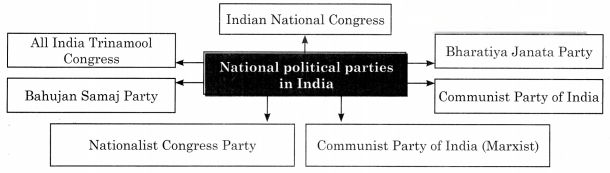
2. Complete the concept maps.
3. Explain the correlation between the following.
However, such organizations due to their structure and scope may not be able to satisfy the concerns of different sections of the population or to represent various interests and causes. This leads to people who are devoted to the cause coming together as non-profit groups and further their cause. NGO’s work in the field of political and environmental awareness, the welfare of the elderly/women/children/disabled, etc., for e.g., Green Peace (environment), Help Age (senior citizens), CRY (children), AGNI (Political awareness), PFA (animals).
4. Express your opinion of the following.
5. Answer the following in detail with reference to the given points.
(b) Electoral Method: Persons are directly or indirectly elected by the citizens to govern them as members of representative assemblies e.g., General elections to Lok Sabha, Assembly elections.
(c) Non-electoral Method: Representatives occupy their position through nomination or appointment for e.g., President of India appoints 12 Members to the Rajya Sabha.
(d) Non-official Method: Civil society represents the people through various pressure groups like trade unions, student groups, peasant organizations.
6. Suggest ways by which you can encourage people to vote in elections.
Answer:
Activity (Text Book Page No. 44)
The party first split at the Surat session (1907) into two groups i.e., Moderates and Extremists (led by Bal Gangadhar Tilak). The party began to endorse the policy of “Swaraj” (Self-rule) and “Swadeshi” (of our own country), After the death of Lokmanya Tilak, the leadership of the Congress passed into the hands of Mahatma Gandhi. His philosophy was based on the ideals of Satyagraha and Ahimsa. Various movements were organized by Gandhiji such as Non-Cooperation Movement (1920’s), Civil Disobedience (1930’s), and Quit India Movement (1942).
The INC has dominated most of India’s political landscape since Independence. The period 1947-1967 is described as the One-Party Dominant System (OPDS) of the INC. However, Congress dominance has declined. In the UPA government (2004 – 2014) the INC was one of the major parties. At present, it is the main opposition party (2019).