BalbhartiYuvakbharati English 12th DigestChapter 1.2 On Saying “Please” Notes, Textbook Exercise Important Questions and Answers.
Maharashtra State Board Class 12 English Yuvakbharati Solutions Chapter 1.2 On Saying “Please”
12th English Digest Chapter 1.2 On Saying “Please” Textbook Questions and Answers
Appropriate | Inappropriate | |||||||||||||||||||||||||||||||||||||||||||||||||||||||||||||||||||||||||||||||||||||||||||
1. To knock before you enter your Principal’s office. | 1. To receive phone calls while you are in a lecture or class. | |||||||||||||||||||||||||||||||||||||||||||||||||||||||||||||||||||||||||||||||||||||||||||
2. To thank the person who offers you tea or coffee. | 2. To leave the classroom without the teacher’s permission. | |||||||||||||||||||||||||||||||||||||||||||||||||||||||||||||||||||||||||||||||||||||||||||
3. To be polite and courteous to others. | 3. To occupy the seats reserved for ladies or physically challenged or elderly people on a bus or a train. (A1) Question (i) Question (ii) (A2) Question (i) False statements: Corrected statements : Question (ii) (iii) Question (a) Question (b)
Question (iv)
Question (v) Question (vi) A sweeper’s job can also be made more dignified if he/she just nods and smiles at passers-by or helps them if they are in need. Question (vii) These are good manners, or courtesy, and they have to be taught right from childhood, and they will change in different cultures and different circumstances. Whether a person follows them or not depends on the individual. However, if these little courtesies are followed, life will become much simpler and more pleasant for everyone. (A3) Question (a)
Question (b)
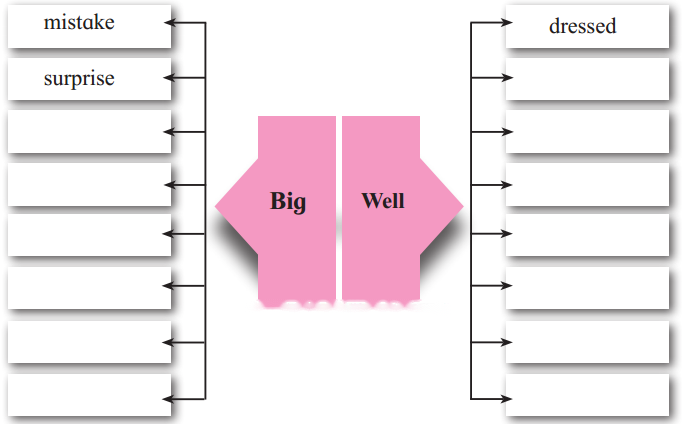
(2) WELL : Question (ii)
Question 1
Maharashtra Board Solution
Now read the following sentences and use the words given in the brackets. Change the word class and rewrite the sentences. (a) Leena was eating a very …………. apple and obviously enjoying it. (crunch) (b) This picture looks …………… (colour) (c) I’m afraid that your behaviour is just not ……………. (accept) (d) I like my elder brother. He is very ……………. (help)
Solution & Step-by-Step Answer:
(a) Leena was eating a very crunchy apple and obviously enjoying it. (b) This picture looks colourful. (c) I’m afraid that your behaviour is just not acceptable. (d) I like my elder brother. He is very helpful.
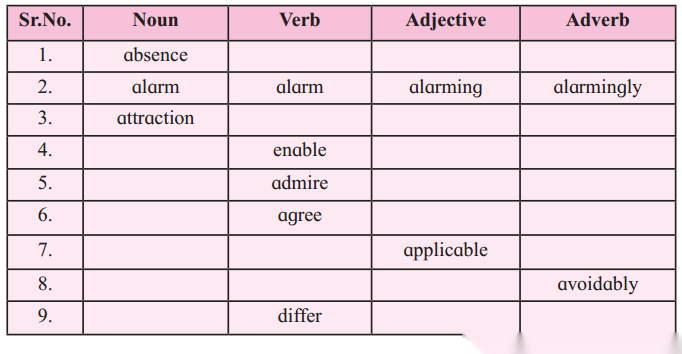
Complete the following table. Put a cross if a word class does not exist.
Question (iii) Question (b) Question (iv)
Question (v) Question (vi)
(A4) Question (i) Question (ii) Question (a) Question (b) Question (c) Question (d) Question (e) Question (f) Question (g) Question (h) Question (i) Question (j) Question (iii) Firstly the monitor, keyboard and printer were linked up. Then the main cable was plugged in. The monitor was switched on at the back. When the light appeared on the screen, the Day Disk was placed in Drive A. The disk was pushed in until the button clicked out. It took the computer 30 seconds to load the program. The drive button was pressed and the disk shot out. The Day Disk was replaced with the Document Disk. Finally, the function key 7 was pressed. The word processor was then ready to use. (A5) Question (i) Good morning. You may be surprised with the topic I have chosen for this speech, for today the word ‘Courtesy’ seems to be an old-fashioned word for us. But it is really the light of life. I, Shivam Goswami, would like to say a few words on why I think so. First of all, what does courtesy mean? It means good manners and polite behaviour. It means being kind and compassionate towards someone. When you are courteous, people have a good impression of you; but that is not the reason for being courteous. Politeness should be real, and not artificial. A courteous person will be appreciated by all. People will like to spend time with him/her and find pleasure in the person’s company. Someone may ask ‘What is courteous behaviour’? Saying simple words like ‘Please’, ‘Thank you’, ‘Excuse me’ and ‘Sorry’ is courteous behaviour. Helping a person who has fallen is courteous behaviour. Holding the lift door open for someone is courteous behaviour. When a person is courteous, people are automatically courteous in return. This leads to a more polite and happier society. As I conclude, I would like to ask all of you to do something for a week: Be courteous. Then you will see the returns and realize the truth of what I am saying. Thank you for listening to me so patiently. Bye. Question (ii) ‘Manners maketh Man’ : so goes a famous saying. In the world of today, people are judged by their manners and conduct. Manners distinguish us from animals, and make us human. A person who is courteous and considerate towards others is said to possess good manners. Such a person is respectful to his superiors, courteous to his equals and sympathetic towards his subordinates. He always shows concern for the well-being and comfort of others. He uses words like ‘Please’, ‘Thank you’ and ‘Sorry’ while talking to others; he helps senior citizens and those in need. Everyone likes a person who speaks and behaves politely and treats others respectfully. Good manners cost practically nothing but can buy everything. They win us friends and help us influence people. They make the world a happier place to live in by reducing friction and avoiding tension. When we meet a person for the first time, it is the person’s courtesy which impresses us deeply. Good manners are generally taught by parents at home, and by teachers in school. Manners that are learnt during childhood generally remain with us throughout our lives. They become a part of our personality. Hence, it is desirable that good manners are instilled in children when they are very young, so that they grow up to become courteous, considerate adults. (A6) Question (i) Question (ii) (A7) Question (i) Question (ii) Yuvakbharati English 12th Digest Chapter 1.2 On Saying “Please” Additional Important Questions and Answers Read the extract and complete the activities given below.: Global Understanding:
Question 1
Maharashtra Board Solution
Read the following sentences and find out True and False sentences. Correct the false sentences: 1. The liftman invited the passenger into the lift. 2. If you knock down a burglar, the law will acquit you. 3. There is no legislation against bad manners. 4. The complainant had to pay a fine.
Solution & Step-by-Step Answer:
True sentences: 2. If you knock down a burglar, the law will acquit you. 3. There is no legislation against bad manners.
False sentences: Corrected sentences:
Question 2
Maharashtra Board Solution
Explain the penalty, if any, that one has to pay if one is rude or boorish.
Solution & Step-by-Step Answer:
There is no penalty to pay if one is rude or boorish except the penalty of being called a ill-mannered person.
Question 3
Maharashtra Board Solution
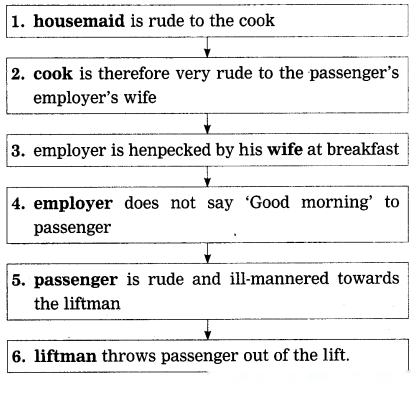
The behaviour of the people who made the passenger rude and ill-mannered:
Solution & Step-by-Step Answer:
Question 4
Maharashtra Board Solution
Complete the following: (The answers are given directly and underlined.)
Solution & Step-by-Step Answer:
Question 5
Maharashtra Board Solution
Tick mark the correct words: (The answers are marked directly.)
Solution & Step-by-Step Answer:
Question 6
Maharashtra Board Solution
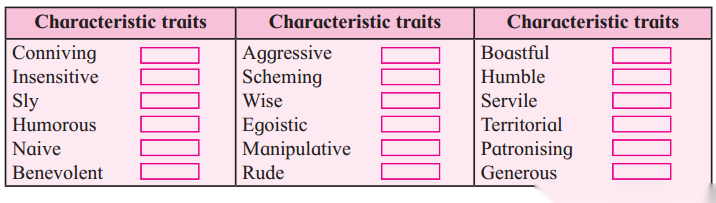
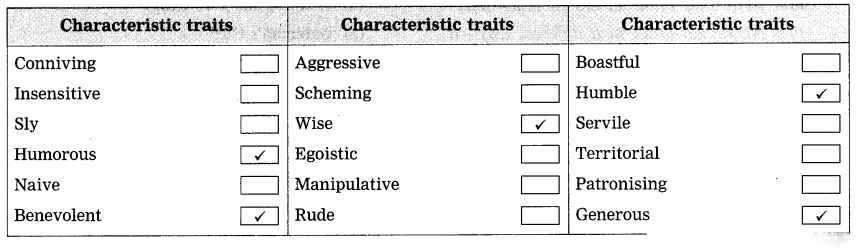
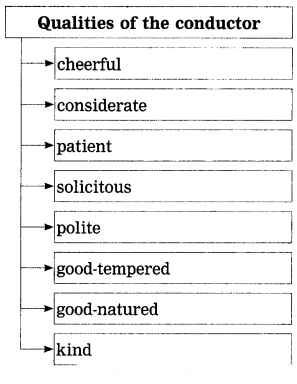
Complete the web by choosing the correct words from the brackets that describe the conductor: (mean cheerful considerate grumpy patient solicitous impatient polite irritable good-tempered haughty good-natured kind)
Solution & Step-by-Step Answer:
Question 7
Maharashtra Board Solution
Complete the following : (The answers are given directly and underlined.)
Solution & Step-by-Step Answer:
Complex Factual:
Question 1
Maharashtra Board Solution
Explain what the liftman wanted the passenger to do, and what happened afterwards.
Solution & Step-by-Step Answer:
The passenger, on entering the lift, said ‘Top’. The liftman wanted him to say ‘Top please’. The passenger refused to do so. The liftman, instead of taking him to the top floor, threw him out of the lift.
Question 2
Maharashtra Board Solution
Explain the sentence: The pain of a kick on the shins soon passes away but the pain of a wound to our self-respect or our vanity may poison a whole day.
Solution & Step-by-Step Answer:
This means that if we are physically attacked i and injured, the pain of the wounds will soon heal and be forgotten. But if our self-respect or pride is hurt, it may poison our lives and behaviour for a much longer time.
Question 3
Maharashtra Board Solution
It is not possible for the law to become the guardian of our private manners. Explain.
Solution & Step-by-Step Answer:
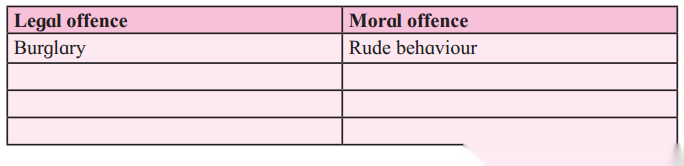
The area of moral offences is quite vast and no laws or commandments can cover this area. In addition, social civilities, speech and manners are of so many types and the interpretation of these (whether they are good or bad) is so different that no court could administer a law which governed them. Hence, it is not possible for the law to become the guardian of our private manners.
Question 4
Maharashtra Board Solution
Mention a couple of ways to keep the machine of life oiled and running sweetly.
Solution & Step-by-Step Answer:
We can keep the machine of life oiled and running sweetly by using courteous words like ‘Please’ and ‘Thank you’ to acknowledge a service.
Question 5
Maharashtra Board Solution
Complete the following: (The answer is given directly and underlined.)
Solution & Step-by-Step Answer:
The public owes much to the Underground Railway Company because they insist on a certain standard of civility in their employees, and take care that the standard is observed.
Question 6
Maharashtra Board Solution
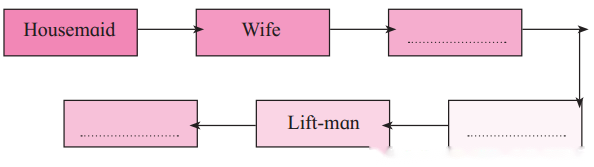
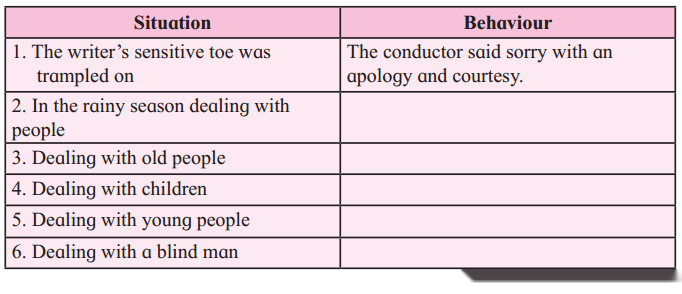
Complete the table:
Solution & Step-by-Step Answer:
Question 7
Maharashtra Board Solution
Write the narrator’s opinion about how the liftman should have dealt with the passenger’s uncivility. Give reasons for the same.
Solution & Step-by-Step Answer:
In the opinion of the writer, the liftman, instead of throwing the passenger out of the lift, should have treated him with elaborate politeness. He would have then had the victory not only over the rude passenger, but also over himself, and that was the spiritual victory that was more important. His revenge would then have been more subtle and effective.
Inference/Interpretation/Analysis :
Question 1
Maharashtra Board Solution
Name the ‘unpleasant specimen’ mentioned in the extract and describe his behaviour.
Solution & Step-by-Step Answer:
The ‘unpleasant specimen’ mentioned in the extract is the type of bus conductor who regards his passengers as natural enemies whose chief purpose on the bus is to cheat him, and who can only be kept honest by using a loud voice and an aggressive manner.
Question 2
Maharashtra Board Solution
Describe the stale old trick, according to the conductor.
Solution & Step-by-Step Answer:
Pretending that you have forgotten your purse at home, and hence do not have the fare for the ticket is a stale old trick, according to the conductor. (The conductor does not say this the narrator only imagines that he may do so.)
Question 3
Maharashtra Board Solution
Describe the reactions of the bus conductor.
Solution & Step-by-Step Answer:
No, the conductor did not think that the narrator was dishonest. He cheerfully accepted what the narrator said without doubting him and offered him a free ticket.
Question 4
Maharashtra Board Solution
Describe the experience which made the narrator comfortable in the bus.
Solution & Step-by-Step Answer:
The conductor had trampled on the narrator’s sensitive toe, causing him pain and agony. However, the conductor had then explained matters and apologized so profusely that the narrator forgot his pain and anger. After this experience, the narrator always observed his constant good nature and cheerful behaviour with pleasure and felt comfortable in his presence.
Question 5
Maharashtra Board Solution
Describe the narrator’s justification of his praise of the conductor.
Solution & Step-by-Step Answer:
The narrator says that if the famous poet Wordsworth could gain wisdom from a poor leech-gatherer, he sees no reason why ordinary people should not take lessons on conduct from a bus conductor, who shows how a modest job can be made more dignified by behaving in a good-tempered and cheerful manner and with kindliness towards the people one comes in contact with.
Personal Response:
Question 1
Maharashtra Board Solution
Describe a person you have come across who is always polite and helpful. What do you think about him/her?
Solution & Step-by-Step Answer:
The security guard of our building is always polite and helpful. He will help senior citizens get in and out of their cars or into the lift; he will help any person who has heavy bags. He also replies politely to any question asked by anyone. We all like him very much and often share our chocolates and biscuits with him. We also give him books, stationery and toys for his little child.
Question 2
Maharashtra Board Solution
Describe a pleasant/unpleasant experience you have had with a bus conductor.
Solution & Step-by-Step Answer:
This is an experience I had when I was new to Mumbai. I got into a bus and asked the conductor for a ticket to Dadar. The conductor shook his head and told me that I had got into the bus going in the wrong direction. He patiently explained that I would have to get off at the next stop, cross the road, and catch a bus having the same number but going in the opposite direction. He even pointed out the bus stop to me. Though I felt a bit embarrassed, I thanked him for his kindness.
Question 3
Maharashtra Board Solution
Give your opinion about the conductor’s behaviour.
Solution & Step-by-Step Answer:
The conductor was really a good and kind human being who saw the best in everyone and believed everyone. He was ready to pay the fare for the narrator’s ticket himself, even though he was not sure whether it would be returned. It is difficult to find such generous and helpful people in the world today, and it leaves a very pleasant feeling in the heart when you do.
Language Study:
Question 1
Maharashtra Board Solution
The law does not compel me to say ‘Please’. (Rewrite as an interrogative sentence.)
Solution & Step-by-Step Answer:
Does the law compel me to say ‘Please’?
Question 2
Maharashtra Board Solution
It was a question of ‘Please’. (Add a question tag.)
Solution & Step-by-Step Answer:
It was a question of ‘Please’, wasn’t it?
Question 3
Maharashtra Board Solution
It will permit me to retaliate with reasonable violence. (Pick out the finite and non-finite verbs.)
Solution & Step-by-Step Answer:
will permit – finite verb; to retaliate – non-finite verb (infinitive)
Question 4
Maharashtra Board Solution
The pain of a wound to our self-respect may poison a whole day. (Pick out the auxiliary and state its function.)
Solution & Step-by-Step Answer:
may – possibility
Question 5
Maharashtra Board Solution
For there are few things more catching than bad temper. (Write the part of speech of the underlined word.)
Solution & Step-by-Step Answer:
Gerund
Question 6
Maharashtra Board Solution
Bad manners probably do more to poison the stream of general life than all the crimes in the calendar. (Rewrite in the present perfect tense.)
Solution & Step-by-Step Answer:
Bad manners have done probably more to poison the stream of general life than all the crimes in the calendar.
Question 7
Maharashtra Board Solution
There is a social practice much older and much more sacred than any law which enjoins us to be civil. (Rewrite using ‘not only … but also… ’)
Solution & Step-by-Step Answer:
There is a social practice not only much older but also much more sacred than any law which enjoins us to be civil.
Question 8
Maharashtra Board Solution
Most people will have a certain sympathy with him. (Rewrite using the verb form of the underlined word.)
Solution & Step-by-Step Answer:
Most people will sympathize with him.
Question 9
Maharashtra Board Solution
Here and there you will meet an unpleasant specimen who regards the passengers as his natural enemies. (Replace the verb in the future tense with a modal auxiliary showing possibility.)
Solution & Step-by-Step Answer:
Here and there you might meet an unpleasant specimen who regards the passengers as his natural enemies.
Question 10
Maharashtra Board Solution
I had left home without any money in my pocket. (Pick out the verb and state the tense.)
Solution & Step-by-Step Answer:
had left-past perfect tense.
Question 11
Maharashtra Board Solution
I know that stale old trick. (Rewrite beginning ‘That stale old trick ’.)
Solution & Step-by-Step Answer:
That stale old trick is known to me.
Question 12
Maharashtra Board Solution
I said it was very kind of him. (Identify the clauses.)
Solution & Step-by-Step Answer:
I said – main clause it was very kind of him – subordinate noun clause
Question 13
Maharashtra Board Solution
I began to observe him whenever I boarded his bus. (Pick out the subordinate clause and state the type.)
Solution & Step-by-Step Answer:
subordinate clause – whenever I boarded his bus; adverb clause of time.
Question 14
Maharashtra Board Solution
He seemed to have an inexhaustible fund of patience and a gift for making his passengers comfortable. (Rewrite using ‘as well as…’)
Solution & Step-by-Step Answer:
He seemed to have an inexhaustible fund of patience as well as a gift for making his passengers comfortable.
Question 15
Maharashtra Board Solution
In lightening their spirits he lightened his own task. (Rewrite using the verb form of the underlined word.)
Solution & Step-by-Step Answer:
When he lightened their spirits he lightened his own task.
Question 16
Maharashtra Board Solution
A very modest calling may be dignified by good temper and kindly feeling. (Rewrite as an interrogative sentence.)
Solution & Step-by-Step Answer:
Can’t a very modest calling be dignified by good temper and kindly feeling?
Question 17
Maharashtra Board Solution
“I never give the wall to a scoundrel,” said a man who met Chesterfield one day in the street. “I always do,” said Chesterfield, stepping with a bow into the road. (Rewrite using reported speech.)
Solution & Step-by-Step Answer:
A man who met Chesterfield one day in the street said that he never gave the wall to a scoundrel. Chesterfield, stepping with a bow into the road, replied that he always did.
Question 18
Maharashtra Board Solution
The polite man may lose the material advantage, but he always has the spiritual victory. (Rewrite beginning ‘Though’)
Solution & Step-by-Step Answer:
Though the polite man may lose the material advantage, he always has the spiritual victory.
Vocabulary: Find out the meanings of the following phrases and use them in your own sentences.
Question 1
Maharashtra Board Solution
knock someone down –
Solution & Step-by-Step Answer:
Meaning: to hit someone forcefully so that he/she falls down Sentence: The young boy was so angry with the bully that he knocked him down.
Question 2
Maharashtra Board Solution
to comply with :
Solution & Step-by-Step Answer:
Meaning: to obey. Sentence: We must comply with the laws of the country we live in.
Question 3
Maharashtra Board Solution
Find out 2 words with prefixes and 2 with suffixes from the extract and write them down.
Solution & Step-by-Step Answer:
1. Words with prefixes : discourtesy, uncivil. 2. Words with suffixes : instruction, reasonable.
Question 4
Maharashtra Board Solution
Complete the following:
Solution & Step-by-Step Answer:
Question 5
Maharashtra Board Solution
Write the meanings of the following words : |
Question 6
Maharashtra Board Solution
Use the phrase ‘a black eye’ in your own sentence.
Solution & Step-by-Step Answer:
When I saw my friend with a black eye, I knew that he had been in a fight with someone.
Question 7
Maharashtra Board Solution
Find out 2 words with suffixes and 2 compound words from the extract and write them down.
Solution & Step-by-Step Answer:
1. words with suffixes: vanity, really. 2. Compound words: breakfast, housemaid.
Question 8
Maharashtra Board Solution
Write the meaning of the following words:
|
Question 9
Maharashtra Board Solution
Find out 2 words with suffixes from the extract and write them down.
Solution & Step-by-Step Answer:
Words with suffixes : sympathy, requirement.
Question 10
Maharashtra Board Solution
Find out two words with prefixes and two with suffixes from the extract and write them down.
Solution & Step-by-Step Answer:
1. Words with prefixes: unfriendliness, inconvenience 2. Words with suffixes: existence, discovery
Question 11
Maharashtra Board Solution
Pick out four adverbs of manner from the extract.
Solution & Step-by-Step Answer:
coldly, cheerfully, luckily, easily.
Question 12
Maharashtra Board Solution
Write the meanings of the followings words:
|
Question 13
Maharashtra Board Solution
Find out 2 words with prefixes and 2 with suffixes from the extract and write them down.
Solution & Step-by-Step Answer:
1. words with prefixes: inexhaustible, unusually 2. words with suffixes: investment, cheerful
Question 14
Maharashtra Board Solution
Write the meaning of ‘moral affront’.
Solution & Step-by-Step Answer:
moral affront: a deliberate offence or insult to one’s dignity or self-respect.
Question 15
Maharashtra Board Solution
Find out the meaning of the following phrase and use it in your own sentence: lower than the angels
Solution & Step-by-Step Answer:
lower than the angels – Meaning : less than perfect Sentence: The unexpected behaviour of the religious men was somewhat lower than the angels.
Question 16
Maharashtra Board Solution
Write four words with suffixes from the extract and write them down.
Solution & Step-by-Step Answer:
agreement, politeness, institution, sweeten. Note: Students can find more words on their own.
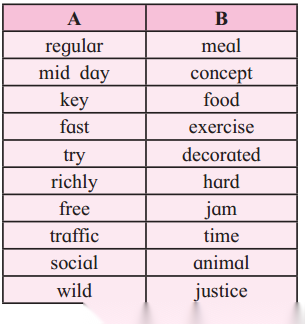
Vocabulary: A Collocation is a combination of words in a language that often go together. They habitually occur together and hence convey some meaning by association, e.g. early morning, hot dinner, fast train. Non-Textual Grammar: Do as directed:
Question 1
Maharashtra Board Solution
Hearing the sound of music from a side street, Mona had an idea. (Rewrite as a compound sentence.)
Solution & Step-by-Step Answer:
Mona heard the sound of music from a side-street and had an idea.
Question 2
Maharashtra Board Solution
Siddharth could not ask his father for a cricket bat. (Rewrite using the antonym of ‘able’.)
Solution & Step-by-Step Answer:
Siddharth was unable to ask his father for a cricket bat.
Question 3
Maharashtra Board Solution
“I will try,” the lady smiled. (Rewrite in indirect speech.)
Solution & Step-by-Step Answer:
The lady smiled and said that she would try.
Spot the error in the following sentences and rewrite them correctly:
Question 1
Maharashtra Board Solution
I picked some of the lovely, tasty fruits and had eaten my fill of them.
Solution & Step-by-Step Answer:
I had picked some of the lovely, tasty fruits and had eaten my fill of them.
Question 2
Maharashtra Board Solution
I miss my friends a lots.
Solution & Step-by-Step Answer:
I miss my friends a lot.
|