Maharashtra State Board Class 12 Psychology Solutions Chapter 6 Psychological Disorders
1. (A) Choose the correct option and complete the following statements.
(B). Match the pairs.
Group A | Group B |
(1) Phobia | (a) 2013 |
(2) DSM-5 | (b) Wellness |
(3) ICD – 11 | (c) Schizophrenia |
(4) Eugen Bleuler | (d) 2019 |
(5) John Travis | (e) Illogical fear |
(6) Depressive disorders | (f) Sad feelings for a long period of time |
Group A | Group B |
(1) Phobia | (e) Illogical fear |
(2) DSM-5 | (a) 2013 |
(3) ICD – 11 | (d) 2019 |
(4) Eugen Bleuler | (c) Schizophrenia |
(5) John Travis | (b) Wellness |
(6) Depressive disorders | (f) Sad feelings for a long period of time (C) State whether the following statements are true or false.
Question 1
Maharashtra Board Solution
Socially or culturally deviant behaviours are signs of psychological disorders.
Solution & Step-by-Step Answer:
False
Question 2
Maharashtra Board Solution
Schizophrenia is a serious psychological disorder.
Solution & Step-by-Step Answer:
True
Question 3
Maharashtra Board Solution
Feeling of hopelessness is one of the symptoms seen in depressive disorders.
Solution & Step-by-Step Answer:
True
(D) Answer the following in one sentence each.
Question 1
Maharashtra Board Solution
From which Latin word is the term anxiety derived?
Solution & Step-by-Step Answer:
The word ‘anxiety’ is derived from the Latin word ‘Anxietas’ which means ‘uneasy or troubled mind’.
Question 2
Maharashtra Board Solution
In which disorder does the person experience sadness and guilt for a long period of time?
Solution & Step-by-Step Answer:
In a depressive disorder the person experiences sadness and guilt for a long period of time.
Question 3
Maharashtra Board Solution
What do you call the fear that you experience unnecessarily in a non threatening situation?
Solution & Step-by-Step Answer:
The fear that is experienced unnecessarily in a non threatening situation is called a phobia.
2. Answer the following questions Briefly.
Question 1
Maharashtra Board Solution
Explain the nature of psychological disorder.
Solution & Step-by-Step Answer:
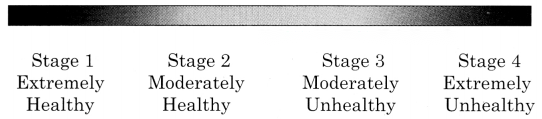
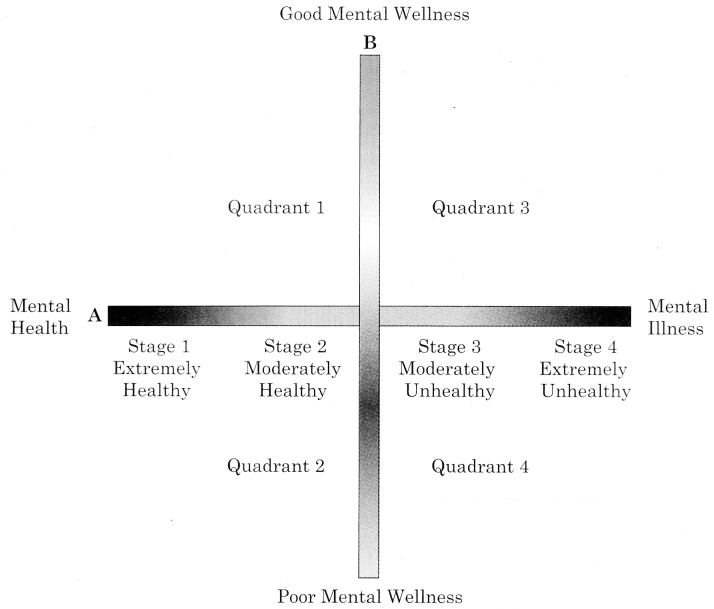
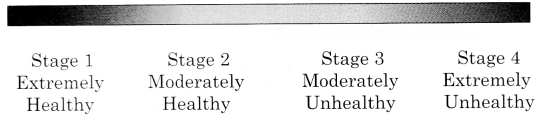
The major criteria of abnormality or psychological disorders are deviance, personal distress and impaired functioning. Illness and absence of illness are not distinct categories but are on opposite poles of the continuum sequence as explained below. Stage 1 – The person is physically and psychologically healthy. They are motivated and emotionally stable. Stage 2 – The person may get affected by life stressors, feel anxious, lack energy, etc. For e.g., before an examination. It is possible to push oneself back towards positive health by adopting a healthy lifestyle. Stage 3 – The person shows signs of psychological damage and experience negative feelings like sadness, lack of motivation, fear and may even indulge in addictive behaviour. However, even this stage is not irreversible. Stage 4 – The person exhibits extreme distress, impairment in mental, emotional and social functioning. He/She needs professional treatment.
Question 2
Maharashtra Board Solution
What is meant by Anxiety disorders?
Solution & Step-by-Step Answer:
The word ‘anxiety’ is derived from the Latin word ‘Anxietas’ which means ‘uneasy or troubled mind’. Anxiety refers to a condition in which the person feels worried and uneasy for a long time for no obvious reasons. Anxiety disorders include disorders in which anxiety is the main symptom or is experienced when an attempt is made to modify some maladjustment. The main anxiety disorder are Generalised Anxiety disorder, Phobic disorder. Panic disorder, O. C. D, etc.
Question 3
Maharashtra Board Solution
Narrate indicators of psychological disorders.
Solution & Step-by-Step Answer:
According to DSM-5, there are five criteria (indicators) for psychological disorders.
Question 4
Maharashtra Board Solution
What is meant by bipolar disorder?
Solution & Step-by-Step Answer:
Bipolar Disorder is also known as Manic Depressive disorder. The person experiences alternate phases of two states viz. mania and depression. Mania includes symptoms such as high energy, excitement, reduced need for sleep and loss of touch with reality, impulsivity, delusion, etc. Depressive state symptoms include low energy and motivation, loss of interest in daily activities, extreme sadness, apathy, feeling of hopelessness, fatigue, guilt, etc. Main causative factors are genetic factors, imbalance in neurotransmitters such as dopamine and epinephrine; environmental factors such as traumatic event.
Question 5
Maharashtra Board Solution
Describe Post Traumatic Stress Disorders?
Solution & Step-by-Step Answer:
If the symptoms of Acute Stress Disorder (ASD) continue for more than one month with the same intensity, the person is diagnosed with PTSD. A person who has suffered trauma goes through three stages viz-
However, some persons still show signs of mental illness i.e., PTSD. 3. Explain the Following concepts.
Question 1
Maharashtra Board Solution
DSM-5
Solution & Step-by-Step Answer:
Presently, the two major systems of classifying psychological disorders are DSM and ICD. Diagnostic and Statistical Manual for Mental Disorders (DSM) was published in its first version by the APA in 1952, i.e., DSM-I. In 2013, the DSM-5 was introduced which contains 22 broad categories of mental disorders with subcategories. It is the classification of officially recognized psychiatric disorders, for e.g., categories in DSM-5 include anxiety disorders, obsessive-compulsive and related disorders and personality disorders.
Question 2
Maharashtra Board Solution
ICD 11
Solution & Step-by-Step Answer:
Presently, the two major systems of classifying psychological disorders are DSM and ICD. The International Classification of Diseases and Related Health Problems (ICD) was created by the WHO for documenting all types of diagnoses, diseases, signs and symptoms and social circumstances. It contains a section on psychological disorders. The latest, 11th version of ICD was presented in 2019. According to the ICD-11, there are 19 broad categories of mental disorders, most of which overlap with DSM-5.
Question 3
Maharashtra Board Solution
Phobia
Solution & Step-by-Step Answer:
The main anxiety disorders include phobic disorders and generalized anxiety disorders. The word ‘phobia’ is derived from the Greek word ‘phobos’ which was used to refer to the God of Fear. A phobia is an intense, persistent but irrational and disproportionate fear of a specific object or situation. DSM classifies phobias as simple phobias, e.g., Acrophobia, Claustrophobia etc., and social phobias, e.g., fear of speaking or eating in public. The phobic object e.g., animals or situations e.g., elevators, almost always provide immediate anxiety.
Question 4
Maharashtra Board Solution
Syndrome
Solution & Step-by-Step Answer:
A syndrome refers to a cluster or collection of symptoms and signs that are characteristic of a diseases or disorder, e.g., Down’s syndrome. It is a group of symptoms which consistently occur together and indicate a particular condition. A syndrome refers to a set of symptoms that tend to occur together and can be associated with a particular physical or mental disorder. In psychological disorders, one of the criteria as suggested by DSM-5 is clinically significant syndrome.
Question 5
Maharashtra Board Solution
Hallucination
Solution & Step-by-Step Answer:
Hallucinations are false perceptions in the absence of appropriate stimuli. Hallucinations are a symptom of schizophrenia and other mental disorders. Commonly occurring hallucinations are visual, auditory, tactile, gustatory and olfactory in nature. For e.g., the person may hear voices telling him to do something. Hallucinations are also noticed due to substance abuse, medications, epilepsy, etc.
4. Write short notes on the following.
Question 1
Maharashtra Board Solution
Nature of mental wellness
Solution & Step-by-Step Answer:
According to the WHO, mental wellness refers to “a state of well-being in which the individual realizes his or her own abilities, can cope up with the normal stresses of life, can work productively and fruitfully, and is able to make a contribution to his or her community.” The important aspects of mental wellness are –
The Illness Wellness Continuum Model by John Travis
Question 2
Maharashtra Board Solution
Drug addiction
Solution & Step-by-Step Answer:
Addictive disorders refer to the physical and psychological inability to stop consuming some substance or indulging in some activity although it is harmful. This includes dependence on drugs, nicotine, alcohol, etc., or activities like gambling, eating, gaming etc. Drug addiction refers to an inability to control the use of alcohol, nicotine, narcotics, marijuana, medications, etc. Symptoms of addiction are-
Alcoholics Anonymous (AA), Narcotics Anonymous (NA) are organizations that help addicts to overcome dependence.
Question 3
Maharashtra Board Solution
Depressive disorders
Solution & Step-by-Step Answer:
Depression is an emotional state typically marked by sadness and guilt, feelings of anxiety and hopelessness. Other symptoms include loss of appetite, interest and sleep, fatigue, sexual dysfunction and suicidal thoughts. Depression is associated with distractability, memory loss, neglect of personal hygiene, panic attacks and even substance abuse. Children may experience symptoms such as irritability, feelings of incompetence, difficulty in concentration, difficulty in sleeping, digestive problems etc.
Question 4
Maharashtra Board Solution
Anxiety disorders
Solution & Step-by-Step Answer:
The word ‘anxiety’ is derived from the Latin word ‘Anxietas’ which means ‘uneasy or troubled mind’. Anxiety refers to a condition in which the person feels worried and uneasy for a long time for no obvious reasons. The main anxiety disorders are. (i) Generalized Anxiety Disorder – The person frequently experiences anxiety more intensely so that it starts interfering with the ability to perform daily tasks. Symptoms include irritability, headaches, insomnia, dizziness, breathlessness, etc.
(ii) Phobic disorders – The word ‘phobia’ is derived form the Greek word ‘phobos’ which was used to refer to the God of Fear. A phobia is an intense, persistent but irrational and disproportionate fear of a specific object or situation. DSM classifies phobias as simple phobias, e.g., Acrophobia, Claustrophobia etc., and social phobias, e.g., fear of speaking or eating in public. 5. Answer the following questions in 150 – 200 words.
Question 1
Maharashtra Board Solution
Describe the criteria of psychological disorders.
Solution & Step-by-Step Answer:
The major criteria of abnormality are deviance, personal distress and impaired functioning. Illness and absence of illness are not distinct categories but are on opposite poles of the continuum sequence as explained below. Stage – 1: The person is physically and psychologically healthy. He/She are motivated and emotionally stable. Stage – 2: The person may get affected by life stressors, feel anxious, lack energy, etc., for e.g., most students are tense before the exams. It is possible to push oneself back towards positive health by adopting a healthy lifestyle. Stage – 3: The person shows signs of psychological damage and may experience negative feelings like sadness, lack of motivation, fear and may even indulge in addictive behaviour. However, even this stage is not irreversible. Stage – 4: The person exhibits extreme distress, impairment in mental, emotional and social functioning. He/She needs professional treatment.
Psychological disorders are also called mental disorders. These are patterns of behavioural or psychological symptoms that impact multiple areas of life and create distress for the person. According to DSM-5, there are five criteria for psychological disorders.
Question 2
Maharashtra Board Solution
Narrate any two psychological disorders in detail.
Solution & Step-by-Step Answer:
Psychological disorders are also called mental disorders. These are patterns of behavioural or psychological symptoms that impact multiple areas of life and create distress for the person. According to DSM-5, there are five criteria for psychological disorders are:
(A) Anxiety Disorders – The word ‘anxiety’ is derived from the Latin word ‘Anxietas’ which means ‘uneasy or troubled mind’. Anxiety refers to a condition in which the person feels worried and uneasy for a long time for no obvious reasons. (ii) Phobic disorders – The word ‘photjia’ is derived form the Greek word ‘phobos’ which was used to refer to the God of Fear. A phobia is an intense, persistent but irrational and disproportionate fear of a specific object or situation. DSM classifies phobias as simple phobias, e.g., Acrophobia, Claustrophobia etc., and social phobias, e.g., fear of speaking or eating in public. (B) Trauma Trauma and Stress-Related Disorders 2. Post Traumatic Stress Disorder (PTSD) However, some persons still show signs of mental illness i.e., PTSD.
Question 3
Maharashtra Board Solution
What is Schizophrenia? Describe the major symptoms of it.
Solution & Step-by-Step Answer:
The term ‘Schizophrenia’ is derived from Greek words Schizein (to split) and phren (mind). Thus, the literal meaning of the word ‘schizophrenia’ is split mind. The term ‘schizophrenia’ was coined in 1911 by a Swiss psychologist, Paul Eugene Bleuler. Schizophrenia is a psychotic disorder. According to DSM-5 the two types of symptoms for schizophrenia are- (a) Positive symptoms are an excess addition to normal thoughts or behaviour of the period. Such symptoms are-
(b) Negative symptoms are deficits of normal emotional responses or of thought processes. They lead to low level of functioning and may not improve much even with treatment. This includes- Sometimes, a schizophrenic exhibits positive as well as negative symptoms. Class 12 Psychology Chapter 6 Psychological Disorders Intext Questions and Answers ACTIVITIES (Textbook Page. No. 62) Activity 1 On the basis of your understanding of various criteria for abnormality, which of these would you consider as normal or abnormal behavior? Answer: Activity 3 (Textbook Page. No. 67) In which Quadrants of wellness illness continuum will you place Karan, Lalita, Pramila and Santosh? Activity 5 (Textbook Page. No. 68) Collect information about Anxiety disorders and discuss this with your friends or parents. Activity 6 (Textbook Page. No. 69) Collect information about other types of phobia. Activity 7 (Textbook Page. No. 71) We make use of various strategies to reduce our stress. Speak to five of your friends and make a list of atleast ten different strategies used by them to reduce stress. Share it with your group and discuss which are healthy and which are unhealthy. Activity 9 (Textbook Page. No. 74) Identify from the internet the red flags (signaling symptoms) for various disorders that you have already studied. (2) Depression (3) Bipolar disorder (4) PTSD |