Maharashtra State Board Class 5 English Solutions Chapter 9 The Triantiwontigongolope
English Balbharati Std 5 Digest Chapter 9 The Triantiwontigongolope Textbook Questions and Answers
1. Read the poem aloud using proper intonation.
2. Note that we say ‘its appetite’, ‘its manners’ and not “it’s appetite’ or ‘it’s manners’.
It’s means ‘It is’ and its means ‘belonging to it.
Question 1
Maharashtra Board Solution
Note that we say ‘its appetite’, ‘its manners’ and not “it’s appetite’ or ‘it’s manners’. It’s means ‘It is’ and its means ‘belonging to it.
Solution & Step-by-Step Answer:
block bg-white dark:bg-slate-900/80 border-l-4 border-emerald-500 rounded-r-xl p-5 my-3 shadow-xs border border-slate-200/60 dark:border-slate-800">
Solution & Step-by-Step Answer:
Now, read the following sentences.
3. Activities 1. Is the insect described in the poem a real insect? Think about an imaginary creature. Describe it in your own words. You may draw its picture and label it.
Question 1
Maharashtra Board Solution
Is the insect described in the poem a real insect? Think about an imaginary creature. Describe it in your own words. You may draw its picture and label it.
Solution & Step-by-Step Answer:
The insect described in the poem is not real but imaginary by the poet’s own admission at the end of the poem. Let me tell you about Hopperslipograssipede, my friend, who lives in my garden. It thrives on plants. When no one is around it changes its colour according to its own whims and fancies.
2. Think of other funny names for imaginary creatures. Write any 3 of them.
Question 1
Maharashtra Board Solution
Think of other funny names for imaginary creatures. Write any 3 of them.
Solution & Step-by-Step Answer:
English Balbharati Std 5 Answers Chapter 9 The Triantiwontigongolope Additional Important Questions and Answers Answer the following questions.
Question 1
Maharashtra Board Solution
What is the poem about?
Solution & Step-by-Step Answer:
The poem is about an imaginary insect The Triantiwontigongolope’. The poet describes its funny ways only to disclose in the end that it was all a joke.
Question 2
Maharashtra Board Solution
What does the insect live on?
Solution & Step-by-Step Answer:
The insect lives on weeds and wattle-gum.
Question 3
Maharashtra Board Solution
What does Trianti wontigongolope do when we call it by its name?
Solution & Step-by-Step Answer:
When we call Triantiwontigongolope by its name, it makes a sound of contentment, with a sense of pride.
Question 4
Maharashtra Board Solution
The poet reveals in the end that it was a joke. Were you disappointed by this confession? Justify your
Solution & Step-by-Step Answer:
Answer: The humorous character in the story made me laugh heartily but at the same time I was disappointed that I won’t be able to see the insect as it does not exist.
Language Study
Question 1
Maharashtra Board Solution
Pick out a word indicating sound from the poem:
Solution & Step-by-Step Answer:
Purrs
Question 2
Maharashtra Board Solution
Match the rhyming words. |
A | B |
1. toes | a. name |
2. shame | b. nose |
3. confess | c. green |
4. been | d. address |
A | B |
1. toes | a. name |
2. shame | a. name |
3. confess | d. address |
4. been | c. green What do the underlined words mean:
Question 1
Maharashtra Board Solution
If you sneer at it or scold it, it will scuttle off in shame.
Solution & Step-by-Step Answer:
If we scorn or scold the insect it will run away in shame.
Question 2
Maharashtra Board Solution
It lives on weeds and wattle-gum and has a funny face.
Solution & Step-by-Step Answer:
It eats weeds and wattle-gum and it has a funny face.
Question 3
Maharashtra Board Solution
Fill in the blanks with ‘it’s’ and ‘its’ |
Reading Skills, Vocabulary and Grammar
Read the following extract and answer the questions given below:
Question 1
Maharashtra Board Solution
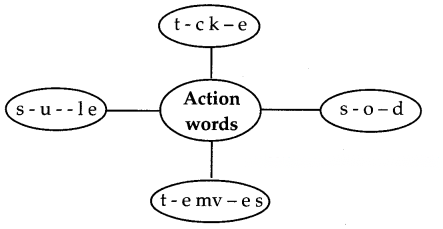
Complete the web
Solution & Step-by-Step Answer:
Select the proper alternative and complete the following:
Question 1
Maharashtra Board Solution
Triantiwontigongolope ………………………. if you tread upon its toes. (a) smiles (b) trembles (c) scuttles
Solution & Step-by-Step Answer:
(b) trembles
Question 2
Maharashtra Board Solution
Pick out a line to prove that Trianti wontigongolope does not exist.
Solution & Step-by-Step Answer:
For there isn’t such an insect.
Question 3
Maharashtra Board Solution
The poet reveals in the end that it was a joke. Were you disappointed by this confession? Justify your
Solution & Step-by-Step Answer:
Answer: The humorous character in the story made me laugh heartily but at the same time. I am disappointed that I won’t be able to see the insect as it does not exist.
The Triantiwontigongolope Summary in English Summary : The humorous poem ‘The Triantiwontigongolope’ written by C. J. Dennis tickles the reader’s funny bones and ushers laughter. The main character of this poem is a very funny insect with a very funny name. The poet describes its physical appearance, eating habits and other activities. At the end of the poem, the poet surprises us by concluding that the insect is imaginary and does not exist. We are willing to forgive the poet for his prank. After all, didn’t he make us laugh to our heart’s content? Meanings : |