Maharashtra State Board Class 9 Political Science Solutions Chapter 6 International Problems
Class 9 Political Science Chapter 6 International Problems Textbook Questions and Answers
1. Choose the right option and rewrite the sentence:
2. Explain with reasons whether the following statements are true or false:
3. Complete the following chart:
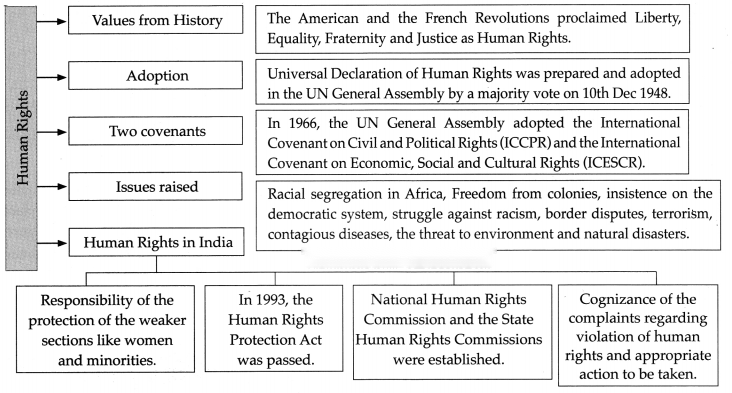
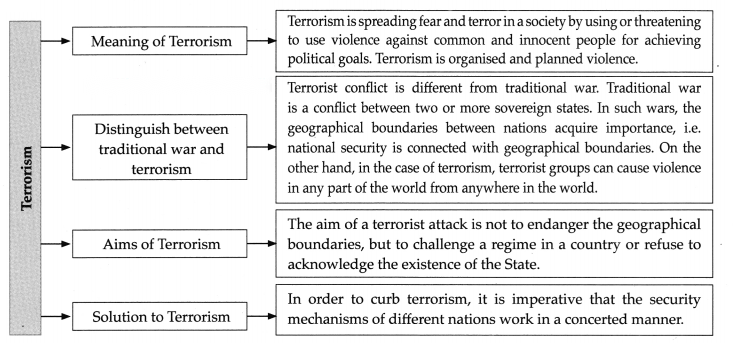
4. Prepare the following concept map:
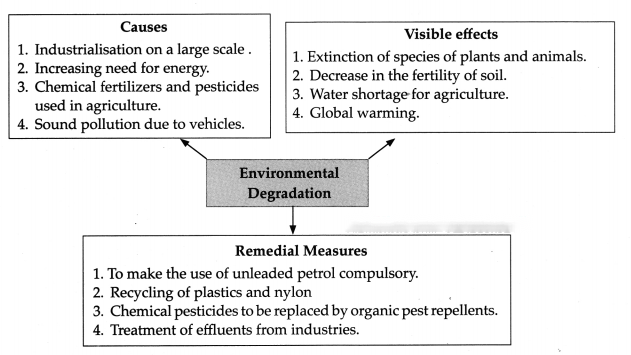
5. Write your own opinion about :
(ii) It secures to its citizens: justice, social, economic and political; Liberty of thought, expression, belief, faith and worship; Equality of status and opportunity; and Fraternity assuring the dignity of the individual and unity and integrity of the Nation.
(iii) Fundamental Rights are assured to all the citizens of India.
(iv) In order to make these objectives effective, Fundamental Rights and Directive Principles of State Policy were incorporated in Part III and Part IV of our Constitution.
(v) The Supreme Court of India and the High Courts of all states issue Writs, such as:
(ii) Terrorism includes taking hostages; firing or bombing civilian localities that are undefended such as hospitals or schools, inhuman treatment to prisoners and destruction of property.
(iii) This leads to feeling of insecurity and helplessness among the people who are prone to terrorism. Their faith in social security and police protection is lowered and they may be psychologically affected.
(iv) Terrorism affects economic growth, political stability and social welfare of the people. It burdens our defence and police system as well. Hence the government cannot focus on its constructive programmes.
(v) Citizens should be alert about unattended luggage or bags at public places and be vigilant about suspicious men around them. They must immediately report to the authorities about the same.
(vi) The youth of the nation should volunteer in police and armed forces. The civilians must always cooperate with the police and government authorities to nab the terrorists.
Class 9 Political Science Chapter 6 International Problems Additional Important Questions and Answers
Choose the correct option from the given options and rewrite the statements:
State whether the following statements are true or false with reasons:
Explain the concept:
(ii) It was stressed that it is the responsibility of all nations to cooperate to overcome pollution.
(iii) The developing nations feel that the developed nations are more responsible for the decline of the environment and they should take the responsibility for stopping the decline.
(iv) Non-governmental organisations working in the field of environmental protection were also present and assumed a bigger role in the decision making process at international conferences regarding the environment.
(v) The issue of the protection of the common global wealth was raised.
(vi) A consensus emerged that it was the responsibility of all the nations to protect these resources.
(vii) It was after this conference that the United Nations created the United Nations Environment Programme (UNEP).
(viii) Many international treaties about environment were signed after this conference.
(ix) Several rules were made about the protection of environment. Environmental movements started on a large scale at national as well as at the international level.
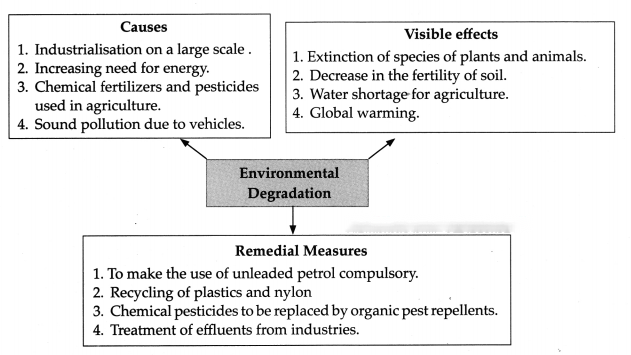
Complete the following Chart/Concept Maps:
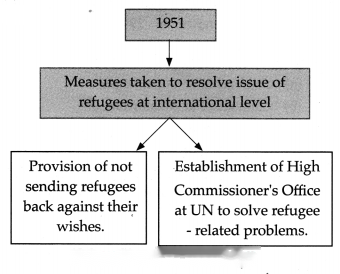
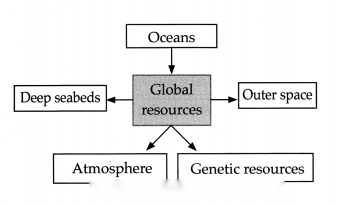
Answer the following questions in brief:
(ii) The most important problem is to decide where to go. They have questions like will that nation give us shelter.
(iii) Secondly, they have to also take along with them other members of their family. It involves a lot of physical and emotional stress.
(iv) Apart from this, there are problems caused by natural elements like heat, rain, storms, as well as shortages of food, sickness, an enemy in pursuit, etc. In this process, many people lose their lives.
(ii) If the language and culture in the other nation are different, then adjusting to that poses difficulties. There is no assurance that the people in the nation which gives shelter to the refugees will accept them.
(ii) Different treaties regarding bio-diversity, climate change due to greenhouse gases, protection of forests, etc. were signed.
(ii) An appeal was made in this conference that all nations should make concerted efforts to stop climate change and global warming and that the developed countries should help the developing countries to acquire the technology to achieve these goals.
(ii) Similarly an office of the High Commissioner of the United Nations has been established to solve their problems.
(ii) Their citizenships and properties were confiscated. Due to this, the Jews became refugees.
(iii) In 1971, the people in East Pakistan turned refugees and came to India seeking refuge due to political and religious persecution.
(iv) In the last few years due to the war-like situation in Iraq and Syria, a lot of people are leaving Syria as refugees. We can cite many such example of refugees.
(ii) The locals may lose their jobs; a problem of law and order may crop up. Many such problems may emerge.
(iii) Due to these problems, many nations are not ready to give shelter to refugees and to resettle them.
(ii) Human rights could be more effectively implemented if the environment is safeguarded and if terrorism is completely wiped out.
(iii) No group of people will have to become refugees. For this, all nations have to come together, cooperate with each other, take concrete action and bring about actual change.
(ii) The visible effects of the decline of environment are extinction of species of plants and animals, decrease in the fertility of soil, water shortage, fluctuation in the proportion of rainfall, global warming, drying up of rivers and lakes, pollution of rivers and seas, incidence of newer diseases, acid rain, thinning of the ozone layer, etc.
(iii) Even if some of the effects are restricted to particular nations, these problems reach global proportions due to their long term effects, while some problems are inherently of a global nature.
(ii) Traditional war is a conflict between two or more sovereign states.
(iii) In such wars, the geographical boundaries between nations acquire importance, i.e. national security is connected with geographical boundaries.
(iv) On the other hand, in the case of terrorism, terrorist groups can cause violence in any part of the world from anywhere in the world.
(v) The aim of a terrorist attack is not to endanger the geographical boundaries, but to challenge a regime in a country or refuse to acknowledge the existence of the state.