Maharashtra State Board Class 10 Science Solutions Part 1 Chapter 9 Carbon Compounds
Group A | Group B |
a. C2H6 | 1. Unsaturated hydrocarbon |
b. C2H2 | 2. Molecular formula of an alcohol |
c. CH4O | 3. Saturated hydrocarbon |
d. C3H6 | 4. Triple bond |
Question 2
Maharashtra Board Solution
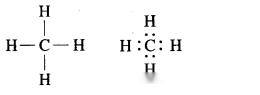
Draw an electron dot structure of the following molecules. (Without showing the circles) a. Methane.
Solution & Step-by-Step Answer:
block bg-white dark:bg-slate-900/80 border-l-4 border-emerald-500 rounded-r-xl p-5 my-3 shadow-xs border border-slate-200/60 dark:border-slate-800">
Solution & Step-by-Step Answer:
Molecular formula: CH4
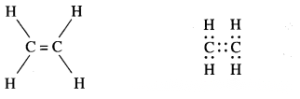
b. Ethene.
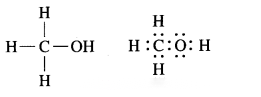
c. Methanol.
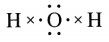
d. Water.
Question 3
Maharashtra Board Solution
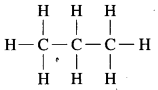
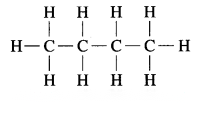
Draw all possible structural formulae of compounds from their molecular formula given below. a. C3H8 b. C4H10 c. C3H4
Solution & Step-by-Step Answer:
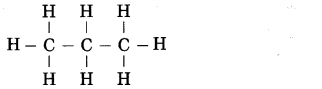
a. C3H8 Propane:
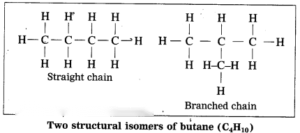
b. C4H10Butane:
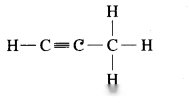
c. C3H4Propyne:
Question 4
Maharashtra Board Solution
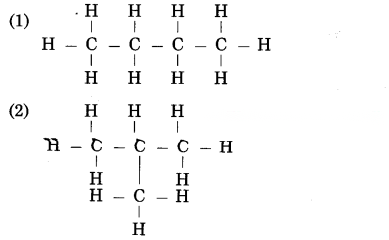
Explain the following terms with example. a. Structural isomerism.
Solution & Step-by-Step Answer:
The phenomenon in which compounds having different structural formulae have the same molecular formula is called structural isomerism. Butane is represented by two different compounds as their structural formulae are different. The first compound is a straight chain compound and the second compound is a branched chain compound. These two different structural formulae have the same molecular formula i.e. C4H10.
b. Covalent bond.
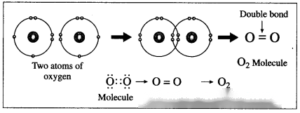
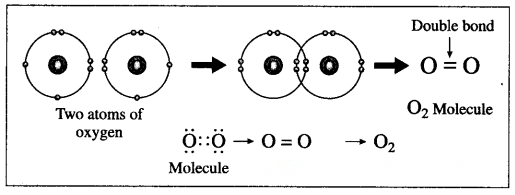
2. Formation of oxygen molecule:
c. Hetero atom in a carbon compound.
d. Functional group. e. Alkane.
f. Unsaturated hydrocarbons. g. Homopolymer. h. Monomer. i. Reduction. j. Oxidant.
Question 5
Maharashtra Board Solution
Write the IUPAC names of the following structural formulae. a. CH3 – CH2 – CH2 – CH3
Solution & Step-by-Step Answer:
The number of carbon atopic in the longest chain: 4 Parent alkane: Butane IUPAC name: n-Butane
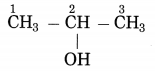
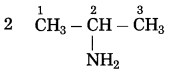
b. CH3– CHOH – CH3(Practice Activity Sheet – 3)
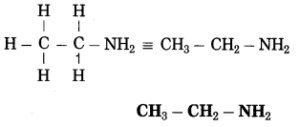
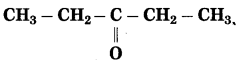
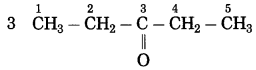
c. CH3– CH2– COOH (Practice Activity Sheet – 3) d. CH3– CH2– NH2 e. CH3– CHO f. CH3– CO – CH2– CH3
Question 6
Maharashtra Board Solution
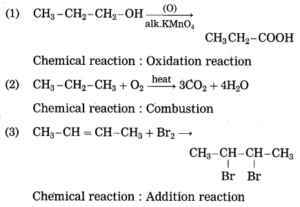
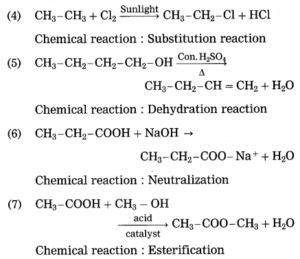
Identify the type of the following reaction of carbon compounds. 1. CH3 – CH2 – CH2 – OH + (O) → CH3 – CH2 – COOH 2. CH3 – CH2 – CH3 + O2 → 3CO2 + 4H2O 3. CH3 – CH = CH – CH3 + Br2 → CH3 – CHBr – CHBr – CH3 4. CH3 – CH3 + Cl2 → CH3 – CH2 – Cl + HCl 5. CH3 – CH2 – CH2 – CH2 – OH → CH3 – CH2 – CH = CH2 + H2O 6. CH3 – CH2 – COOH + NaOH → CH3 – CH2 – COONa+ + H2O 7. CH3 – COOH + CH3 – OH → CH3 – COO – CH3 + H2O
Solution & Step-by-Step Answer:
Question 7
Maharashtra Board Solution
Write the structural formulae for the following IUPAC names: a. Pent-2-one
Solution & Step-by-Step Answer:
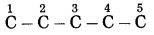
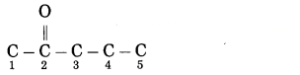
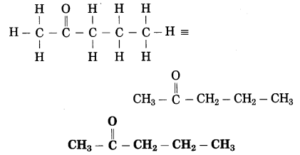
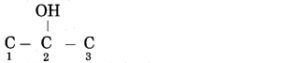
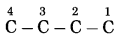
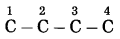
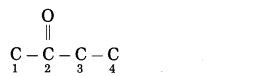
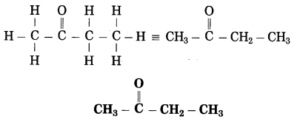
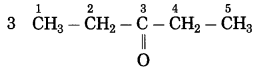
Pent-2-one. (1) Pent stands for 5 carbon atoms in a chain. Number the carbon atoms in a chain as 1, 2, 3,….. (2) ‘one’ stands for functional group ketone. The number assigned for the ketone group is 2. Show the ketone group at C2. (3) Now satisfy the valencies of each carbon atom
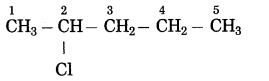
b. 2-Chlorobutane
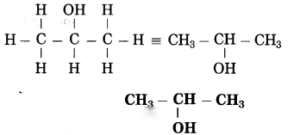
c. Propan-2-ol
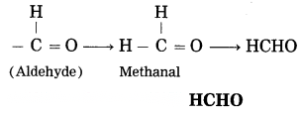
d. Methanal
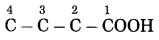
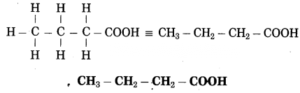
e. Butanoic acid
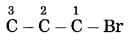
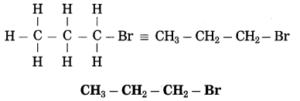
f. 1-Bromopropane.
g. Ethanamine
h. Butanone.
Question 8
Maharashtra Board Solution
a. What causes the existance of very large number of carbon compound?
Solution & Step-by-Step Answer:
(1) Carbon has a unique ability to form strong covalent bonds with other carbon atoms; this results in formation of big molecules. This property of carbon is called catenation power. The carbon compounds contain open chains or closed chains of carbon atoms. An open chain can be a straight chain or a branched chain. A closed chain is a ring structure. The covalent bond between two carbon atoms is strong and therefore stable. Carbon is bestowed with catenation power due to the strong and stable covalent bonds.
(2) One, two or three covalent bonds can bond together two carbon atoms. These bonds are called single covalent bond, double covalent bond and triple covalent bond respectively. Due to the ability of carbon atoms to form multiple bonds as well as single bonds, the number of carbon compounds increases. For example, there are three compounds, namely, ethane (CH3– CH3), ethene (CH2= CH2) and ethyne (CH = CH) which contain two carbon atoms. (3) Carbon being tetravalent, one carbon atom can form bonds with four other atoms (carbon or any other). This results in formation of many compounds. These compounds possess different properties as per the atoms to which carbon is bonded. For example, five different compounds are formed using one carbon atom and two monovalent elements hydrogen and chlorine: CH4, CH3Cl, CH2Cl2, CHCl3, CCl4. Similarly carbon atoms form covalent bonds with atoms of elements like O, N, S, halogen and P to form different types of carbon compounds in large number. (4) Isomerism is one more characteristic of carbon compound which is responsible for large number of carbon compounds. b. Saturated hydrocarbons are classified into three types. Write these names giving one example each.
c. Give any four functional groups containing oxygen as the heteroatom in it. write name and structural formula of one example each.
d. Give names of three functional groups containing three different heteroatoms. Write name and structural formula of one example each.
e. Give names of three natural polymers. write the place of their occurance and names of monomers from which they are formed. f. What is meant by vinegar and gasohol? What are their uses? g. what is a catalyst ? write any one reaction which is brought about by use of catalyst? Project: Can you recall? (Text Book Page No. 110)
Question 1
Maharashtra Board Solution
What are the types of compounds?
Solution & Step-by-Step Answer:
Organic and inorganic compounds are the two important types of compounds.
Question 2
Maharashtra Board Solution
Objects in everyday use such as foodstuff, fibres, paper, medicines, wood, fuels are made of various compounds. Which constituent elements are common in these compounds?
Solution & Step-by-Step Answer:
The constituent elements common in these compounds are carbon (C), hydrogen (H) and oxygen (O).
Question 3
Maharashtra Board Solution
To which group in the periodic table does the element carbon belongs? Write down the electronic configuration of carbon and deduce the valency of carbon.
Solution & Step-by-Step Answer:
The element carbon belongs to group 14 and its electronic configuration is 2, 4. The valency of carbon is 4.
Use your brain Power! (Text Book Page No. 115)
Question 1
Maharashtra Board Solution
The molecular formula of ethyne is C2H2. From this draw its structural formula and electron-dot structure.
Solution & Step-by-Step Answer:
Ethyne: Molecular formula: C2H2
Question 2
Maharashtra Board Solution
How many bonds have to be there in between the carbon atoms in ethyne so as to satisfy their tetra valency?
Solution & Step-by-Step Answer:
To satisfy their tetravalency, three double bonds have to be there in between two carbon atoms in ethyne.
Use your brain power! (Text Book Page No. 116)
Question 1
Maharashtra Board Solution
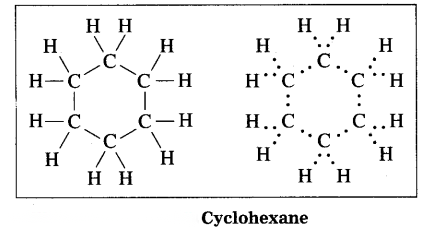
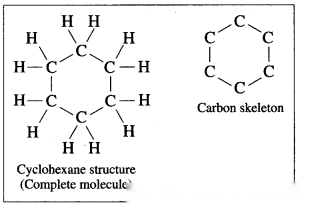
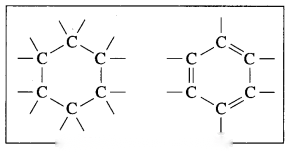
Draw the electron-dot structure of cyclohexane.
Solution & Step-by-Step Answer:
Cyclohexane: Molecular formula: C6H12
Use your brain power! (Text Book Page No. 112)
Question 1
Maharashtra Board Solution
Atomic number of chlorine is 17. What is the number of electrons in the valence shell of the chlorine?
Solution & Step-by-Step Answer:
There are seven electrons in the valence shell of the chlorine.
Question 2
Maharashtra Board Solution
Molecular formula of chlorine is Cl2. Draw electron-dot and line structure of a chlorine molecule.
Solution & Step-by-Step Answer:
Question 3
Maharashtra Board Solution
The molecular formula of water is H2O. Draw electron-dot and line structures for triatomic molecule. (Use dots for electron of oxygen atom and crosses for electrons of hydrogen atoms.)
Solution & Step-by-Step Answer:
Question 4
Maharashtra Board Solution
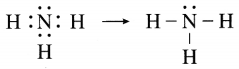
The molecular formula of ammonia is NH3. Draw electron-dot and line structures for ammonia molecule.
Solution & Step-by-Step Answer:
Question 5
Maharashtra Board Solution
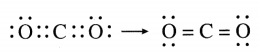
The molecular formula of carbon dioxide is CO2. Draw the electron-dot structure (without showing circle) and line structure for CO2.
Solution & Step-by-Step Answer:
Question 6
Maharashtra Board Solution
With which bond C atom in CO2 is bonded to each of the O atoms ?
Solution & Step-by-Step Answer:
In CO2, carbon atom is bonded to each of the O atoms by double bond.
Question 7
Maharashtra Board Solution
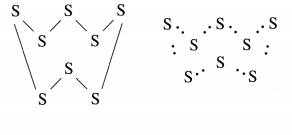
The molecular formula of sulfur is S8 in which eight sulphur atoms are bonded to each other to form one ring. Draw electron-dot structure for S8 without showing the circles.
Solution & Step-by-Step Answer:
The above S8 molecule of sulphur has crown shaped structure. One molecule of sulpur is made up of eight atoms of sulphur.
Use your brain power! (Text Book Page No. 113)
Question 1
Maharashtra Board Solution
Hydrogen peroxide decomposes of its own by the following reaction: 2H – O – O – H → 2H – O – H + O2 From this, what will be your inference about the strength O – O covalent bond ? Tell from the above example whether oxygen has catenation power or not.
Solution & Step-by-Step Answer:
In hydrogen peroxide (H2O2), the O – O covalent bond is not strong as oxygen has no catenation power.
Use your brain power! (Text Book Page No. 120)
Question 1
Maharashtra Board Solution
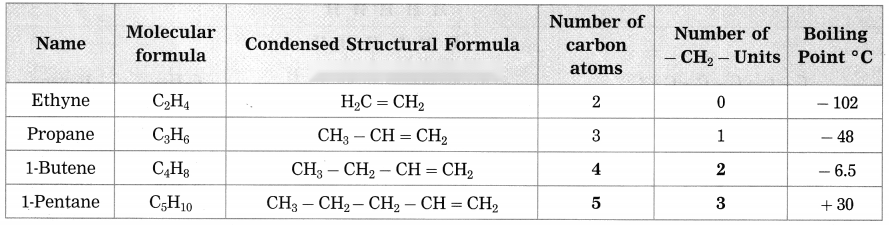
The above table shows the homologous series of alkenes. Inspect the molecular formulae of the members of this series. Do you find any relationship, in the number of carbon atoms and the number of hydrogen atoms in the molecular formulae?
Solution & Step-by-Step Answer:
In the above homologous series, if we observe the molecular formulae of alkenes then the number of carbon atoms are half the number of hydrogen atoms.
Question 2
Maharashtra Board Solution
If the number of carbon atoms in the molecular formulae of alkenes is denoted by ‘n’ what will be the number of hydrogen atoms?
Solution & Step-by-Step Answer:
If the number of carbon atoms in the molecular formulae of alkenes is denoted by ‘n’ then the number of hydrogen atoms would be 2n.
Question 3
Maharashtra Board Solution
What would be the general formula for the molecular formulae of the members of the homologous series of alkanes? What would be the value of ‘n’ for the first member of this series?
Solution & Step-by-Step Answer:
The general formula for the homologous series of alkane is CnH2n + 2. The value of ‘n’ for the first member of homologous series is 1. CnH2n+2 = C1H2 × 1 + 2 = CH4
Question 4
Maharashtra Board Solution
The general molecular formula for the homologous series of alkynes is CnH2n – 2. Write down the individual molecular formulae of the first, second and third members by substituting the values 2, 3 and 4 respectively for ‘n’ in this formula.
Solution & Step-by-Step Answer:
The general molecular formula for the homologous series of alkynes is CnH2n – 2 n = 2 C2H2 × 2 – 2 = C2H2 Ethyne n = 3 C3H2 × 3 – 2 = C3H4 Propyne n = 4 C4H2 × 4 – 2 = C4H6 Butyne
Question 5
Maharashtra Board Solution
Write down structural formulae of the first four members of the various homologous series formed by making use of the functional groups.
Solution & Step-by-Step Answer:
Question 6
Maharashtra Board Solution
General formula of the homologous series of alkanes is CnH2n + 2. Write down the molecular formula of the 8th and 12th member using this.
Solution & Step-by-Step Answer:
General formula of alkanes is CnH2n + 2 n = 8 C8H2 × 8 + 2 = C6H18 Octane n = 12 C12H2 × 12 + 2 = C12H26 Dodecane
Use your brain power! (Text Book Page No. 121)
Question 1
Maharashtra Board Solution
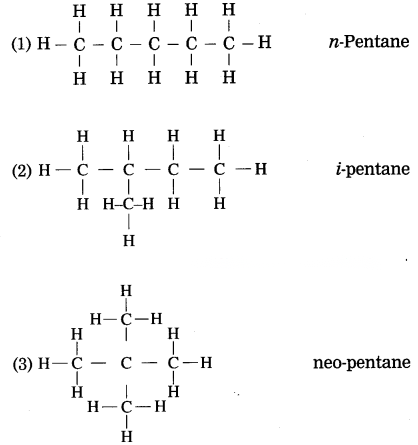
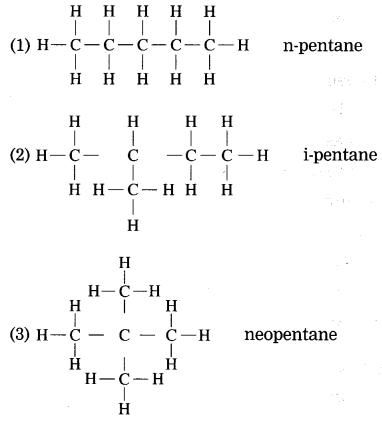
Draw three structural formulae having molecular formula C5H12. Give the names n-pentane, i-pentane and neo-pentane to the above structural formulae.
Solution & Step-by-Step Answer:
Question 2
Maharashtra Board Solution
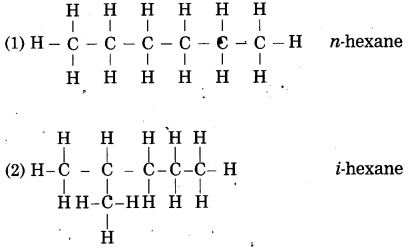
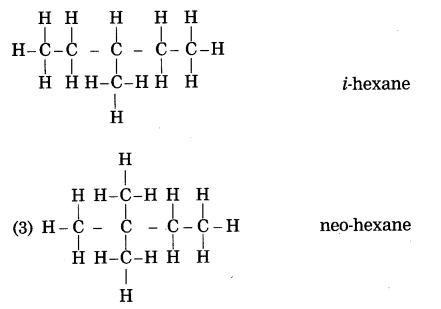
Draw all possible structural formulae having molecular formula C6H14. Give names to all the isomers.
Solution & Step-by-Step Answer:
Try This! (Text Book Page No. 124)
Question 1
Maharashtra Board Solution
Light a bunsen burner. Open and close the air hole at the bottom of the burner by means of the movable ring around it. When do you get yellow sooty flame? When do you get blue flame?
Solution & Step-by-Step Answer:
When the air hole at the bottom of the burner is open, sufficient oxygen is mixed gaseous fuel for complete combustion and a clean blue flame is obtained. When the air hole is partially blocked by means of the movable ring around it, the air supply is limited which results in incomplete combustion. Hence, yellow sooty flame is produced.
(Text Book Page No. 126)
Question 1
Maharashtra Board Solution
The names of four fatty acids separated from vegetable oils are given in the table. Identify the number of carbon – carbon double bonds from their structure and molecular formula from the below fatty acids which one when reacts with iodine will make the colour of iodine disappear.
Solution & Step-by-Step Answer:
Use your brain power! (Text Book Page No. 128)
Question 1
Maharashtra Board Solution
Explain by writing a reaction, what will happen when pieces of sodium metal are put in n-propyl alcohol.
Solution & Step-by-Step Answer:
n-Propyl alcohol reacts with pieces of sodium metal, sodium propoxide and hydrogen gas are obtained.
Question 2
Maharashtra Board Solution
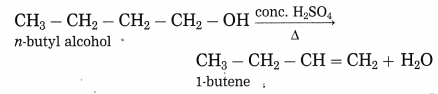
Explain by writing a reaction, which product will be formed on heating n-butyl alcohol with concentrated sulphuric acid.
Solution & Step-by-Step Answer:
When n-butyl alcohol is heated with concentrated sulphuric acid, one molecule of water is removed from its molecule to form 1-butene.
Use your brain power! (Text Book Page No. 129)
Question 1
Maharashtra Board Solution
Which one of ethanoic acid and hydrochloric acid is stronger?
Solution & Step-by-Step Answer:
Hydrochloric acid is stronger acid.
Question 2
Maharashtra Board Solution
Which indicator paper out of blue litmus paper and pH paper is useful to distinguish between ethanoic acid and hydrochloric acid ?
Solution & Step-by-Step Answer:
pH paper is useful to distinguish between ethanoic acid and hydrochloric acid.
Use your brain power! (Text Book Page No. 130)
Question 1
Maharashtra Board Solution
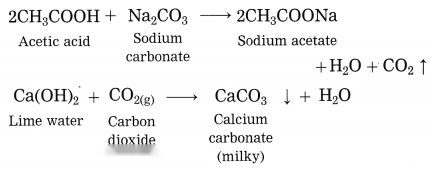
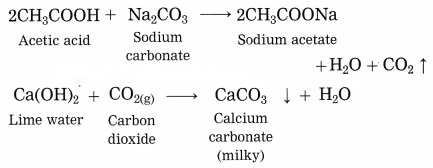
Explain why does the lime water turns milky in the reaction of acetic acid with sodium carbonate.
Solution & Step-by-Step Answer:
In the reaction of acetic acid with sodium carbonate, carbon dioxide gas is evolved which turns lime water milky resulting in the formation of insoluble calcium carbonate.
Question 2
Maharashtra Board Solution
Explain the reaction that would take place when a piece of sodium metal is dropped in ethanoic acid.
Solution & Step-by-Step Answer:
When a piece of sodium metal is dropped in ethanoic acid, sodium acetate and hydrogen gas is formed.
Question 3
Maharashtra Board Solution
Two test tubes contain two colourless liquids ethanol and ethanoic acid. Explain by writing reaction which chemical test you would perform to tell which substance is present in which test tube.
Solution & Step-by-Step Answer:
Ethanol does not react with sodium bicarbonate, while ethanoic acid reacts with sodium bicarbonate to form carbon dioxide gas.
Use your brain power! (Text Book Page No. 131)
Question 1
Maharashtra Board Solution
When fat is heated with sodium hydroxide solution, soap and glycerin are formed. Which functional groups might be present in fat and glycerin? What do you think?
Solution & Step-by-Step Answer:
The functional group carboxylic acid (-COOH) is present in fat whereas the functioned group hydroxyl group (-OH) is present in glycerin.
Can you tell? (Text Book Page No. 131)
Question 1
Maharashtra Board Solution
What are the chemical names of the nutrients that we get from the foodstuff, namely, cereals, pulses and meat?
Solution & Step-by-Step Answer:
The nutrients that we get from the foodstuff, namely cereals, pulses and meat are alpha amino acids.
Question 2
Maharashtra Board Solution
What are the chemical substances that make cloth, furniture and elastic objects?
Solution & Step-by-Step Answer:
The chemical substances that make cloth, furniture and elastic objects are cellulose and rubber.
Use your brain power! (Text Book Page No. 133)
Question 1
Maharashtra Board Solution
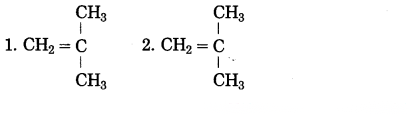
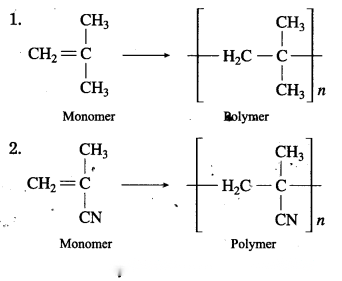
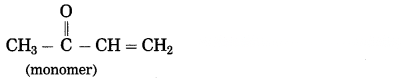
Structural formulae of some monomers are given below. Write the structural formula of the homopolymer formed from them.
Solution & Step-by-Step Answer:
Question 2
Maharashtra Board Solution
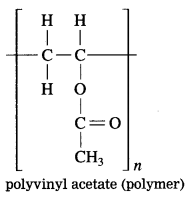
From the given structural formula of polyvinyl acetate, that is used in paints and glues, deduce the name and structural formula of the corresponding monomer.
Solution & Step-by-Step Answer:
(Text Book Page No. 133)
Question 1
Maharashtra Board Solution
Complete the following table by writing their Structural formulae and Molecular formulae.
Solution & Step-by-Step Answer:
(Answer is given directly in bold letters.)
Fill in the gaps in the table: (Text Book Page No. 119)
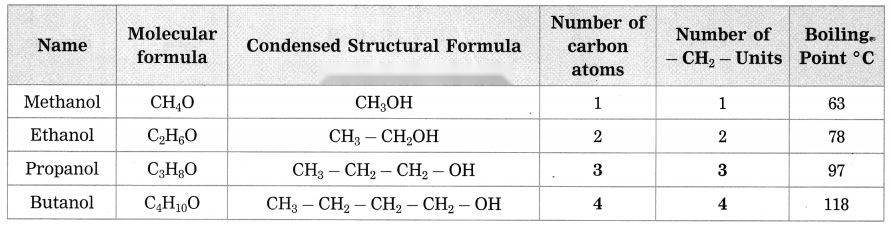
b. Homologous series of alcohol.
c. Homologous series of alkenes.
(Text Book Page No. 123)
Question 1
Maharashtra Board Solution
Complete the table by writing the IUPAC names in the third column. (Answer is directly given with underline.)
Solution & Step-by-Step Answer:
Use your brain power! (Text Book Page No. 119)
Question 1
Maharashtra Board Solution
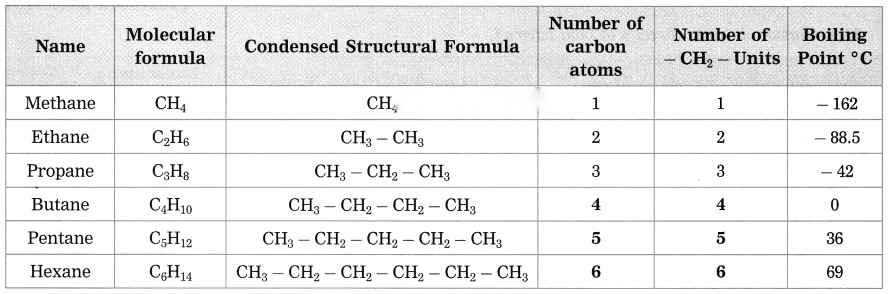
By how many -CH2– (methylene) units do the formulae of the first two members of homologous series of alkanes, methane (CH4) and ethane (C2H6) differ? Similarly, by how many -CH2– units do the neighbouring members ethane (C2H6) and propane (C3H8) differ from each other?
Solution & Step-by-Step Answer:
The first two members of homologous series of alkanes, methane (CH4) and ethane (C2H6) differed by one -CH2– unit. Similarly, ethane (C2H6) and propane (C3H8) differed by -CH2– unit.
Question 2
Maharashtra Board Solution
How many methylene units are extra in the formula of the fourth member than the third member of the homologous series of alcohols?
Solution & Step-by-Step Answer:
There is only one, methylene unit extra in the formula of the fourth member and the third member of the homologous series of alcohols.
Question 3
Maharashtra Board Solution
How many methylene units are less in the formula of the second member than the third member of the homologous series of alkenes?
Solution & Step-by-Step Answer:
There is only one methylene unit less in the formula of the second member of and the third member of the homologous series of alkenes.
Fill in the blanks and rewrite the completed statements:
Question 1
Maharashtra Board Solution
The organic compounds having double or triple bonds in them are termed as …………
Solution & Step-by-Step Answer:
The organic compounds having double or triple bonds in them are termed as unsaturated hydrocarbons.
Question 2
Maharashtra Board Solution
The general formula of alkane is ……………
Solution & Step-by-Step Answer:
The general formula of alkane is CnH2n + 2.
Question 3
Maharashtra Board Solution
The compounds of homologous series have the same ………….. group.
Solution & Step-by-Step Answer:
The compounds of homologous series have the same functional group.
Question 4
Maharashtra Board Solution
A double bond is formed between carbon atoms by ………… pairs of electrons.
Solution & Step-by-Step Answer:
A double bond is formed between carbon atoms by two pairs of electrons.
Question 5
Maharashtra Board Solution
The compounds having different structural formulae having the same molecular formula is called ……….
Solution & Step-by-Step Answer:
The compounds having different structural formulae having the same molecular formula is called structural isomerism.
Question 6
Maharashtra Board Solution
The functional group of ether is …………..
Solution & Step-by-Step Answer:
The functional group of ether is -O-.
Question 7
Maharashtra Board Solution
The general formula of alkene is …………
Solution & Step-by-Step Answer:
The general formula of alkene is CnH2n.
Question 8
Maharashtra Board Solution
The bond between two atoms of nitrogen is a ………… bond.
Solution & Step-by-Step Answer:
The bond between two atoms of nitrogen is a triple bond.
Question 9
Maharashtra Board Solution
Benzene ring is made up of ………….. carbon atoms.
Solution & Step-by-Step Answer:
Benzene ring is made up of six carbon atoms.
Question 10
Maharashtra Board Solution
Due to …………., vegetable oil is converted into vanaspati ghee.
Solution & Step-by-Step Answer:
Due to hydrogenation, vegetable oil is converted into vanatspati ghee.
Question 11
Maharashtra Board Solution
………….. control the heredity at molecular level.
Solution & Step-by-Step Answer:
Nucleic acids control the heredity at molecular level.
Question 12
Maharashtra Board Solution
The regular repetition of a small unit is called …………..
Solution & Step-by-Step Answer:
The regular repetition of a small unit is called polymer.
Question 13
Maharashtra Board Solution
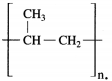
The structural formula of polypropylene is ……………….
Solution & Step-by-Step Answer:
The structural formula of polypropylene is
Question 14
Maharashtra Board Solution
The monomers of proteins are ……………..
Solution & Step-by-Step Answer:
The monomers of proteins are alpha amino acids.
Question 15
Maharashtra Board Solution
The monomer of cellulose is …………
Solution & Step-by-Step Answer:
The monomer of cellulose is glucose.
Question 16
Maharashtra Board Solution
…………. have sweet odour.
Solution & Step-by-Step Answer:
Esters have sweet odour.
Choose the correct alternative and rewrite the statement:
Question 1
Maharashtra Board Solution
The property of direct bonding between atoms of the same element to form a chain is called ……….. (a) catenation (b) isomerism (c) dehydration (d) polymerization
Solution & Step-by-Step Answer:
The property of direct bonding between atoms of the same element to form a chain is called catenation.
Question 2
Maharashtra Board Solution
The molecular weight of two adjacent members in homologous series of an alkane differ by ………. units. (a) 16 (b) 20 (c) 14 (d) 12
Solution & Step-by-Step Answer:
The molecular weight of two adjacent members in homologous series of an alkane differ by 14 units.
Question 3
Maharashtra Board Solution
Consecutive members of a homologous series differ by ………. group. (a) -CH (b) -CH2 (C) -CH3 (d) -CH4
Solution & Step-by-Step Answer:
Consecutive members of a homologous series differ by CH2 group.
Question 4
Maharashtra Board Solution
……….. is used to prepare carbon black. (a) Methane (b) Ethene (c) Propane (d) Butane
Solution & Step-by-Step Answer:
Methane is used to prepare carbon black.
Question 5
Maharashtra Board Solution
……….. is the general formula of alkene. (a) CnH2n (b) CnH2n + 2 (c) CnH2n – 2 (d) CnHn – 2
Solution & Step-by-Step Answer:
CnH2n is the general formula of alkene.
Question 6
Maharashtra Board Solution
The reaction of methane with chlorine in the presence of sunlight is called ……….. (a) pyrolysis (b) an elimination reaction (c) a substitution reaction (d) an addition reaction
Solution & Step-by-Step Answer:
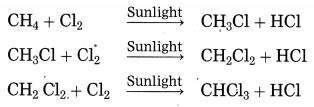
The reaction of methane with chlorine in the presence of sunlight is called a substitution reaction.
Question 7
Maharashtra Board Solution
The general formula for alkynes is …………. (a) CnH2n (b) CnH2n + 2 (c) CnH2n – 2 (d) CnH2n – 1
Solution & Step-by-Step Answer:
The general formula for alkynes is CnH2n – 2
Question 8
Maharashtra Board Solution
The reaction of ………… with ethanol is a fast reaction. (a) calcium (b) magnesium (c) sodium (d) aluminum
Solution & Step-by-Step Answer:
The reaction of sodium with ethanol is a fast reaction.
Question 9
Maharashtra Board Solution
Ethylene has …………. bond between two carbon atoms. (a) a single (b) a double (c) a triple (d) an ionic
Solution & Step-by-Step Answer:
Ethylene has a double bond between two carbon atoms.
Question 10
Maharashtra Board Solution
The saturated hydrocarbons are those in which carbon atom are linked by …………. (a) a single bond (b) a double bond (c) a triple bond (d) an ionic bond
Solution & Step-by-Step Answer:
The saturated hydrocarbons are those in which carbon atom are linked by a single bond.
Question 11
Maharashtra Board Solution
C7H16 is …………. (a) hexane (b) octane (c) methane (d) heptane
Solution & Step-by-Step Answer:
C7H16 is heptane.
Question 12
Maharashtra Board Solution
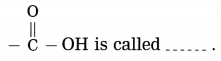
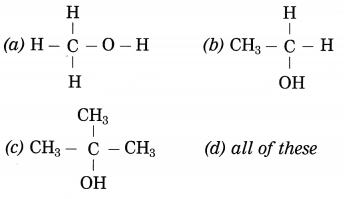
(a) carboxylic acid group (b) aldehyde group (c) ketonic group (d) alcohol group
Solution & Step-by-Step Answer:
(a) carboxylic acid group
Question 13
Maharashtra Board Solution
The possible isomers for C5H12 are …………… (a) 2 (b) 4 (c) 1 (d) 3
Solution & Step-by-Step Answer:
The possible isomers for C5H12 are 3.
Question 14
Maharashtra Board Solution
………. contains alcoholic functional group.
Solution & Step-by-Step Answer:
(d) all of these
Question 15
Maharashtra Board Solution
Oxygen molecule has ………… bond between two oxygen atoms. (a) a double (b) a single (c) a triple (d) an ionic
Solution & Step-by-Step Answer:
Oxygen molecule has a double bond between two oxygen atoms.
Question 16
Maharashtra Board Solution
Some acetic acid is treated with solid NaHCO3. The resulting solution will be ……….. (a) colourless (b) blue (c) green (d) yellow
Solution & Step-by-Step Answer:
Some acetic acid is treated with solid NaHCO3. The resulting solution will be colourless.
Question 17
Maharashtra Board Solution
Ethanoic acid has a ……… odour. (a) rotten eggs (b) pungent (c) mild (d) vinegar-like
Solution & Step-by-Step Answer:
Ethanoic acid has a vinegar-like odour.
Question 18
Maharashtra Board Solution
Acetic acid ……….. (a) turns red litmus blue (b) has pungent odour (c) is red in colour (d) is odourless
Solution & Step-by-Step Answer:
Acetic acid has pungent odour.
Question 19
Maharashtra Board Solution
When acetic acid reacts with sodium metal ……….. gas is formed. (a) oxygen (b) hydrogen (c) chlorine (d) nitrogen
Solution & Step-by-Step Answer:
When acetic acid reacts with sodium metal hydrogen gas is formed.
Question 20
Maharashtra Board Solution
The molecular formula of acetic acid (ethanoic acid) is ………… (a) HCOOH (b) CH3COOH (c) C2H5COOH (d) C3H7COOH
Solution & Step-by-Step Answer:
The molecular formula of acetic acid (ethanoic acid) is CH3COOH.
Question 21
Maharashtra Board Solution
When sodium bicarbonate solution is added to dilute acetic acid ………… (a) a gas is evolved (b) a solid settles at the bottom (c) the mixture becomes warm (d) the colour of the mixture becomes yellow
Solution & Step-by-Step Answer:
When sodium bicarbonate solution is added to dilute acetic acid a gas-is evolved.
Question 22
Maharashtra Board Solution
2 ml of ethanoic acid was taken in each of test tubes A, B, C and 2 ml, 4 ml, 6 ml of water was added respectively to them. A clear solution is obtained in ……….. (a) test tube A (b) test tube B (c) test tube C (d) all the test tubes
Solution & Step-by-Step Answer:
2 ml of ethanoic acid was taken in each of test tubes A, B, C and 2 ml, 4 ml, 6 ml of water was added respectively to them. A clear solution is obtained in all the test tubes.
Question 23
Maharashtra Board Solution
In the presence of acid catalyst, ethanoic acid reacts with ethanol and ……….. ester is produced. (a) ethanol (b) ethanoic (c) ethyl ethanoate (d) ethyl ethanol (Practice Activity Sheet – 1)
Solution & Step-by-Step Answer:
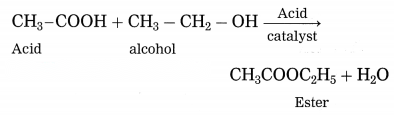
In the presence of acid catalyst, ethanoic acid reacts with ethanol and ethyl ethanoate ester is produced.
Question 24
Maharashtra Board Solution
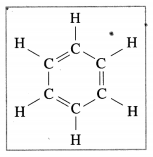
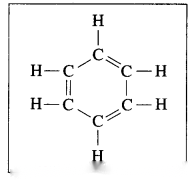
The following structural formula belongs to which carbon compound? (a) Camphor (b) Benzene (c) Starch (d) Glucose (Practical activity sheet- 2)
Solution & Step-by-Step Answer:
(b) Benzene
Question 25
Maharashtra Board Solution
What type of reaction is shown below? (a) Addition (b) Substitution (c) Decomposition (d) Reduction (Practice Activity Sheet – 3)
Solution & Step-by-Step Answer:
(b) substitution
Question 26
Maharashtra Board Solution
The carbon compound is used in daily life is ……….. (a) edible oil (b) salt (c) carbon dioxide (d) baking soda (March 2019)
Solution & Step-by-Step Answer:
The carbon compound is used in daily life is edible oil
State whether the following statements are true or false. (If a statement is false, correct it and rewrite it.):
Question 1
Maharashtra Board Solution
Generally the melting and boiling points of carbon compounds are high.
Solution & Step-by-Step Answer:
False. (Generally the melting and boiling points of carbon compounds are low.)
Question 2
Maharashtra Board Solution
Till now the number of known carbon compounds is about 10 million.
Solution & Step-by-Step Answer:
True.
Question 3
Maharashtra Board Solution
Unsaturated hydrocarbons are less reactive than saturated hydrocarbons.
Solution & Step-by-Step Answer:
False. (Unsatured hydrocarbons are more reactive than saturated hydrocarbons.)
Question 4
Maharashtra Board Solution
Benzene is an aromatic compound.
Solution & Step-by-Step Answer:
True.
Question 5
Maharashtra Board Solution
The carbon-carbon double and triple bonds are also recognised as functional groups.
Solution & Step-by-Step Answer:
True.
Question 6
Maharashtra Board Solution
The general formula of alkyne is CnH2n.
Solution & Step-by-Step Answer:
False. (The general formula of alkyne is CnH2n – 2)
Question 7
Maharashtra Board Solution
Naphthalene burns with a yellow flame.
Solution & Step-by-Step Answer:
True.
Question 8
Maharashtra Board Solution
When vegetable oil and tincture iodine react, the color of iodine does not change.
Solution & Step-by-Step Answer:
False. (When vegetable oil and tincture iodine react, the colour of iodine changes.)
Question 9
Maharashtra Board Solution
Saturated fats are healthy.
Solution & Step-by-Step Answer:
False. (Saturated fats are harmful to health.)
Question 10
Maharashtra Board Solution
Aqueous solution of ethanol is found to be neutral.
Solution & Step-by-Step Answer:
True.
Question 11
Maharashtra Board Solution
Denatured ethanol is used as industrial solvent.
Solution & Step-by-Step Answer:
True.
Question 12
Maharashtra Board Solution
Vinegar is a 12-15 % aqueous solution of acetic acid.
Solution & Step-by-Step Answer:
False. (Vinegar is a 5-8 % aqueous solution of acetic acid.)
Question 13
Maharashtra Board Solution
The functional group of ethanoic acid is a carboxylic group.
Solution & Step-by-Step Answer:
True.
Question 14
Maharashtra Board Solution
Sodium hydroxide is used in the preparation of soap from fats and oils.
Solution & Step-by-Step Answer:
True.
Question 15
Maharashtra Board Solution
Rubber is a manmade macromolecule.
Solution & Step-by-Step Answer:
False. (Rubber is a natural macromolecule.)
Question 16
Maharashtra Board Solution
Polyvinyl chloride is used in the manufacture of P.V.C. pipes and bags.
Solution & Step-by-Step Answer:
True.
Question 17
Maharashtra Board Solution
Polyethylene is a homopolymer.
Solution & Step-by-Step Answer:
True.
Question 18
Maharashtra Board Solution
The chemical bonds in carbon compounds do not produce ions.
Solution & Step-by-Step Answer:
True.
Find the odd one out:
Question 1
Maharashtra Board Solution
Propane, methane, ethene, pentane
Solution & Step-by-Step Answer:
Ethene. (Others are saturated hydrocarbons.)
Question 2
Maharashtra Board Solution
Methane, butane, benzene, sodium chloride
Solution & Step-by-Step Answer:
Sodium chloride. (Others are organic compounds.)
Question 3
Maharashtra Board Solution
CH4, C2H6, C3H8, CaCO3
Solution & Step-by-Step Answer:
CaCO3. (Others are organic compounds.)
Question 4
Maharashtra Board Solution
C2H2, C3H8, C2H6, CH4
Solution & Step-by-Step Answer:
C2H2. (Others are saturated hydrocarbons.)
Question 5
Maharashtra Board Solution
C2H4, C4H10, C3H8, CH4
Solution & Step-by-Step Answer:
C2H4. (Others are saturated hydrocarbons.)
Question 6
Maharashtra Board Solution
Polyethylene, Polysaccharide, Polystyrene, Polypropylene
Solution & Step-by-Step Answer:
Polysaccharide (Others are manmade polymers.)
Question 7
Maharashtra Board Solution
-NH2, -COOH,-SO4, -Br
Solution & Step-by-Step Answer:
-SO4 (Others are functional groups.)
Question 8
Maharashtra Board Solution
Methane, Ethane, Propene, Propane, Butane
Solution & Step-by-Step Answer:
Propene (Others are members of homologous series of alkanes.)
Match the columns:
Question 1
Maharashtra Board Solution
|



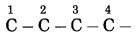
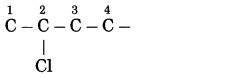
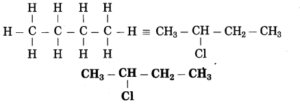
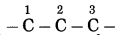







Column I | Column II |
(1) CH4 | (a) CH2= CH2 |
(2) Ethane | (b) CnH2n –2 |
(3) Alkene | (c) Methane |
(4) Alkyne | (d) C2H6 |
(e) C3H8 |
(1) CH4– Methane
(2) Ethane – C2H6
(3) Alkene – CH2= CH2
(4) Alkyne – CnH2n –2.
Question 2
Maharashtra Board Solution
Solution & Step-by-Step Answer:
(1) Aromatic hydrocarbon – Benzene
(2) Alkane – Saturated hydrocarbon (3) Alkyne – Propyne (4) Alkene – CnH2n.
Question 3
Maharashtra Board Solution
|
Column I | Column II |
(1) Cyclohexane | (a) CH3COOH |
(2) Methanol | (b) CH3Cl |
(3) Acetaldehyde | (c) CH2Cl2 |
(4) Ethanoic acid | (d) CH3OH |
(e) C6H12 | |
(f) CH3CHO |
(1) Cyclohexane – C6H12
(2) Methanol – CH3OH
(3) Acetaldehyde – CH3CHO
(4) Ethanoic acid – CH3COOH.
Question 4
Maharashtra Board Solution
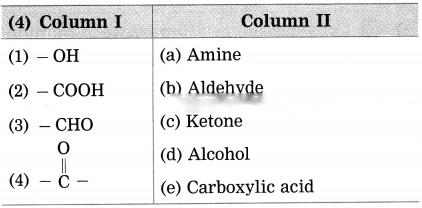
Solution & Step-by-Step Answer:
(1) (-OH) – Alcohol (2) (-COOH) – Carboxylic acid (3) (-CHO) – Aldehyde
Question 5
Maharashtra Board Solution
|
Column I | Column II |
(1) Ethyne | (a) C2H6 |
(2) Ethene | (b) C2H2 |
(3) Ethane | (c) C3H6 |
(4) Propyne | (d) C2H4 |
(e) C3H4 |
(1) Ethyne – C2H2
(2) Ethene – C2H4
(3) Ethane – C2H6
(4) Propyne – C3H4.
Question 6
Maharashtra Board Solution
Solution & Step-by-Step Answer:
(1) Cellulose – Wood
(2) R.N.A. – Chromosomes of plants (3) Polyacrylonitrile – Blankets (4) Polyvinyl chloride – P.V.C. pipes, bags. Consider the relation between Column I and II. Fill in Column IV to match Column III.
Answer: Define the following:
Question 1
Maharashtra Board Solution
Define Alkane
Solution & Step-by-Step Answer:
Alkane: In hydrocarbon, the four valencies of carbon atom are satisfied only by the single bonds, such compounds are called alkane. Example: Methane (CH4), Ethane (C2H6)
Question 2
Maharashtra Board Solution
Define Alkene.
Solution & Step-by-Step Answer:
Alkene: The unsaturated hydrocarbons containing a carbon-carbon double bond are called alkenes. Example : Ethene (CH2 = CH2)
Question 3
Maharashtra Board Solution
Define Alkyne.
Solution & Step-by-Step Answer:
Alkyne: The unsaturated hydrocarbons containing a carbon-carbon triple bond are called alkynes. Example: Ethyne C2H2 (CH ≡ CH).
Question 4
Maharashtra Board Solution
Define Addition reaction.
Solution & Step-by-Step Answer:
Addition reaction: When a carbon compound combines with another compound to form a product that contains all the atoms in both the reactants; it is called an addition reaction.
Question 5
Maharashtra Board Solution
Define Substitution reaction.
Solution & Step-by-Step Answer:
Substitution reaction: The reaction in which the place of one type of atom/group in a reactant is taken by another atom/group of atoms, is called substitution reaction.
Question 6
Maharashtra Board Solution
Define Esterification.
Solution & Step-by-Step Answer:
Esterification: A carboxylic acid reacts with an alcohol in presence of an acid catalyst, an ester is formed. The reaction is known as esterification.
Question 7
Maharashtra Board Solution
Define Saponification.
Solution & Step-by-Step Answer:
Saponification: When an ester reacts with the alkali, i.e. sodium hydroxide, the corresponding alcohol and sodium salt of carboxylic acid are obtained. This reaction is called saponification reaction. It is used in the preparation of soap. Ester + Sodium hydroxide → Sodium salt of carboxylic acid + Alcohol.
Question 8
Maharashtra Board Solution
Define Polymerization.
Solution & Step-by-Step Answer:
Polymerization: The reaction by which monomer molecules are converted into a polymer is called polymerization.
Name the following:
Question 1
Maharashtra Board Solution
The higher homologue of hexane.
Solution & Step-by-Step Answer:
Keptane.
Question 2
Maharashtra Board Solution
The number of double bonds in benzene.
Solution & Step-by-Step Answer:
Three.
Question 3
Maharashtra Board Solution
The functional group in ether and halogen.
Solution & Step-by-Step Answer:
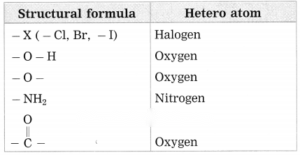
Functional groups: Ether: – O – Halogen: – X (-Cl, -Br, -I).
Question 4
Maharashtra Board Solution
Polymer of tetrafluoroethylene.
Solution & Step-by-Step Answer:
Teflon.
Question 5
Maharashtra Board Solution
The monomer of polysaccharide.
Solution & Step-by-Step Answer:
Glucose.
Question 6
Maharashtra Board Solution
The Polymer of nucleotide.
Solution & Step-by-Step Answer:
D.N.A./R.N.A.
Question 7
Maharashtra Board Solution
The Monomer of rubber.
Solution & Step-by-Step Answer:
Isoprene.
Question 8
Maharashtra Board Solution
Two oxidising compounds.
Solution & Step-by-Step Answer:
Potassium permanganate, Potassium dichromate.
Question 9
Maharashtra Board Solution
IUPAC name of sodium acetate.
Solution & Step-by-Step Answer:
Sodium ethanoate.
Question 10
Maharashtra Board Solution
The main component of natural gas.
Solution & Step-by-Step Answer:
Methane.
Question 11
Maharashtra Board Solution
Two isomers of butane.
Solution & Step-by-Step Answer:
n-butane and i-butane.
Question 12
Maharashtra Board Solution
A nomenclature system based on the structure of the compounds and it was accepted all over the world.
Solution & Step-by-Step Answer:
International Union of Pure and Applied Chemistry (IUPAC).
Answer the following questions in one sentence each:
Question 1
Maharashtra Board Solution
State the atomic number and electronic configuration of carbon.
Solution & Step-by-Step Answer:
The atomic number of carbon is 6 and the electronic configuration of carbon is (2, 4).
Question 2
Maharashtra Board Solution
State number of electrons in the outermost orbit of carbon and valency of carbon.
Solution & Step-by-Step Answer:
Four electrons are present in the outermost orbit of carbon and the valency of carbon is 4.
Question 3
Maharashtra Board Solution
What are hydrocarbons? Give one example.
Solution & Step-by-Step Answer:
The compounds containing only carbon and hydrogen are called hydrocarbons. These compounds are known as organic compounds. E.g. Methane, Ethane.
Question 4
Maharashtra Board Solution
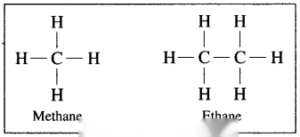
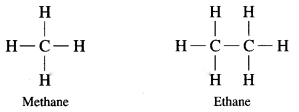
What is the molecular formula and structural of methane?
Solution & Step-by-Step Answer:
The molecular formula of methane is CH4.
Question 5
Maharashtra Board Solution
How many atoms of carbon and hydrogen are present in methane?
Solution & Step-by-Step Answer:
The molecule of methane has one carbon atom and four hydrogen atoms.
Question 6
Maharashtra Board Solution
State the general formula of alkane.
Solution & Step-by-Step Answer:
The general formula of an alkane is CnH2n + 2.
Question 7
Maharashtra Board Solution
Give two examples of alkanes.
Solution & Step-by-Step Answer:
Methane (CH4) and ethane (C2H6) are alkanes.
Question 8
Maharashtra Board Solution
Give two examples of alkenes.
Solution & Step-by-Step Answer:
Ethene (CH2 = CH2) and propene (CH3 – CH = CH2) are alkenes.
Question 9
Maharashtra Board Solution
Give two examples of alkynes.
Solution & Step-by-Step Answer:
Ethyne (HC ≡ CH) and propyne (CH3 – C ≡ CH) are alkynes.
Question 10
Maharashtra Board Solution
Write the name and molecular formula of a higher homologue of propane.
Solution & Step-by-Step Answer:
Butane (C4H10) is a higher homologue of propane.
Question 11
Maharashtra Board Solution
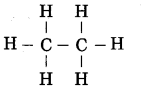
Write the structure and molecular formula of ethane.
Solution & Step-by-Step Answer:
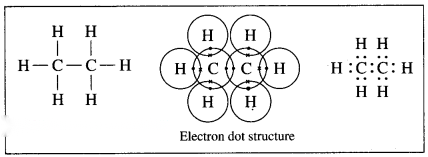
Structure of ethane: Molecular formula of ethane: C2H6
Question 12
Maharashtra Board Solution
What is meant by catenation power?
Solution & Step-by-Step Answer:
Carbon has a unique ability to form strong covalent bonds with other carbon atoms, this result in formation of big molecules. This property of carbon is called catenation power.
Question 13
Maharashtra Board Solution
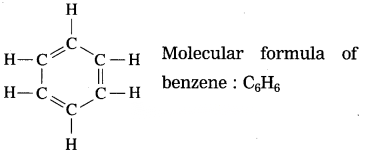
State the structural and molecular formula of benzene.
Solution & Step-by-Step Answer:
Question 14
Maharashtra Board Solution
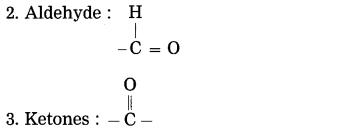
Which functional groups are present in aldehyde and ketone?
Solution & Step-by-Step Answer:
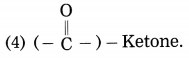
The functional group -CHO is present in aldehyde and the functional group is present in ketone.
Question 15
Maharashtra Board Solution
Which functional group is present in
Solution & Step-by-Step Answer:
Question 16
Maharashtra Board Solution
Compare: The proportions of carbon atoms in ethanol (C2H5OH) and naphthalene (C10H8).
Solution & Step-by-Step Answer:
Ethanol contains two carbon atoms while naphthalene contains 10 carbon atoms. Ethanol is a saturated hydrocarbon and naphthalene is an unsaturated hydrocarbon.
Question 17
Maharashtra Board Solution
What are the products of combustion of methane?
Solution & Step-by-Step Answer:
Carbon dioxide (CO2) and water (H2O) are the products of combustion of methane.
Question 18
Maharashtra Board Solution
Which gas is evolved when ethanol reacts with sodium?
Solution & Step-by-Step Answer:
Hydrogen gas (H2) is evolved when ethanol reacts with sodium.
Question 19
Maharashtra Board Solution
Compare: How is the transformation of ethanol into ethanoic acid on oxidation reaction?
Solution & Step-by-Step Answer:
The transformation of ethanol into ethanoic acid is an oxidation process, in which ethanol accepts oxygen.
Question 20
Maharashtra Board Solution
Complete the following:
Solution & Step-by-Step Answer:
Question 21
Maharashtra Board Solution
Which of the following hydrocarbons undergo addition reactions: C2H6, C3H8, C2H4, C3H8?
Solution & Step-by-Step Answer:
C2H4 (ethene) and C3H6 (propene) undergo addition reactions.
Question 22
Maharashtra Board Solution
How many covalent bonds are there in a molecule of cyclohexane?
Solution & Step-by-Step Answer:
A molecule of cyclohexane contains 18 covalent bonds.
Question 23
Maharashtra Board Solution
Give the IUPAC name for CH3COOH.
Solution & Step-by-Step Answer:
The IUPAC name for CH3COOH is ethanoic acid.
Question 24
Maharashtra Board Solution
Write the IUPAC name of CH3COONa.
Solution & Step-by-Step Answer:
IUPAC name of CH3COONa is sodium ethanoate.
Question 25
Maharashtra Board Solution
What is meant by denatured alcohol?
Solution & Step-by-Step Answer:
Ethanol is the important commercial solvent. To prevent the misuse of this solvent, it is mixed with the poisonous methanol. Such ethanol is called denatured spirit.
Question 26
Maharashtra Board Solution
What is meant by glacial acetic acid ?
Solution & Step-by-Step Answer:
The melting point of pure acetic acid is 17 °C. Therefore, during winter in old countries acetic acid freezes at room temperature itself and looks like ice. Therefore it is named glacial acetic acid.
Question 26
Maharashtra Board Solution
Which useful components of hydro¬carbon are obtained by fractional distillation of crude oil?
Solution & Step-by-Step Answer:
Various useful components of hydrocarbon such as CNG, LPG, petrol (gasoline), rockel, diesel, engine oil, lubricant, etc. are obtained by separation of crude oil using fractional distillation.
Question 28
Maharashtra Board Solution
Which functional groups are present in ester and amine?
Solution & Step-by-Step Answer:
Ester: -COO- Amine: -NH2–
Question 29
Maharashtra Board Solution
Give two examples of natural macromolecules.
Solution & Step-by-Step Answer:
Examples: Polysaccharide, protein and nucleic acid.
Question 30
Maharashtra Board Solution
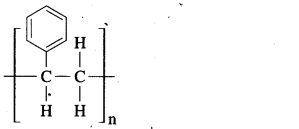
Write the structure of polystyrene and give its uses.
Solution & Step-by-Step Answer:
Structure: Polystyrene is used to make thermocoal articles.
Question 31
Maharashtra Board Solution
Write the name and the structure of monomer of polyacrylonitrile.
Solution & Step-by-Step Answer:
The name and structure of monomer: Acrylonitrile CH2 = CH – CN
Question 32
Maharashtra Board Solution
Write the name and the structure of monomer of teflon and its uses.
Solution & Step-by-Step Answer:
The name and structure of monomer: Tetrafluro ethylene CF2 = CF2 Teflon is used to make nonstick cookware.
Question 33
Maharashtra Board Solution
What is meant by copolymers?
Solution & Step-by-Step Answer:
The polymers formed from two or more monomers are called copolymers. Examples: Poly ethylene terephthalate.
Answer the following questions:
Question 1
Maharashtra Board Solution
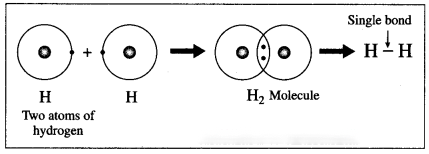
How is hydrogen molecule formed?
Solution & Step-by-Step Answer:
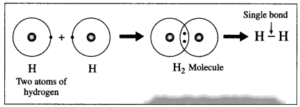
The atomic number of hydrogen is 1, its atom contains 1 electron in K shell. It requires one more electron to complete the K shell and attain the configuration of helium (He). To meet this requirement two hydrogen atoms share their electrons with each other to form H2 molecule. One covalent bond, i.e. a single bond is formed between two hydrogen atoms by sharing of two electrons.
Question 2
Maharashtra Board Solution
Describe the formation of oxygen molecule (O2).
Solution & Step-by-Step Answer:
(1) The atomic number of oxygen is 8. The electronic configuration of oxygen is (2, 6). Oxygen has 6 electrons in the outermost shell. (2) It requires 2 electrons to complete the L shell and attain the configuration of neon (Ne). (3) Each oxygen atom shares its valence electron with the valence electron of another oxygen atom to give two shared pairs of electrons which results in the formation of oxygen molecule. (4) Thus, two electron pairs are shared between two oxygen atoms, forming double covalent bond (=).
Question 3
Maharashtra Board Solution
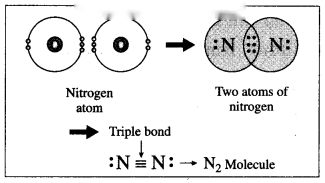
Describe the formation of nitrogen molecule.
Solution & Step-by-Step Answer:
(1) The atomic number of nitrogen is 7. The electronic configuration of nitrogen is (2, 5). Nitrogen has 5 electrons in the outermost shell. (2) It requires three more electrons to complete the L shell and attain the configuration of neon (Ne). (3) Two nitrogen atoms come close together and share three pairs of electrons with each other, resulting in the formation of a triple bond. (4) Thus, two nitrogen atoms are bound with a triple bond (=) to form a nitrogen molecule.
Question 4
Maharashtra Board Solution
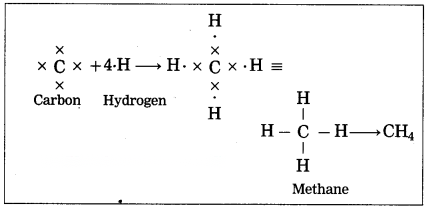
How is the methane molecule formed?
Solution & Step-by-Step Answer:
(1) The electronic configuration of carbon is (2, 4). Carbon has four electrons in the outermost shell, hence it is tetravalent. (2) The electronic configuration of hydrogen is 1, hence it is monovalent. (3) Carbon needs four electrons to complete the L shell and attain the configuration of neon (Ne). (4) Four atoms of hydrogen share 1 electron each with 4 electrons of carbon. (5) A single covalent bond is formed by sharing of two electrons. Thus, the methane molecule contains four single bonds between the carbon and hydrogen atoms.
Question 5
Maharashtra Board Solution
State the various compounds and its formulae formed by a single atom of carbon with monovalent hydrogen and chlorine.
Solution & Step-by-Step Answer:
Question 6
Maharashtra Board Solution
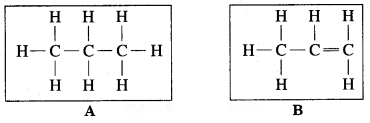
Observe the straight chain hydrocarbons given below and answer the following questions: (i) Which of the straight chain compounds from A and B is saturated and unsaturated straight chains? (ii) Name these straight chains. (iii) Write their chemical formulae and number of -CH2 units. (Practice Activity Sheet – 2)
Solution & Step-by-Step Answer:
(i) A is a saturated hydrocarbon, B is an unsaturated hydrocarbon. (ii) A = Propane, B = Propene (iii) The chemical formula of A = C3H8 and number of -CH2 units are 3. The chemical formula of B = C3H6 and number of -CH2 unit is 1.
Question 7
Maharashtra Board Solution
Draw electron-dot and line structure of an ethane molecule.
Solution & Step-by-Step Answer:
The molecular formula of ethane is C2H6.
Question 8
Maharashtra Board Solution
The molecular formula of propane is C3H8. From this draw its structural formula. (Practice Activity Sheet – 3)
Solution & Step-by-Step Answer:
The structural formula of propane:
Question 9
Maharashtra Board Solution
Draw the structure and carbon skeleton for cyclohexane.
Solution & Step-by-Step Answer:
Question 10
Maharashtra Board Solution
Classify into saturated and unsaturated hydrocarbons: (1) Methane (2) Ethene (3) Ethane (4) Ethyne (5) Propene (6) Propyne (7) Butane (8) Cyclohexene (9) Cyclopentane (10) Heptane.
Solution & Step-by-Step Answer:
(i) Saturated hydrocarbons: (1) Methane (2) Ethane (3) Butane (4) Cyclopentane (5) Heptane. (ii) Unsaturated hydrocarbons: (1) Ethene (2) Ethyne (3) Propene (4) Propyne (5) Cyclohexene.
Question 11
Maharashtra Board Solution
Classify into alkanes, alkenes and alkynes: (1) Ethane (2) Ethene (3) Methane (4) Propene (5) Ethyne (6) Propyne (7) Butane (8) Pentane.
Solution & Step-by-Step Answer:
Alkanes: (1) Ethane (2) Methane (3) Butane. (4) Pentane Alkenes: (1) Ethene (2) Propene Alkynes: (1) Ethyne (2) Propyne
Question 12
Maharashtra Board Solution
Classify into straight chain carbon compounds, branched chain carbon compounds and ring carbon compounds: (1) Propene (2) Butane (3) Iso-butane (4) Cyclopentane (5) Benzene (6) Isobutylene.
Solution & Step-by-Step Answer:
Straight chain carbon compounds:
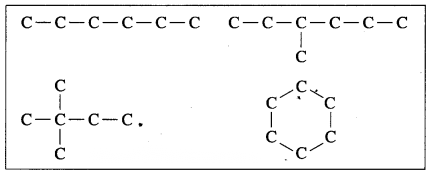
Branched chain carbon compounds: Ring carbon compounds:
Question 13
Maharashtra Board Solution
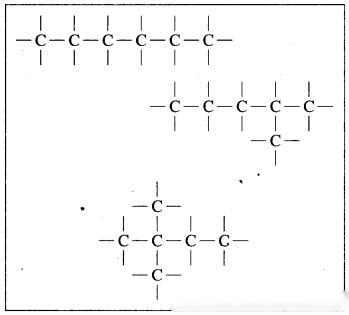
Draw chain and ring structures of organic compound having six carbon atoms in it.
Solution & Step-by-Step Answer:
Chain structures of an organic compound having six carbon atoms: Ring structures of an organic compound having six carbon atoms:
Question 14
Maharashtra Board Solution
Explain the structure of benzene.
Solution & Step-by-Step Answer:
The molecular formula of benzene is C6H6. It is a cyclic unsaturated hydrocarbon. Benzene ring is made of six carbon atoms. In benzene, each carbon atom is linked to two other carbon atoms, on one side by a single bond and on the other side by a double bond, i.e. three alternate single bonds and double bonds in the six membered ring structure of benzene. The compound having this characteristic unit in their structure are called aromatic compounds.
Question 15
Maharashtra Board Solution
Draw the structures of isomers of pentane (C5H12).
Solution & Step-by-Step Answer:
Question 16
Maharashtra Board Solution
Recognize the carbon chain type for each of the following: (Practice Activity Sheet – 1)
Solution & Step-by-Step Answer:
In the reaction of acetic acid with sodium carbonate, carbon dioxide gas is evolved which turns lime water milky resulting in the formation of insoluble calcium carbonate.
Question 17
Maharashtra Board Solution
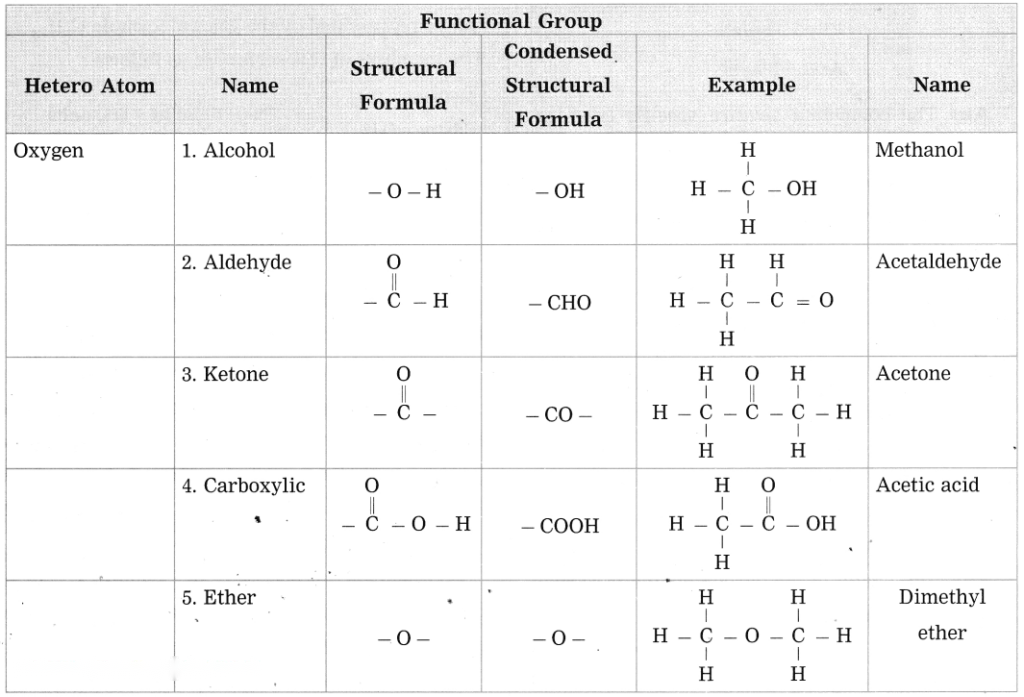
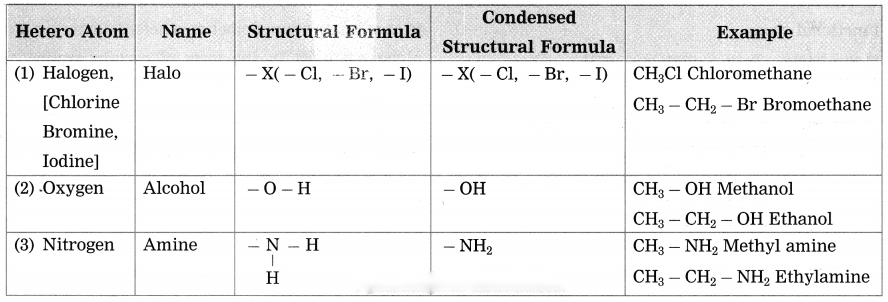
What is meant by functional group? Give examples. (OR) Explain the term functional group with example.
Solution & Step-by-Step Answer:
The compound acquire specific chemical properties due to these hetero atoms or the groups of atoms that contain hetero atoms, irrespective of length and nature of the carbon chain in that compound. Therefore these hetero atoms or groups of atoms containing hetero atoms are called the functional groups. Example: Methyl alcohol, acetic acid.
In methane (CH4), when one hydrogen atom is replaced by an -OH group, methyl alcohol (CH3OH), is formed. The -OH is known as the alcoholic functional group.
Question 18
Maharashtra Board Solution
Define functional group and complete the following table: |





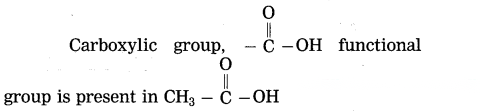


Functional group | Compound | Formula |
——————– | Ethyl alcohol | ——————– |
——————– | Acetaldehyde | ——————– |
The compound acquire specific chemical properties due to these hetero atoms or the groups of atoms that contain hetero atoms, irrespective of length and nature of the carbon chain in that compound. Therefore these hetero atoms or groups of atoms containing hetero atoms are called the
functional groups.
Functional group | Compound | Formula | ||||||||||||||||||||||||||||||||||
-OH | Ethyl alcohol | C2H5OH | ||||||||||||||||||||||||||||||||||
-CHO | Acetaldehyde | CH3CHO
Question 19
Maharashtra Board Solution
What is meant by homologous series?
Solution & Step-by-Step Answer:
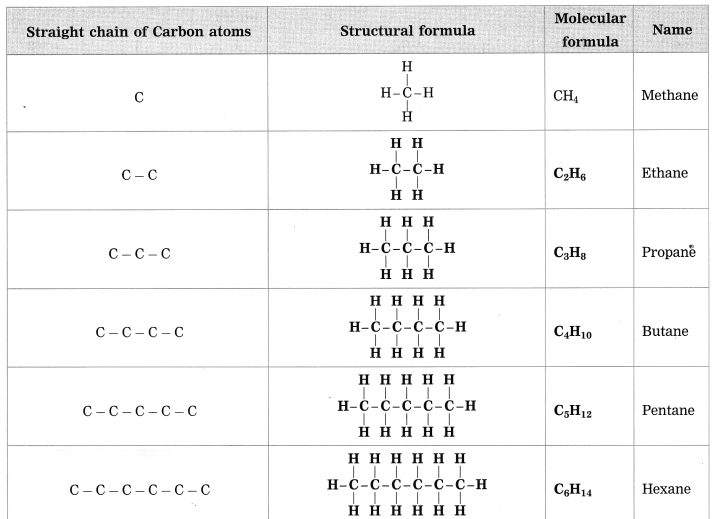
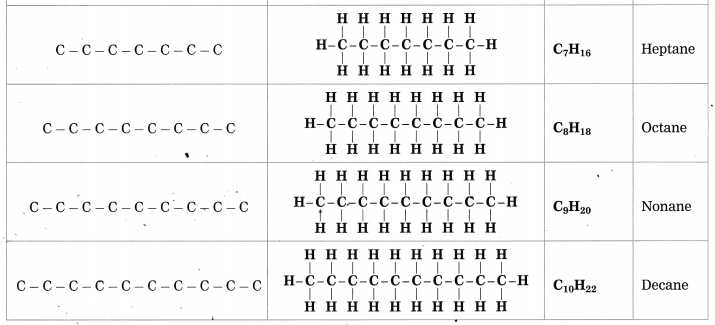
The length of the carbon chains in carbon compounds is different their chemical properties are very much similar due to the presence of the same functional group in them. The series of compounds formed by joining the same functional group in place of a particular hydrogen atom on the chains having sequentially increasing length is called homologous series. Two adjacent members of the series differ by only one -CH2– (methylene) unit and their mass differ by 14 units.
The homologous series of straight chain alkanes can be represented by the general formula CnH2n + 2. The members of this series are as follows:
Question 20
Maharashtra Board Solution
State the four characteristics of homologous series.
Solution & Step-by-Step Answer:
Characteristics of Homologous series: (1) In homologous series while going in an increasing order of the length of carbon chain (a) one methylene unit ( -CH2– ) gets added (b) molecular mass increases by 14 u (c) number of carbon atoms increases by one. (2) Chemical properties of members of a homologous series show similarity due to the presence of the same functional group in them. (3) Each member of the homologous series can be represented by the same general molecular formula. (4) While going in an increasing order of the length there is gradation in the physical properties i.e. the boiling and melting points.
Question 21
Maharashtra Board Solution
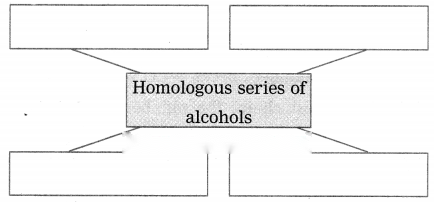
Write names of first four homologous series of alcohols: (March 2019)
Solution & Step-by-Step Answer:
First four homologous series of alcohols are
Question 22
Maharashtra Board Solution
Describe the IUPAC rules of naming organic compounds.
Solution & Step-by-Step Answer:
IUPAC nomenclature system: International Union for Pure and Applied Chemistry (IUPAC) put forth a nomenclature system based on the structure of the compounds and it was accepted all over the world. There are three units in the IUPAC name of any carbon compound: parent, suffix and prefix. These are arranged in the name as follows:
Prefix-parent-suffix: Step 1: Draw the structural formula of the straight chain compound and count the number of carbon atoms in it. The alkane with the same number of carbon atoms is the parent alkane of the concerned compound. Write the name of this alkane. In case the carbon chain of concerned compound contains a double bond, change the ending of the parent name from ‘ane’ to ‘ene’. If the carbon chain in the concerned compound contains a triple bond, change the ending of the parent name from ‘ane’ to ‘yne’.
Step 2: If the structural formula contains a functional group, replace the last letter ‘e’ from the parent name by the condensed name of the functional group as the suffix. (Exception: The condensed name of the functional group ‘halogen’ is always attached as the prefix.) Step 3: Number the carbon atoms in the carbon chain from one end to the other. Assign the number T to carbon in the functional group -CHO or -COOH, if present. Otherwise, the chain can be numbered in two directions. Accept that numbering which gives smaller number to the carbon carrying the functional group. In the final name, a digit (number) and a character (letter) should be separated by a small horizontal line.
Question 23
Maharashtra Board Solution
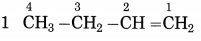
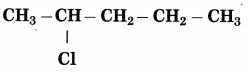
Write the IUPAC names of the following structural formulae. a. CH3 – CH2 – CH = CH2
Solution & Step-by-Step Answer:
Number of carbon atoms in the longest chain: 4 Parent alkane: Butene Functional group: double bond Assign the number:
In the longest chain, the numbering of carbon atom starts from the carbon atom nearest to the double bond and the other c-atoms are numbered accordingly. b. CH3– C ≡ C – H c.
d. CH3– CH2– CH2– Br
e.
f.
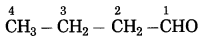
g. HCOOH h. CH3– CH2– CH2– CHO
i.
Question 24
Maharashtra Board Solution
What happens when methane is burnt in air? Write the balanced chemical equation for the same.
Solution & Step-by-Step Answer:
When methane burns in air, carbon dioxide and water are formed. The reaction is exothermic with release of large amount of heat and light.
Question 25
Maharashtra Board Solution
What happens when ethanol is burnt in air?
Solution & Step-by-Step Answer:
When ethanol is burnt in air, it burns with a clean blue flame, carbon dioxide and water are formed. In this reaction, release of large amount of heat and light takes place.
Question 26
Maharashtra Board Solution
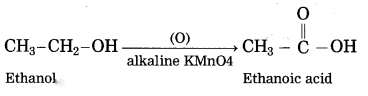
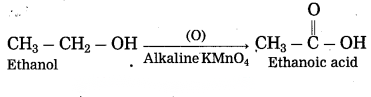
What happens when ethanol is treated with alkaline potassium permanganate? Write the balanced chemical equation for the same.
Solution & Step-by-Step Answer:
When ethanol is treated with alkaline potassium permanganate, ethanol gets oxidised by alkaline potassium permanganate to’ form ethanoic acid.
Question 27
Maharashtra Board Solution
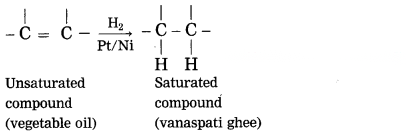
What happens when vegetable oil is hydrogenated? Write the balanced chemical equation.
Solution & Step-by-Step Answer:
When vegetable oil (unsaturated compound) is hydrogenated in the presence of nickel catalyst, vanaspati ghee (saturated) compound is formed.
Question 28
Maharashtra Board Solution
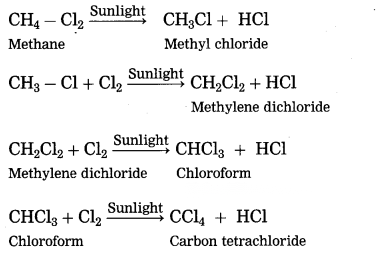
What happens when chlorine is treated with methane? (OR) Describe the action of chlorine on methane. (OR) Write a note on chlorination of methane.
Solution & Step-by-Step Answer:
Methane reacts rapidly with chlorine in the presence of sunlight to form four products. In this reaction, chlorine atoms replace, one by one, all the hydrogen atoms in the methane. The reaction in which the place of one type of atom/group in a reactant is taken by another atom/group of atoms is called substitution reaction. Chlorination of methane is a substitution reaction.
Question 29
Maharashtra Board Solution
What happens when ethanol is reacted with sodium?
Solution & Step-by-Step Answer:
When ethanol is reacted with sodium at room temperature, sodium ethoxide is formed and hydrogen gas is liberated.
Question 30
Maharashtra Board Solution
What happens when ethanol is heated at 170 °C with excess of conc. sulphuric acid?
Solution & Step-by-Step Answer:
When ethanol is heated at 170 °C with excess of conc. sulphuric acid, one molecule of water is removed from its molecule to form ethene (unsaturated compound).
Question 31
Maharashtra Board Solution
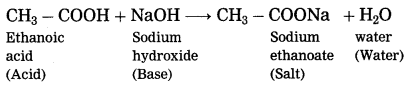
What happens when ethanoic acid is treated with sodium hydroxide? Write the balanced equation for the same.
Solution & Step-by-Step Answer:
When ethanoic acid is treated with sodium hydroxide, neutralization takes place to form sodium acetate (sodium ethanoate) and water.
Question 32
Maharashtra Board Solution
What happens when ethanoic acid is treated with sodium carbonate?
Solution & Step-by-Step Answer:
When ethanoic acid is treated with sodium carbonate, sodium ethanoate, carbon dioxide and water is formed.
Question 33
Maharashtra Board Solution
What happens when ethanoic acid is treated with sodium bicarbonate?
Solution & Step-by-Step Answer:
When ethanoic acid is treated with sodium bicarbonate, sodium ethanoate, water and carbon dioxide is formed.
Question 34
Maharashtra Board Solution
What happens when ethanoic acid is treated with ethanol? Write the balanced equation for the same.
Solution & Step-by-Step Answer:
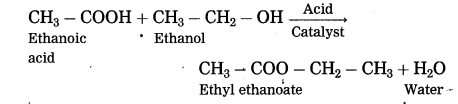
When ethanoic acid is treated with ethanol in the presence of an acid catalyst, an ester, i.e., ethyl ethanoate is formed.
Question 35
Maharashtra Board Solution
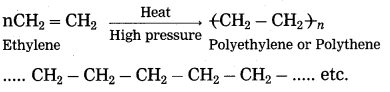
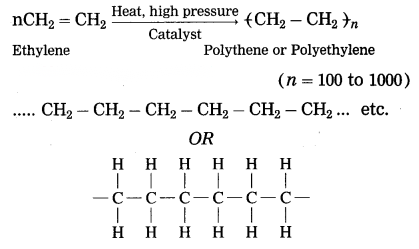
What happens when ethylene gas is heated at high pressure and high temperature in the presence of suitable catalyst? Ans. When ethylene gas is heated at high pressure and high temperature in the presence of suitable catalyst, it polymerizes to form polyethylene or polythene (plastic). |








Question 36
Maharashtra Board Solution
State the physical properties of ethyl alcohol ethanol.
Solution & Step-by-Step Answer:
block bg-white dark:bg-slate-900/80 border-l-4 border-emerald-500 rounded-r-xl p-5 my-3 shadow-xs border border-slate-200/60 dark:border-slate-800">
Solution & Step-by-Step Answer:
Question 37
Maharashtra Board Solution
State the properties of ethanoic acid.
Solution & Step-by-Step Answer:
Write short notes:
Question 1
Maharashtra Board Solution
Catenation power.
Solution & Step-by-Step Answer:
(1) Carbon has a unique ability to form strong covalent bonds with other carbon atoms; this results in formation of big molecules. This property of carbon is called catenation power.
(2) Carbon shows catenation. Two or more carbon atoms can share their valence electrons and bond with each other. Thus, carbon chains can be straight or branched or closed chain ring structure forming large molecules. The covalent bond between two carbon atoms is strong and therefore stable. Carbon is bestowed with catenation power due to the strong and stable covalent bonds. (3) Hence, carbon atoms can form an unlimited number of compounds.
Question 2
Maharashtra Board Solution
Characteristics of Carbon.
Solution & Step-by-Step Answer:
(1) Carbon has a unique ability to form strong covalent bonds with other carbon atoms: this results in formation of big molecules. This property of carbon is called catenation power. The carbon compounds contain open chains or closed chains of carbon atoms. An open chain can be a straight chain or a branched chain. A closed chain is a ring structure. The covalent bond between two carbon atoms is strong and therefore stable. Carbon is bestowed with catenation power due to the strong and stable covalent bonds.
Question 3
Maharashtra Board Solution
Functional group.
Solution & Step-by-Step Answer:
(1) The compound acquire specific chemical properties due to these hetero atoms or the groups of atoms that contain hetero atoms, irrespective of the length and nature of the carbon chain in that compound. Therefore these hetero atoms or the groups of atoms containing hetero atoms are called functional groups.
All organic compounds are derivatives of hydrocarbons. The derivatives are formed by replacing one or more H-atom/atoms of hydrocarbon by some other hetero atom or groups of atoms containing hetero atoms. After replacement, a new compound is formed which has properties different from the parent hydrocarbon. Examples: For methane, if one hydrogen atom is replaced by an – OH group, then a compound is methyl alcohol (CH3OH). The -OH group is known as the alcoholic functional group.
Question 4
Maharashtra Board Solution
Homologous series.
Solution & Step-by-Step Answer:
The length of the carbon chains in carbon compounds is different their chemical properties are very much similar due to the presence of the same functional group in them. The series of compounds formed by joining the same functional group in place of a particular hydrogen atom on the chains having sequentially increasing length is called homologous series. Two adjacent members of the series differ by only one -CH2– (methylene) unit and their mass differ by 14 units.
The homologous series of straight chain alkanes can be represented by the general formula CnH2n + 2
Characteristics:
Question 5
Maharashtra Board Solution
Polymerization.
Solution & Step-by-Step Answer:
(1) The reaction by which monomer molecules are converted into a polymer is called polymerization. A macromolecule formed by regular repetition of a small unit is called polymer. The small unit that repeats regularly to form a polymer is called monomer. The important method of polymerization is to make a polymer by joining alkene type of monomers.
(2) When ethylene gas is heated at high pressure and high temperature in the presence of suitable catalyst, it polymerizes to form polyethylene or polythene (plastic).
(3) The polymer polystyrene is used to make thermocoal articles. The polymer polyvinyl chloride is used to make P.V.C. pipes, doormats, etc. The polymer teflon is used to make nonstick cookware. The polymer polypropylene is used to make injection syringe, furniture, etc. Give scientific reasons:
Question 1
Maharashtra Board Solution
Carbon atoms are capable of forming an unlimited number of compounds.
Solution & Step-by-Step Answer:
Question 2
Maharashtra Board Solution
Ethylene is an unsaturated hydrocarbon.
Solution & Step-by-Step Answer:
(1) Ethylene (CH2 = CH2) contains a double bond between carbon atoms. (2) Thus, the valencies of the two carbon atoms are not fully satisfied by single covalent bonds. Hence, ethylene is an unsaturated hydrocarbon.
Question 3
Maharashtra Board Solution
Naphthalene burns with a yellow flame.
Solution & Step-by-Step Answer:
(1) Naphthalene is an unsaturated compound. In unsaturated hydrocarbon the proportion of carbon is larger than that of saturated hydrocarbon. As a result, some unburnt carbon particles are also formed during combustion of unsaturated compounds.
(2) In the flame. these unburnt hot carbon particles emit yellow light and therefore the flame appears yellow. Hence, naphthalene burns with a yellow flame.
Question 4
Maharashtra Board Solution
The colour of iodine disappears in the reaction between vegetable oil and iodine.
Solution & Step-by-Step Answer:
(1) Vegetable oils (unsaturated compound) contains a multiple bond as their functional group. They undergo addition reaction to form a saturated compound as the product. (2) The addition reaction of vegetable oil with iodine takes place instantaneously at room temperature. The colour of iodine disappears in this reaction. This iodine test indicates the presence of a multiple bond in vegetable oil.
Question 5
Maharashtra Board Solution
The hydrogenation of vegetable oil in the presence of nickel catalyst forms vanaspati ghee.
Solution & Step-by-Step Answer:
(1) The molecules of vegetable oil contain long and unsaturated carbon chains. These unsaturated hydrocarbons contain a multiple bond as their functional group. They undergo addition reaction to form a saturated compound as the product.
(2) When vegetable oil (unsaturated compound) is hydrogenated in the presence of nickel catalyst, the addition reaction takes place, vanaspati ghee (saturated compound) is formed. Distinguish between the following:
Question 1
Maharashtra Board Solution
Saturated hydrocarbons and Unsaturated hydrocarbons.
Solution & Step-by-Step Answer:
Saturated hydrocarbons:
Unsaturated hydrocarbons:
Question 2
Maharashtra Board Solution
Open chain hydrocarbons and closed chain hydrocarbons.
Solution & Step-by-Step Answer:
Open chain hydrocarbons:
Closed chain hydrocarbons:
Question 3
Maharashtra Board Solution
Alkane and Alkene.
Solution & Step-by-Step Answer:
Alkane
Alkene: Project:
|