Latest Maharashtra State Board (SSC & HSC) 2026-27 Syllabus Digest & Solutions Updated!
Class 6History2026-27 Syllabus

Chapter 8 States after the Maurya Empire Solutions

Complete Maharashtra State Board Balbharati & Yuvakbharati textbook solutions for Chapter 8 States after the Maurya Empire. Step-by-step solved exercises, numerical problems, and digest answers.

61 Solved Questions1 Diagrams2115 words

Maharashtra Board Class 6 History Solutions Chapter 8 States after the Maurya Empire

Class 6 History Chapter 8 States after the Maurya Empire Textbook Questions and Answers

1. Can you tell ?

Question 1 Maharashtra Board Solution
The kings who started the minting of gold coins in India.
Solution & Step-by-Step Answer:
The Kushana kings
Question 2 Maharashtra Board Solution
The city established by Kanishka in Kashmir.
Solution & Step-by-Step Answer:
Kanishkapur
Question 3 Maharashtra Board Solution
The king who played the veena.
Solution & Step-by-Step Answer:
Samudragupta
Question 4 Maharashtra Board Solution
Another name for Kamrup.
Solution & Step-by-Step Answer:
Pragjyotish

2. Observe the map in the lesson. List the names of the modern cities which were part of the Gupta Empire.

3. Discuss and write:

Question 1 Maharashtra Board Solution
Emperor Kanishka
Solution & Step-by-Step Answer:
Question 2 Maharashtra Board Solution
Iron pillar at Mehrauli
Solution & Step-by-Step Answer:

4. Make a list of the various books and authors mentioned in the lesson:
Answer:

5. Make a comparative chart of the Vardhan and Gupta dynasties based on the following points.
Answer:

Points

Gupta Dynastry

Vardhan Dynastry

Founder

Shrigupta

Prabhakar Vardhan

Expansion of the kingdom/ empire

The Gupta empire spread from Assam upto the Punjab. He also conquered the eastern coastal region up to Kanchi Tamil Nadu.

Harshavardhan, expanded the Vardhan Empire up to Nepal in the north, up to the river Narmada in the south, Assam in the east and Gujarat in the west.

Achievements

(i) A pillar inscription at Prayag describes Samudragupta conquest and victories.
(ii) He minted coins.
(iii) There is an iron pillar at Mehrauli near Delhi which has not rusted even after a course of last fifteen hundred years.

(i) Trade flourished.
(ii) Knowledge also flourished, we know this as the famous Nalanda University existed during this time.
(iii) He wrote three Sanskrit plays Ratnavali, Naganand and Priyadarshika.

6. What would you do if you met foreign travellers like Yuan Chwang?
Answer:
If I were to meet a foreign traveller, I would extend my friendship, try to grasp information from his vast knowledge. Probably I would also have accompanied him to Nalanda University. I would also have emulated his virtues, learnt Chinese (Mandarin) and helped him translate Buddhist manuscripts.

7. Solve the Puzzle:

Down:
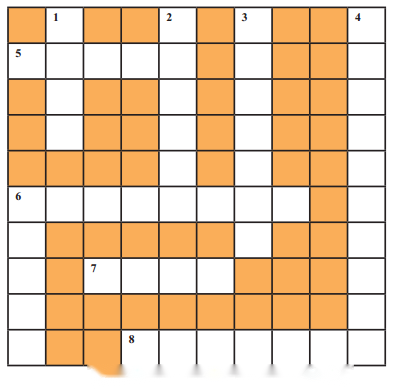
Answer:

Down:

Activity:

Obtain more information about the rulers of the period following the Maurya period in India. Enact the role of a ruler of your choice.

Class 6 History Chapter 8 States after the Maurya Empire Additional Important Questions and Answers

Complete the sentence by choosing the correct option:

Question 1 Maharashtra Board Solution
The last Mauryan emperor was _______. (a) Chandragupta (b) Brihadratha (c) Ashoka
Solution & Step-by-Step Answer:
(b) Brihadratha
Question 2 Maharashtra Board Solution
The Indo-Greek kings had a tradition of putting the,______ of the king on one side and that of a deity on the other side of the coin (a) map (b) picture (c) family
Solution & Step-by-Step Answer:
(b) picture
Question 3 Maharashtra Board Solution
One of the famous Indo-Greek kings was _________. (a) Menander (b) Alexander (c) Nagasena
Solution & Step-by-Step Answer:
(a) Menander
Question 4 Maharashtra Board Solution
Menander disussed Buddhist philosophy with the Buddhist bhikkhu _____. (a) Fa-Hein (b) Ashoka (c) Nagasena
Solution & Step-by-Step Answer:
(c) Nagasena
Question 5 Maharashtra Board Solution
Menander is also referred to as ________. (a) Pushyamitra (b) Panha (c) Milinda
Solution & Step-by-Step Answer:
(c) Milinda
Question 6 Maharashtra Board Solution
The Kushanas established their________ in the northwestern region and in Kashmir in the first century CE. (a) family (b) friends (c) rule
Solution & Step-by-Step Answer:
(c) rule
Question 7 Maharashtra Board Solution
The Kushan kings were the first to start minting ________ coins in India. (a) iron (b) copper (c) gold
Solution & Step-by-Step Answer:
(c) gold
Question 8 Maharashtra Board Solution
The ________ kings started the custom of putting the images of Gautam Buddha and different Indian deities on the coins. (a) Kushana (b) Gupta (c) Vardhaman
Solution & Step-by-Step Answer:
(a) Kushana
Question 9 Maharashtra Board Solution
Gold and copper coins minted by Kanishka have been found in ________ India. (a) south (b) north (c) east
Solution & Step-by-Step Answer:
(b) north
Question 10 Maharashtra Board Solution
The ________ Buddhist council was held in Kashmir during Kanishka’s reign. (a) fourth (b) fifth (c) sixth
Solution & Step-by-Step Answer:
(a) fourth
Question 11 Maharashtra Board Solution
Kanishka established the city of _______ in Kashmir. (a) Saurashtra (b) Malwa (c) Kanishkapur
Solution & Step-by-Step Answer:
(c) Kanishkapur
Question 12 Maharashtra Board Solution
The well-known poet _________ lived during the reign of Kanishka. (a) Ashvaghosh (b) Charaka (c) Nagasena
Solution & Step-by-Step Answer:
(a) Ashvaghosh
Question 13 Maharashtra Board Solution
The famous vaidya ______ was also in Kanishka’s court. (a) Chandra (b) Charaka (c) Shrigupta
Solution & Step-by-Step Answer:
(b) Charaka
Question 14 Maharashtra Board Solution
The Guptas remained in power for nearly _____ centuries. (a) one (c) two (c) three
Solution & Step-by-Step Answer:
(c) three
Question 15 Maharashtra Board Solution
_____ was the founder of the Gupta dynasty. (a) Shrigupta (b) Samudragupta (c) Brihadratha
Solution & Step-by-Step Answer:
(a) Shrigupta
Question 16 Maharashtra Board Solution
Samudragupta and Chandragupta II were the notable kings of the ________ dynasty. (a) Maurya (b) Gupta (c) Nanda
Solution & Step-by-Step Answer:
(b) Gupta
Question 17 Maharashtra Board Solution
A pillar inscription at Prayag describes _________ conquests and victories. (a) Samudragupta’s (b) Chandragupta’s (c) Ashoka’s
Solution & Step-by-Step Answer:
(a) Samudragupta’s
Question 18 Maharashtra Board Solution
Samudragupta was an excellent ______ player. (a) drum (b) guitar (c) veena
Solution & Step-by-Step Answer:
(c) veena
Question 19 Maharashtra Board Solution
In the Gupta period, the Bauddha bhikkhu Fa-Hien came to ______ from China. (a) Sri Lanka (b) India (c) Nepal
Solution & Step-by-Step Answer:
(b) India
Question 20 Maharashtra Board Solution
______ has written an account of his travels in India. (a) Harshavardhan (b) Yuan Chwang (c) Fa-Hien
Solution & Step-by-Step Answer:
(c) Fa-Hien
Question 21 Maharashtra Board Solution
Prabhakar Vardhan was the _______ of Thanesar, near Delhi. (a) general (b) minister (c) king
Solution & Step-by-Step Answer:
(c) king
Question 22 Maharashtra Board Solution
The Vardhan dynasty was founded by ______. (a) Prabhakar Vardhan (b) Harshavardhan (c) Kamrup
Solution & Step-by-Step Answer:
(a) Prabhakar Vardhan
Question 23 Maharashtra Board Solution
Harshavardhan established friendly relations with the emperor of ________. (a) Sri Lanka (b) China (c) Tamil Nadu
Solution & Step-by-Step Answer:
(b) China
Question 24 Maharashtra Board Solution
The capital of Harshavardhan’s Empire was ________. (a) Kanauj (b) Kamrup (c) Nalanda
Solution & Step-by-Step Answer:
(a) Kanauj
Question 25 Maharashtra Board Solution
Harshavardhan spent a large portion of his ________ for the welfare of the people. (a) kingdom (b) revenue (c) mines
Solution & Step-by-Step Answer:
(b) revenue
Question 26 Maharashtra Board Solution
The court poet ______ wrote Harshacharita a biography of Emperor Harshavardhan. (a) Fa-Hien (b) Banabhatta (c) Nalanda
Solution & Step-by-Step Answer:
(b) Banabhatta
Question 27 Maharashtra Board Solution
Harshavardhan had become a follower of ________. (a) Buddhism (b) Jainism (c) Judaism
Solution & Step-by-Step Answer:
(a) Buddhism
Question 28 Maharashtra Board Solution
The Buddhist Bhikkhu ________ had come to India from China during the regime of Harshavardhan. (a) Yuan Chwang (b) Fa-Hien (c) Magasthenes
Solution & Step-by-Step Answer:
(a) Yuan Chwang
Question 29 Maharashtra Board Solution
Yuan Chwang stayed at the ________ University for two years. (a) Mumbai (b) Oxford (c) Nalanda
Solution & Step-by-Step Answer:
(c) Nalanda
Question 30 Maharashtra Board Solution
Yuan Chwang translated many Buddhist manuscripts into _________. (a) Hindi (b) Chinese (c) Pali
Solution & Step-by-Step Answer:
(b) Chinese
Question 31 Maharashtra Board Solution
The state of ______ emerged in the fourth century CE. (a) Harappa (b) Mohen-jo-daro (c) Kamrup
Solution & Step-by-Step Answer:
(c) Kamrup
Question 32 Maharashtra Board Solution
The epics Mahabharta and Ramayana use the name Tragjyotish’ for ________. (a) Kamrup (b) Magdha (c) Avanti
Solution & Step-by-Step Answer:
(a) Kamrup
Question 33 Maharashtra Board Solution
The capital of Pragjyotish state was _______. (a) Kashmir (b) Pragjyotishpur (c) Manipur
Solution & Step-by-Step Answer:
(b) Pragjyotishpur
Question 34 Maharashtra Board Solution
During the reign of King Bhaskar Varman, Yuan Chwang had visited _________. (a) Kamrup (b) Nalanda (c) Manipur
Solution & Step-by-Step Answer:
(a) Kamrup

Match the following:

Question 1 Maharashtra Board Solution

Column A

Column B

(1) Brihadratha

(a) Vaidya at Kanishka’s court

(2) Menander

(b) First to mint gold coins in India

(3) Charaka

(c) Last Maurya king

(4) Kushana kings

(d) Stayed at Nalanda university

(5) Yuan Chwang

(e) Famous Indo-Greek kings

Solution & Step-by-Step Answer:

1 – c
2 – e
3 – a
4 – b
5 – d

Answer in one sentence:

Question 1. Who was the last Mauryan Emperor? Answer: The last Mauryan emperor was Brihadratha.

Question 2 Maharashtra Board Solution
How did Pushyamitra become a king?
Solution & Step-by-Step Answer:
The Mauryan general Pushyamitra Shunga revolted against Brihadratha, killed him and became the king himself.
Question 3 Maharashtra Board Solution
Which kings are known as Indo-Greek kings?
Solution & Step-by-Step Answer:
There were several small kingdoms in the northwest of the Indian subcontinent, ruled by Greek kings also known as Indo-Greek kings.
Question 4 Maharashtra Board Solution
Which Indo-Greek tradition took root in India?
Solution & Step-by-Step Answer:
The Indo-Greek had a tradition of putting the picture of the king on one side and that of a deity on the other of the coin. This tradition later took root in India.
Question 5 Maharashtra Board Solution
Name of famous Indo-Greek king.
Solution & Step-by-Step Answer:
One of the famous Indo-Greek king was Menander.
Question 6 Maharashtra Board Solution
What is the content of Milind-Panha?
Solution & Step-by-Step Answer:
The questions that were discussed between Bhikkhu Nagasena and Milinda is the content of the book ‘Milind-Panha’.
Question 7 Maharashtra Board Solution
In which region did the Kushana tribe establish their rule in India?
Solution & Step-by-Step Answer:
The Kushana tribe established their rule in the northwestern region and in Kashmir in the first century C.E.
Question 8 Maharashtra Board Solution
Which custom was started by the Kushana kings?
Solution & Step-by-Step Answer:
The Kushana kings started a custom of putting the images of Gautam Buddha and different Indian deities on the coins.
Question 9 Maharashtra Board Solution
Where was the fourth Buddhist council held?
Solution & Step-by-Step Answer:
The fourth Buddhist council was held in Kashmir during Kanishka’s reign.
Question 10 Maharashtra Board Solution
Which poet and vaidya were well-known during the time of Kanishka?
Solution & Step-by-Step Answer:
During the time of Kaniska, poet Ashvagosh and vaidya Charaka were well-known.
Question 11 Maharashtra Board Solution
Who was the founder of the Gupta dynasty?
Solution & Step-by-Step Answer:
Shrigupta was the founder of the Gupta dynasty.
Question 12 Maharashtra Board Solution
Name two notable kings of the Gupta Dynasty.
Solution & Step-by-Step Answer:
Samudragupta and Chandragupta II were the two notable kings of the Gupta Dynasty.
Question 13 Maharashtra Board Solution
Why did Sri Lanka make treaties of friendship with Samudragupta?
Solution & Step-by-Step Answer:
Due to Samudragupta’s victories, Sri Lanka came to be recognised everywhere. So Sri Lanka made a treaty of friendship with him.
Question 14 Maharashtra Board Solution
Which Bhikkhu from China visited India during Chandragupta’s reign?
Solution & Step-by-Step Answer:
The Buddha Bhikkhu Fa-Hein came to India from China during Chandragupta’s reign.
Question 15 Maharashtra Board Solution
What do we learn from Fa-Hien’s account of his travels in India?
Solution & Step-by-Step Answer:
From Fa-Hien’s account of his travels in India we learn about the efficient administration of the Gupta emperors.
Question 16 Maharashtra Board Solution
Who was the founder of the Vardhan Dynasty?
Solution & Step-by-Step Answer:
Prabhakar Vardhan was the founder of the. Vardhan Dynasty.
Question 17 Maharashtra Board Solution
Where was the capital of Harshavardhan’s Empire?
Solution & Step-by-Step Answer:
The capital of Harshavardhan’s Empire was Kanauj.
Question 18 Maharashtra Board Solution
Which Chinese bhikkhu came to India during the reign of Harshavardhan?
Solution & Step-by-Step Answer:
The Buddhist bhikkhu Yuan Chwang had come to India from China during Harshavardhan’s reign.
Question 19 Maharashtra Board Solution
Why did Yuan Chwang stay at Nalanda?
Solution & Step-by-Step Answer:
Yuan Chwang stayed at the Nalanda University for two years to learn and gain more knowledge about the Buddhist manuscripts.
Question 20 Maharashtra Board Solution
Which state in ancient India is the present city of Guwahati?
Solution & Step-by-Step Answer:
The ancient state of Pragjyotish is the present city of Guwahati in Assam.
Question 21 Maharashtra Board Solution
During whose reign did Yuan Chwang visit ‘Kamrup’?
Solution & Step-by-Step Answer:
During the reign of king Bhaskar Varman, Yuan Chwang visited ‘Kamrup’.