Maharashtra Board Class 6 History Solutions Chapter 9 Ancient Kingdoms of the South
Class 6 History Chapter 9 Ancient Kingdoms of the South Textbook Questions and Answers
1. Can you tell ?
Solution & Step-by-Step Answer:
Jhe Satavahana kings were known to follow the custom of writing their mother’s name before their own.
Solution & Step-by-Step Answer:
The ancient name of Kolhapur was ‘Kuntal’.
2. Complete the table by reading the map in the lesson:
Pallava | Kanchi |
| Aihole, Badami, Pattdakal |
Satavahana | |
Answer:
Pallava | Kanchi |
Chalukya | Aihole, Badami, Pattdakal |
Satavahana | Ajanta, Ellora, Nashik, Bhokardan |
3. Tabulate the following names as dynasties and their capitals:
Satavahana, Pandya, Chalukya,Vakataka, Pallava, Madurai, Pratishthan, Kanchipuram, Vatapi
Answer:
Dynasty Capital | |
Satavahana | Pratishthan |
Chalukya | Vatapi |
Vakataka | Vatsagulm |
Pallava | Kanchipuram |
Pandya | Madurai |
4. Observe any three picture in the lesson and write in your own words what you learn from them:
Answer:
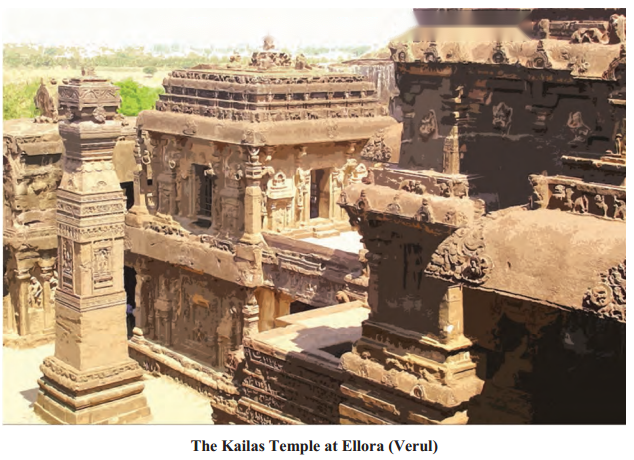
The Kailas Temple:
The Kailas temple at Ellora in Maharashtra was carved out during the reign of Krishna Raja I. This temple is the largest rock-cut monolithic ancient Hindu temple. This temple gets its name Kailas as it symbolizes mount Kailas, the home of Lord Shiva.
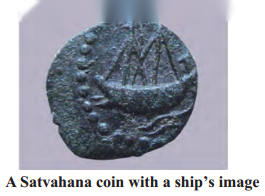
A Satavahana coin:
Indian trade was at its zenith during the Satavahana period. Indian goods were exported to western countries and even as far as Rome. Trade took place by sea and this fact is known through coins which have the image of a ship carved on it.
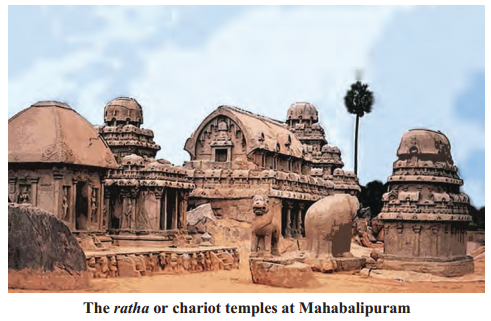
The Ratha or chariot temples:
The rathas or shrines shaped as temple chariot are hewn from the granite rock. They are a perfect example of monilithic rock-cut architecture of the Pallava dynasty. These group monuments at Mahabalipuram has been classified as a UNESCO World Heritage Site.
5. Answer in one sentence:
Solution & Step-by-Step Answer:
The Cher, Pandya and Chola dynasty were the ancient dynasties of Southern India.
Solution & Step-by-Step Answer:
After the decline of the Mauryan Empire, the local kings in Maharashtra, Andhra Pradesh, Karnataka became independent.
6. Anwer in brief:
Solution & Step-by-Step Answer:
Solution & Step-by-Step Answer:
Tri-samudra-toya-peet-vahnah means ‘one whose houses have drunk the water of three seas’. It simply means to describe the one whose kingdom is so vast that it extends to the three seas, i.e. Arabian sea, the Bay of Bengal and the Indian Ocean.
Solution & Step-by-Step Answer:
Goods like spices, pearls, precious stones were exported from the Muziris port.
Activity:
Make a collection of the pictures in the chapter and display them in the school exhibition
Class 6 History Chapter 9 Ancient Kingdoms of the South Additional Important Questions and Answers
Complete the sentence by choosing the correct option:
Solution & Step-by-Step Answer:
(a) Kerala
Solution & Step-by-Step Answer:
(c) Cher
Solution & Step-by-Step Answer:
(b) Tamil Nadu
Solution & Step-by-Step Answer:
(c) Madurai
Solution & Step-by-Step Answer:
(a) independent
Solution & Step-by-Step Answer:
(b) Maharashtra
Solution & Step-by-Step Answer:
(a) Satavahana
Solution & Step-by-Step Answer:
(c) Naneghat
Solution & Step-by-Step Answer:
(a) Chalukya
Solution & Step-by-Step Answer:
(a) Shaka
Solution & Step-by-Step Answer:
(a) composed
Solution & Step-by-Step Answer:
(b) increased
Solution & Step-by-Step Answer:
(c) trade
Solution & Step-by-Step Answer:
(b) Rome
Solution & Step-by-Step Answer:
(a) Satavahana
Solution & Step-by-Step Answer:
(b) weaken
Solution & Step-by-Step Answer:
(a) powerful
Solution & Step-by-Step Answer:
(c) King Vindhyashakti
Solution & Step-by-Step Answer:
(a) succeeded
Solution & Step-by-Step Answer:
(c) Rudrasen II
Solution & Step-by-Step Answer:
(b) Buddhism
Solution & Step-by-Step Answer:
(a) Meghadoot
Solution & Step-by-Step Answer:
(b) Karnataka
Solution & Step-by-Step Answer:
(c) sixth
Solution & Step-by-Step Answer:
(c) Chalukya
Solution & Step-by-Step Answer:
(a) South
Solution & Step-by-Step Answer:
(b) Kanchipuram
Solution & Step-by-Step Answer:
(b) Pallava
Solution & Step-by-Step Answer:
(c) Mahabalipuram
Solution & Step-by-Step Answer:
(b) navy
Solution & Step-by-Step Answer:
(c) Maharashtra
Solution & Step-by-Step Answer:
(a) Ellora
Answer in one sentence:
Solution & Step-by-Step Answer:
The Cher, Pandya and Chola dynasty were the ancient dynasties of Southern India.
Solution & Step-by-Step Answer:
‘Muziris, is mentioned as an important port on the coast of Kerala.
Solution & Step-by-Step Answer:
The capital of the Pandya kingdom was Madurai.
Solution & Step-by-Step Answer:
Pratishthan or the preseht day Paithan in Maharashtra was the capital of the Satavahana dynasty.
Solution & Step-by-Step Answer:
iCing Simuk was the founder of the Satavahana dynasty.
Solution & Step-by-Step Answer:
The Satavahana kings were known to follow the custom of writing their mother’s name before their own.
Solution & Step-by-Step Answer:
Gautamiputra Satakarni was a very well known Satavahana king.
Solution & Step-by-Step Answer:
Gautamiputra Satakarni was awarded the title Tri-samudra-toya-peet-vahan’.
Solution & Step-by-Step Answer:
The Satavahana empire extended from the river Narmada in the north to the Tunga- bhadra river in the south.
Solution & Step-by-Step Answer:
Paithan, Ter, Bhokardan, Kolhapur were recognised as important trade centres of the Satavahana period.
Solution & Step-by-Step Answer:
The Caves at Ajanta, Nashik, Karla, Bhaje, Kanheri, Junnar in Maharashtra were carved during the Satavahana period.
Solution & Step-by-Step Answer:
The Vakataka dynasty emerged after the Satavahana dynasty.
Solution & Step-by-Step Answer:
The Vakataka dynasty was founded by king Vindhyashakti.
Solution & Step-by-Step Answer:
The Vakataka king Pravarsen II composed ‘Setubandh’ in Maharashtra.
Solution & Step-by-Step Answer:
Kalidasa’s literature was ‘Meghdoot’.
Solution & Step-by-Step Answer:
The Chalukya dynasty was a powerful dynasty from Karnataka.
Solution & Step-by-Step Answer:
Badami or Vatapi was the capital of the Chalukya dynasty.
Solution & Step-by-Step Answer:
The famous temples at Badami, Aihole and Pattadakal were built during the Chalukya period.
Solution & Step-by-Step Answer:
The Pallavas were a powerful dynasty in South India.
Solution & Step-by-Step Answer:
Kanchipuram in Tamil Nadu was the capital of the Pallava kingdom.
Solution & Step-by-Step Answer:
The ‘ratha’ temples of Mahabalipuram are characteristic to have been sculpted from a single rock.
Solution & Step-by-Step Answer:
Yuan Chwang visited Kanchi and recorded that people of all religions received tolerant and just treatment under the rule of the Pallava kings.
Solution & Step-by-Step Answer:
King Dantidurg was the founder of the Rashtrakuta Dynasty.
Solution & Step-by-Step Answer:
Krishna Raja I had the famous Kailas temple carved at Ellora.
Answer in brief:
Solution & Step-by-Step Answer:
The Satavahana king Hala composed the famous poetic work Gatha-Saptashati in Maharashtrin a Prakrit language. This work provides information about the life of the people during the Satavahana period.