Latest Maharashtra State Board (SSC & HSC) 2026-27 Syllabus Digest & Solutions Updated!
Class 9 (SSC)History2026-27 Syllabus

Chapter 1 Sources of History Solutions

Complete Maharashtra State Board Balbharati & Yuvakbharati textbook solutions for Chapter 1 Sources of History. Step-by-step solved exercises, numerical problems, and digest answers.

40 Solved Questions5 Diagrams2303 words

Maharashtra State Board Class 9 History Solutions Chapter 1 Sources of History

Class 9 History Chapter 1 Sources of History Textbook Questions and Answers

1. A Choose the right option and rewrite the sentence.

Class 9 History Chapter 1 Sources Of History Questions And Answers  Question 1.
The National Archives of India is situated at ______.
(a) Pune
(b) New Delhi
(c) Kolkata
(d) Hyderabad
Answer:
(b) New Delhi

Sources of History Class 9 History Chapter 1 Question 2.
The _______ is included among the Audio -Visual media.
(a) Newspaper
(b) Television
(c) All India Radio
(d) Periodicals
Answer:
(b) Television

Question 3 Maharashtra Board Solution
______ is not included in physical sources. (a) Coins (b) Ornaments (c) Buildings (d) Proverbs
Solution & Step-by-Step Answer:
(d) Proverbs

B. Identify the wrong pair and rewrite the corrected one:

Question 1 Maharashtra Board Solution
(1) Jal Cooper – Philatelist (2) Kusumagraj – Poet (3) Anna Bhau Sathe – People’s bard (4) Amar Shaikh – Art Collector
Solution & Step-by-Step Answer:
Amar Shaikh – Art Collector

2. Write Short Notes:

Question 1 Maharashtra Board Solution
Written Sources
Solution & Step-by-Step Answer:
(i) Any historical document written by hand or typed or in printed form is called written sources. (ii) The following are included in written sources: Newspapers, Periodicals, Diaries, Reference books, Correspondence, Document in the Archives, Government Gazettes, Postage Stamps, and Encyclopedias.
Question 2 Maharashtra Board Solution
Press Trust of India (PTI)
Solution & Step-by-Step Answer:
(i) After 1953, the Press Trust of India has been an important source of primary details of all important events and of articles on important subjects.

(ii) Press Trust of India has provided reports, photographs and articles on financial and scientific issues to newspapers. PTI has now started its online service.

(iii) During the 1990s, PTI started using the ‘satellite broadcast’ technology instead of teleprinters to send news all over the country.

(iv) This material is important for writing the history of modern India.

3. Give reasons:

Question 1 Maharashtra Board Solution
The postal department tries to preserve the heritage and integrity of Indian culture through postage stamps.
Solution & Step-by-Step Answer:
(i) Postage stamps reveal a lot to us about changing times due to the variety in the sizes of the stamps, the novelty in their subjects and colour schemes.

(ii) The Postal Department issues postage stamps on a wide variety of themes.

(iii) It issues stamps on political leaders, flowers, animals, birds, an event, or the silver, golden, diamond jubilees or centenary, bicentenary and tercentenary of different events.

(iv) It is therefore, a valuable repository of history.

(v) Thus the postal department tries to preserve the heritage and integrity of Indian culture through postage stamps.

Question 2 Maharashtra Board Solution
Audio-visual media are an important source for writing the history of modem India.
Solution & Step-by-Step Answer:
(i) Audio-visual means possessing sound and visual content; for example, films and television

(ii) We have channels like History channel and Discovery channel which telecast footage of historical events in multimedia.

(iii) With the help of satellites, live coverage of all political, social and cultural events is possible across the globe. This helps to create an accountable repository for future reference as well.

(iv) Video libraries possess a vast storage of historical information in audio-visual mode which becomes handy in writing the history of modem India.

Class 9 History Chapter 1 Sources of History Additional Important Questions and Answers

Choose the correct option from the given options and rewrite the statements:

Question 1 Maharashtra Board Solution
Information and Broadcasting Department published ______, an annual reference book. (a) India 2000 (b) Incredible India (c) Indian Horizon (d) Aspiring India
Solution & Step-by-Step Answer:
(a) India 2000
Question 2 Maharashtra Board Solution
The place where historical documents are _______. preserved is called (a) Library (b) Store Room (c) Archives (d) History Room
Solution & Step-by-Step Answer:
(c) Archives
Question 3 Maharashtra Board Solution
Newspapers are considered the _______ pillar of democracy. (a) First (b) Second (c) Third (d) Fourth
Solution & Step-by-Step Answer:
(d) Fourth
Question 4 Maharashtra Board Solution
_____ has also produced various documentaries on prominent social leaders, on people who have made major contributions and about important locations in India. (a) British Broadcasting Corporation (BBC) (b) Reuters (c) Indian News Review (d) Bloomberg
Solution & Step-by-Step Answer:
(c) Indian News Review
Question 5 Maharashtra Board Solution
Aavahan is written on the backdrop of Sino- Indian war by the noted Marathi poet _____. (a) Narayan Gupte (b) Kusumagraj (c) G.D. Madgulkar (d) Namdeo Dhasal
Solution & Step-by-Step Answer:
(b) Kusumagraj
Question 6 Maharashtra Board Solution
Cooper edited _______. (a) India’s Stamp Journal (b) Indian Philatelic Magazine (c) Stamp Synopsis (d) The Journal of Philatelic Bureau
Solution & Step-by-Step Answer:
(a) India’s Stamp Journal
Question 7 Maharashtra Board Solution
After 1953, the ____ has been an important source of primary details of all important events. (a) Union Trust of India (b) Press Trust of India (c) Information and Broadcasting Ministry (d) Film and Television Institute of India
Solution & Step-by-Step Answer:
(b) Press Trust of India
Question 8 Maharashtra Board Solution
Duringthe 1990s, PTI started using ____ technology instead of Teleprinters. (a) GPS Device (b) Ultrasonic Gadget (c) Radio Programming (d) Satellite Broadcast
Solution & Step-by-Step Answer:
(d) Satellite Broadcast
Question 9 Maharashtra Board Solution
The Government of India started the Film and Television Institute of India at Pune in 1960 with the purpose of providing _______. (a) Entertainment (b) Public Education (c) International updates (d) Intra-societal information
Solution & Step-by-Step Answer:
(b) Public Education
Question 10 Maharashtra Board Solution
The Indian government issued the ______ stamp in 1977. (a) Narsee Monjee (b) Jal Cooper (c) Birsa Munda (d) Senapati Bapat
Solution & Step-by-Step Answer:
(b) Jal Cooper
Question 11 Maharashtra Board Solution
The Chhatrapati Shivaji Maharaj Museum is at ________. (a) Delhi (b) Mumbai (c) Kolkata (d) Chennai
Solution & Step-by-Step Answer:
(b) Mumbai
Question 12 Maharashtra Board Solution
The ______ issues postage stamps on a wide variety of themes. (a) Publications Division (b) Postal Department (c) Income Tax Department (d) Revenue Department
Solution & Step-by-Step Answer:
(b) Postal Department
Question 13 Maharashtra Board Solution
______ prints the notes. (a) Reserve Bank of India (b) Union Bank of India (c) Philatelic Bureau of India (d) State Bank of India
Solution & Step-by-Step Answer:
(a) Reserve Bank of India
Question 14 Maharashtra Board Solution
Empire of India Philatelic Society was founded by ______. (a) Pherozeshah Mehta (b) Mahzarin Banaji (c) Jal Cooper (d) Dinshaw Patel
Solution & Step-by-Step Answer:
(c) Jal Cooper
Question 15 Maharashtra Board Solution
PTI has provided reports, photographs and articles on ___ issues to newspapers. (a) Therapeutic (b) Financial and scientific (c) Demographic and Topographic (d) Environmental
Solution & Step-by-Step Answer:
(b) Financial and scientific

Identify and write the wrong pair in the following sets:

Question 1 Maharashtra Board Solution
(1) Powada – Oral sources (2) Documentaries – Audio Visual Sources (3) Coins – Material Sources (4) Owis – Archaeological Sources
Solution & Step-by-Step Answer:
Owis – Archaeological Sources
Question 2 Maharashtra Board Solution
(1) India 2000 – Annual Reference book (2) Indian News Review – News reels and documentariess. (3) FTII – Radio Programmes (4) Reserve Bank of India – Printing notes
Solution & Step-by-Step Answer:
FTII – Radio Programmes
Question 3 Maharashtra Board Solution
(1) Chhatrapati Shivaji Maharaj Museum – Mumbai (2) Reserve Bank Museum – Pune (3) National Archives of India – Calcutta (4) Film and Television Institute of India – Pune
Solution & Step-by-Step Answer:
National Archives of India – Calcutta

Do as directed.
Complete the concept map:
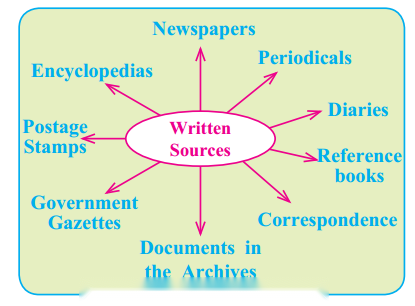
Question 1 Maharashtra Board Solution
Solution & Step-by-Step Answer:

Question 2 Maharashtra Board Solution
Solution & Step-by-Step Answer:

Question 3 Maharashtra Board Solution
Solution & Step-by-Step Answer:

Question 4 Maharashtra Board Solution
Solution & Step-by-Step Answer:

Write short notes:

Question 1 Maharashtra Board Solution
Coins
Solution & Step-by-Step Answer:
(i) We can also understand history with the help of coins and the changes in the printing of currency notes. (ii) The Reserve Bank of India prints the notes. It has its headquarters in Mumbai. (iii) The coins from 1950 to those used at present, the metals used for making them, their different shapes, and the diversity of subjects on them together help us to understand the important contemporary issues in India; For example coins to convey the message of population control and coins communicating the importance of agriculture and of farmers.
Question 2 Maharashtra Board Solution
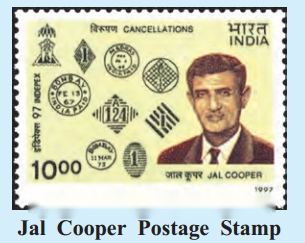
Jal Cooper Ans (i) The Indian government issued the ‘Jal Cooper’ stamp in 1977. Jal Cooper was an internationally acclaimed philatelist, i.e. an expert on the subject of ‘postage stamps’. (ii) Bom in a Parsi household in Mumbai, Cooper edited ‘India’s Stamp Journal’. (iii) He was the founder of the first Philatelic Bureau in India, an office that collected stamps. He founded the ‘Empire of India Philatelic Society. (iv) He went on to write many books on this subject. He gave a scientific bent to his hobby. (v) He played a pivotal role in taking the study of Indian postage stamps to the international level. (vi) Having started his career as a postage stamp collector, Cooper achieved the expertise of a philatelist at the international level. (vii) The postage stamp on Jal Cooper is an important source to understand his significant contribution to this field.

Explain the statements with reason:

Question 1 Maharashtra Board Solution
Museums reflect the unique heritage of a state.
Solution & Step-by-Step Answer:
block bg-white dark:bg-slate-900/80 border-l-4 border-emerald-500 rounded-r-xl p-5 my-3 shadow-xs border border-slate-200/60 dark:border-slate-800">
Solution & Step-by-Step Answer:
(i) All states of India have museums that depict the characteristics and display the cultural and social heritage of the state. (ii) They enable us to understand history; For example, the Chhatrapati Shivaji Maharaj Museum at Mumbai and the Reserve Bank Museum in Pune city. (iii) Apart from the Government Museums, some private collectors also set up their own museums. (iv) They are based on distinctive subjects; For example, coins, notes, lamps and nutcrackers in different shapes, cricket equipment, etc.

Read the passage and answer the questions.

The Indian government issued the ‘Jal Cooper’ stamp in 1977. Jal Cooper was an internationally acclaimed philatelist, i.e. an expert on the subject of ‘postage, stamps’. Bom in a Parsi household in Mumbai, Cooper edited ‘India’s Stamp Journal’. He was the founder of the first Philatelic Bureau in India, an, office that collected stamps. He founded the ‘Empire of India Philatelic Society’. He went on to write many, books on this subject. He gave a scientific bend to his, hobby. He played a pivotal role in taking the study of Indian postage stamps to the international level,, Having started his career as a postage stamp collector, Cooper achieved the expertise of a philatelist at the international level. The postage stamp on Jal Cooper, is an important source to understand his significant,contribution to this field.

Question 1 Maharashtra Board Solution
Other than Philatelies which other streams of vocation deal with sources of history?
Solution & Step-by-Step Answer:
Other than Philatelies, other streams of vocation which deal with sources of history are: Numismatics, Museology and Archaeology.
Question 2 Maharashtra Board Solution
Name the two institution founded by Jal Cooper.
Solution & Step-by-Step Answer:
Two institutions founded by Jal Cooper are:

(i) The First Philatelic Bureau in India.
(ii) Empire of India Philatelic Society.

Question 3 Maharashtra Board Solution
Why do you think the government of India issued a postage stamp in the name of Jal Cooper?
Solution & Step-by-Step Answer:
Jal Cooper is accredited to raise Indian Philatelies to an international level. He nurtured his hobby with great expertise and became a renowned Postage Stamp Collector. To honour his contribution, the government of India issued a postage stamp in his name in 1977.

Answer the following questions in detail.

Question 1 Maharashtra Board Solution
Which information among print media is considered authentic and trustworthy?
Solution & Step-by-Step Answer:
Among the print media, the information contained in the annual issues of the Publications Division of the Government of India is authentic and trustworthy. (ii) For example, the Information and Broadcasting Department published ‘INDIA 2000’, an annual reference book. (iii) ‘ This reference book is created under ‘Research, Reference and Training Department’.
Question 2 Maharashtra Board Solution
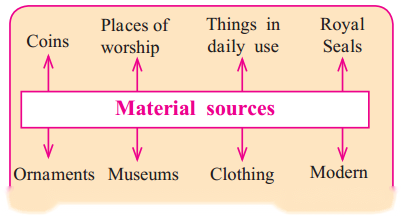
Which sources are included in material sources?
Solution & Step-by-Step Answer:
The following sources are included in material sources:
Question 3 Maharashtra Board Solution
Write in brief about museums in India.
Solution & Step-by-Step Answer:
(i) All states of India have museums that depict the characteristics and display the cultural and social heritage of the state. (ii) They enable us to understand history (e.g., the Chhatrapati Shivaji Maharaj Museum at Mumbai, Reserve Bank Museum in Pune city). (iii) Apart from the Government Museums, some private collectors also set up their own museums. (iv) They are based on distinctive subjects; For example, coins, notes, lamps and nutcrackers in different shapes, cricket equipment, etc.
Question 4 Maharashtra Board Solution
Write briefly about ‘Indian News Review’.
Solution & Step-by-Step Answer:
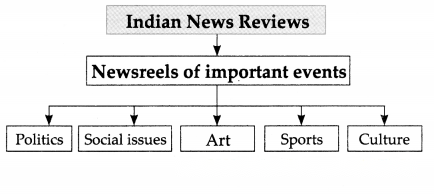
(i) An institute called Indian News Review has produced various newsreels on important events in politics, social issues, art, sports and culture. (ii) This department has also produced various documentaries on prominent social leaders, on people who have made major contributions for the country and about important locations in India. (iii) These news releases and documentaries are useful for studying the history of modern India.
Question 5 Maharashtra Board Solution
Oral Sources
Solution & Step-by-Step Answer:
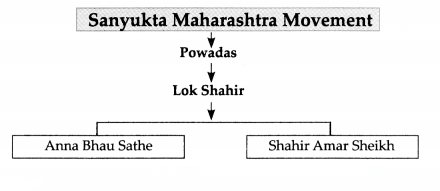
(i) These sources include folktales, folksongs, proverbs, ballads and owis (Marathi verses in the oral tradition). (ii) Activists were inspired by the powadas of Lok shahir, Anna Bhau Sathe and Shahir Amar Sheikh during the Sanyukta Maharashtra Movement.
Question 6 Maharashtra Board Solution
Identify the picture and give relevant information.
Solution & Step-by-Step Answer: