Maharashtra State Board Class 8 Science Solutions Chapter 2 Health and Diseases
Class 8 Science Chapter 2 Health and Diseases Textbook Questions and Answers
1. Distinguish between- Infectious and non – infectious diseases.
Infectious diseases | Non-infectious diseases |
1. The diseases which can be transmitted from one patient to other person are called infectious diseases. | 1. The diseases which cannot be transmitted from one patient to other person, are called non-infectious diseases. |
2. Contaminated air, water, food or carrier! vector animals or insects spread the infectious diseases. | 2. Non-infectious diseases are not transmitted through any medium. |
3. infectious diseases are acute diseases as they are suddenly caused due to infections from either bacteria, virus or protozoan. Thus, their symptoms are seen sooner. | 3. Some non-infectious diseases are due to hereditary causes, some are a clue to failure in metabolism, some due to deficiency of the nutrients. Their symptoms are not seen suddenly but are developed gradually. |
4. Antibiotics or antihelminth medicines are used to treat the infectious diseases. E.g. Tuberculosis, hepatitis, leprosy, cough and cold, etc. | 4. Antibiotics cannot be used for treating non-infectious diseases. These diseases have a proper treatment. E.g. Diabetes, cancer, heart diseases, etc.Tuberculosis, hepatitis, leprosy, cough and cold, etc. |
2. Identify the odd term.
Question a.
Malaria, hepatitis, elephantiasis, dengue.
Answer:
Hepatitis (All other diseases are caused by the carrier mosquito.)
Question b.
Plague, AIDS, Cholera, T.B.
Answer:
AIDS [All others are bacterial (caused by bacteria) diseases.]
3. Answer in one to two sentences.
Question a.
Which are various media of spreading the infectious diseases?
Answer:
Infectious diseases spread through contaminated air, water, food, vectors such as insects, animals and man.
Question b.
Give the names of five non-infectious diseases other than given in the lesson.
Answer:
Asthma, cataract, diseases of kidney such as kidney stones and renal failure, arthritis, Alzheimer which is a condition during old age, hypertension, migraine, etc.
Question c.
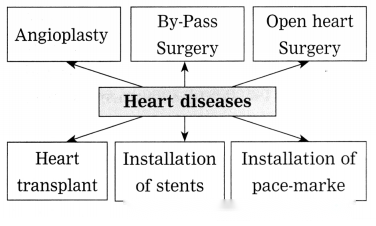
Which are the main reasons of diabetes and heart diseases?
Answer:
Improper lifestyle, wrong type of diet, lack of exercise, excessive mental stress and strain, imbalance in secretion of hormones, etc. are the main reasons for diabetes and heart diseases.
4. What can be achieved/can be prevented?
Question a.
Drinking boiled and filtered water.
Answer:
Question b.
Avoiding smoking and alcoholism.
Answer:
1. Smoking and alcoholism are two dangerous habits that cause addictions. Alcoholism causes disorders of liver.
2. The addict suffers from malnourishment.
3. His I mental and psychological conditions become abnormal. There is social and familial) impacts too due to alcoholistn.
4. Smoking is an invitation for cancer. In cigarettes/ bidis, there is hazardous nicotine. Nicotine is not only toxic but is also carcinogenic. Cancers of oral cavity, tongue, respiratory tract, lungs is very common among smokers. Therefore, addictions like smoking and alcoholism should always be avoided.
Question c.
Regular balanced diet and exercise.
Answer:
1. Regular and balanced diet results into perfect health. The disease fighting power or immunity of a person is increased due to healthy diet.
2. One can avoid of frequent infections and also mental well¬being is established.
3. Heart disease, diabetes, obesity, etc. can be avoided by not consuming high caloric junk food.
4. Exercise improves blood circulation. Many disorders which are caused by faulty lifestyle can be prevented by having regular balanced diet and exercise, thus one must always follow these for well-being.
Question d.
Proper checking of blood before blood donation.
Answer:
1. There are definite blood groups.
2. During blood transfusion, the donor’s and recipient’s blood should be well-matched with each other. Otherwise, blood gets clumped inside the body of recipient.
3. Through infected blood, the viruses such as those causing hepatitis B or AIDS are transmitted to other healthy persons. Thus, for prevention of transmission of such diseases, blood should be checked before blood donation.
5. Read the passage and answer the questions.
Master X’ is a 3-year-old child. He is living with his family in a slum. The public toilet is present near his house. His father is drunkard. His mother does not know the importance of balanced diet.
Question a.
Master ‘X’ can suffer from which different possible diseases in above conditions?
Answer:
Master ‘X’ stays in an area which is devoid of cleanliness. The public toilet is near his house. This indicates that he will have to fight against many infectious diseases. Because his father is a drunkard, there will always be a dearth of money in r the house. He may not be able to afford, enough and balanced food. Thus his diet must be deficient in vitamins and minerals.
Moreover, his mother is ignorant about the importance of health and a balanced diet. This must be causing Master ‘X’ malnourishment and loss of immunity. The financial conditions and the addition of the father must be causing stress in the house.
This will further add stress on Master ‘X’ resulting into susceptibility to infections. As it is due to the location the germs are around and thus they may be attacking Master ‘X’. He will on and off suffer from digestive disorders! such as typhoid, hepatitis, cholera, enteritis, etc.
Question b.
How will you help him and his family in this situation?
Answer:
Initially, we shall help Master ‘X’ to procure healthy and balanced diet having fruits, vegetables, milk, etc. His mother will be taught importance of the balanced diet. The surroundings should be clean and hygienic. Food should be covered, houseflies should not be allowed to contaminate the food. Germicidal floor cleaners and disinfectants should be used to keep off the houseflies and cockroaches. His father will be taken to de-addiction centres such as ‘Alcoholics Anonymous’. He will be persuaded to leave alcoholism.
Question c.
Which disease can occur to the i father of master ‘X’?
Answer:
Father of Master ‘X’ can develop diseases of liver and kidney.
6. Give the preventive measures of following diseases:
Question a.
Dengue:
Answer:
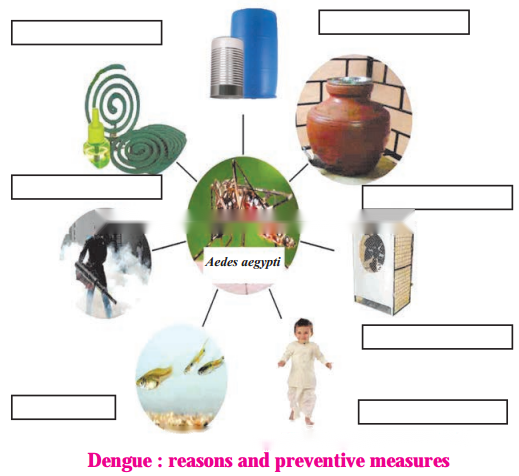
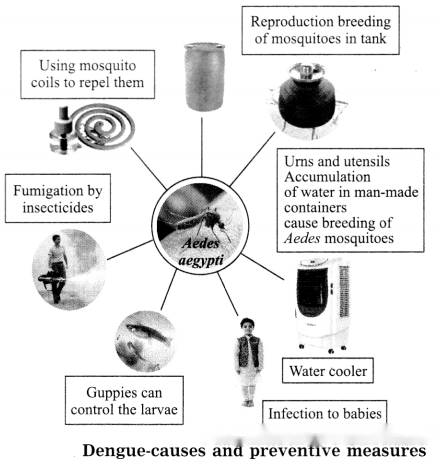
Dengue is transmitted through bite of mosquito of Aedes aegypti. DEN-1, 2 virus belonging to the type – flavivirus is the causative pathogen for Dengue. Wherever there is stagnant or accumulated water, there is possibility of mosquito breeding. Therefore, care is to be taken to drain of such water. Thus this is a very important preventive measure. Especially, in the man¬made containers and in clean water, the Aedes mosquito prefers to breed.
Therefore, such water storages should be either covered or should be decanted. Another way to keep off from dengue is to increase our immunity to fight against the virus. There is vaccine called CYD-TDV or Dengvaxia which is synthesised in 2017. But it is still not considered to be completely safe.
Question b.
Cancer:
Answer:
The most important preventive measure is to remain away from the carcinogenic substances. Tobacco, gutkha, cigarette, bidi, etc. are addictive things which are very bad for our health. The nicotine present in these cause cancers of oral cavity and of respiratory system. Radiations can also cause cancer.
We should not expose ourselves to hazardous radiations. Balanced and healthy diet, proper exercise and living stress free with mental balance are some of the preventive measures of the cancer. Only for few types of cancer like cervical cancer in women, vaccine has been developed.
Question c.
AIDS:
Answer:
When blood transfusion is done, the blood should be checked for the presence of HIV. The used syringes, needles, etc. should not be used without sterilization. Through blood and blood products and body fluids HIV finds its way into the body. Therefore, these precautions should be taken. Unsafe sexual contact is the most important mode of transmission of HIV. Thus one should never deal with such dangerous acts. Awareness about AIDS and HIV is the real preventive measure.
7. Explain the importance.
Question a.
Balanced diet.
Answer:
The diet that contains all the nutrients in the balanced proportion is called balanced diet. One can avoid malnutrition by taking balanced diet. The immunity increases due to balanced diet containing good proportion of vitamins and minerals. Some diseases can be avoided due to raised immunity. Wrong lifestyle and wrong diet can cause hypertension, diabetes or heart disease. To maintain our health and keep the body in equilibrium, we have to take balanced diet.
Question b.
Physical exercise/Yogasanas.
Answer:
By exercise and yoga, the blood circulation of body is improved. Body and joints remain flexible. Mental strain and stress is reduced. Insomnia (inability to fall asleep), arthritis, indigestion, and some other disorders can be avoided. The person who performs exercise, always remains away from the addictions. Yoga makes levels of hormones, enzymes, etc. in equilibrium. By keeping control over breathing through pranayama many respiratory and circulatory disorders can be prevented.
8. Make a list.
Question a.
Viral diseases.
Answer:
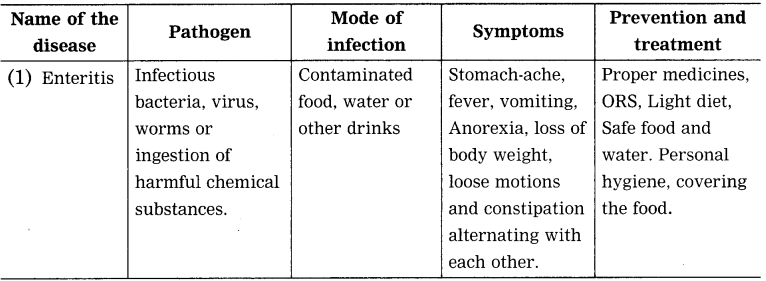
AIDS, Hepatitis, Influenza, Rabies, Polio.
Question b.
Bacterial diseases.
Answer:
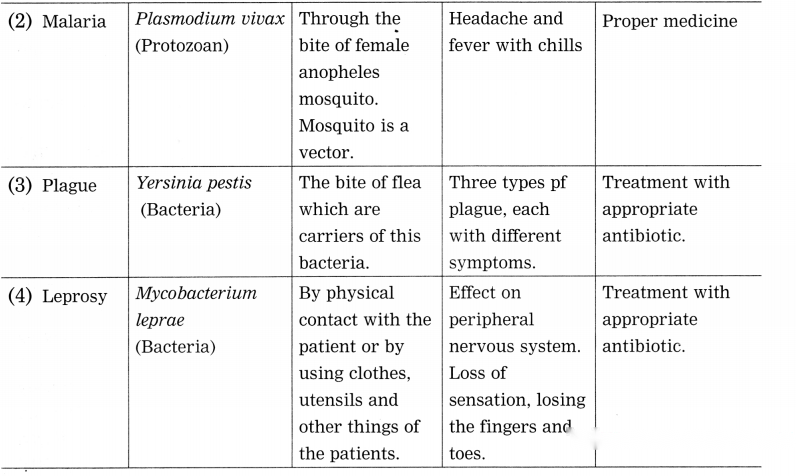
Typhoid, Tuberculosis, Cholera, Leprosy.
Question c.
Diseases spread through insects.
Answer:
Malaria, Dengue, Elephantiasis.
Question d.
Hereditary diseases.
Answer:
Diabetes, Haemophilia, Muscular dystrophy, Colourblindness.
9. Write the information on modern diagnostics and treatments of cancer.
Question a.
Answer:
1. Following methods are used as diagnostic methods to detect the cancer. Techniques like CT scan, MRI scan, mammography, biopsy.
Treatment of the cancer is done by the following methods:
2. For treatment of cancer, some conventional methods are used. Along with these methods, chemotherapy, radiation therapy and surgery are commonly used to treat cancerous growth and tumours. New and modern techniques of robotic and laparoscopic surgery are also used for the treatment.
10. Enlist the names and composition of the medicines present at your home.
Question 2
Maharashtra Board Solution
Visit the public health center/clinic nearby and collect the information about vaccination. |
Question 3. Compose a street-play to increase public awareness about dengue, malaria, swine flu and present ¡tin the area nearby your school. |
Project:
Question 1. Prepare posters giving information about various diseases, public awareness and arrange exhibition in school. |
Question 2. Visit the public health center/clinic nearby and collect the information about vaccination. |
Question 3. Compose a street-play to increase public awareness about dengue, malaria, swine flu and present it in the area nearby your school. |
Class 8 Science Chapter 2 Health and Diseases Additional Important Questions and
Rewrite the sentences after filling the blanks:
Question 1
Maharashtra Board Solution
For eradication of tuberculosis everybody should be vaccinated by …………. vaccine.
Solution & Step-by-Step Answer:
block bg-white dark:bg-slate-900/80 border-l-4 border-emerald-500 rounded-r-xl p-5 my-3 shadow-xs border border-slate-200/60 dark:border-slate-800">
Solution & Step-by-Step Answer:
For eradication of tuberculosis everybody j should be vaccinated by B.C.G vaccine.
Question 2
Maharashtra Board Solution
Hepatitis B can be transmitted by ………….
Solution & Step-by-Step Answer:
Hepatitis B can be transmitted by blood transfusion.
Question 3
Maharashtra Board Solution
For treating diarrhoea/dysentery…………. is given to the patient.
Solution & Step-by-Step Answer:
For treating diarrhoea/dysentery O.R.S. is given to the patient.
Question 4
Maharashtra Board Solution
…………. virus is responsible for the infection of swine flu.
Solution & Step-by-Step Answer:
Influenza A (H1N1) virus is responsible for the infection of swine flu.
Question 5
Maharashtra Board Solution
…………. mosquito spreads dengue.
Solution & Step-by-Step Answer:
Aedes aegypti mosquito spreads dengue.
Question 6
Maharashtra Board Solution
Malaria is caused by female mosquito of …………. genus.
Solution & Step-by-Step Answer:
Malaria is caused by female mosquito of Anopheles genus.
Question 7
Maharashtra Board Solution
…………. test is performed on blood to diagnose AIDS.
Solution & Step-by-Step Answer:
ELISA test is performed on blood to diagnose AIDS.
One word in the following sentences is wrong. Change it to make the sentences correct:
Question 1
Maharashtra Board Solution
Culex mosquito is seen in clean water.
Solution & Step-by-Step Answer:
Culex mosquito is seen in dirty water.
Question 2
Maharashtra Board Solution
Transmission of swine flu is done by dogs and human beings.
Solution & Step-by-Step Answer:
Transmission of swine flu is done by pigs and human beings.
Question 3
Maharashtra Board Solution
Hydrophobia is the main symptom of typhoid.
Solution & Step-by-Step Answer:
Hydrophobia is the main symptom of rabies.
Question 4
Maharashtra Board Solution
The maximum number of patients of diabetes are found in America.
Solution & Step-by-Step Answer:
The maximum number of patients of diabetes are found in India.
Question 5
Maharashtra Board Solution
Generic medicines are also called branded medicines.
Solution & Step-by-Step Answer:
Generic medicines are also called general medicines.
Question 6
Maharashtra Board Solution
If the secretion of insulin is increased, then the diabetes is caused.
Solution & Step-by-Step Answer:
If the secretion of insulin is decreased, then the diabetes is caused.
Question 7
Maharashtra Board Solution
Virus causing rabies enter the brain through food.
Solution & Step-by-Step Answer:
Virus causing rabies enter the brain through neurons.
Match the columns:
Question 1
Maharashtra Board Solution
|
Bacterial diseases | Bacteria |
1. Typhoid | (a) Mycobacterium tuberculi |
2. Cholera | (b) Bacillus |
3. Diarrhoea | (c) Vibrio choleri |
4. Tuberculosis | (d) Salmonella typhi |