Maharashtra State Board Class 8 Science Solutions Chapter 6 Composition of Matter
Class 8 Science Chapter 6 Composition of Matter Textbook Questions and Answers
1. Choose the appropriate option and rewrite the following statements:
Question a.
The intermolecular force is ……………. in the particles of solid.
(a) minimum
(b) moderate
(c) maximum
(d) indefinite
Answer:
(c) maximum
Question b.
Solids retain their volume even when external pressure is applied. This property is called …………….
(a) plasticity
(b) incompressibility
(c) fluidity
(d) elasticity
Answer:
(d) elasticity
Question c.
Matter is classified into the types mixture, compound and element, by applying the criterion …………….
(a) states of matter
(b) phases of matters
(c) chemical composition of matter
(d) all of these
Answer:
(c) chemical composition of matter
Question d.
Matter that contain two or more constituent substances is called ……….
(a) mixture
(b) compound
(c) element
(d) metalloid
Answer:
(a) mixture
Question e.
Milk is an example of type of matter called …………..
(a) solution
(b) homogeneous mixture
(c) heterogeneous mixture
(d) suspension
Answer:
(c) heterogeneous mixture
Question f.
Water, mercury and bromine are similar to each other, because the three are ………...
(a) liquids
(b) compounds
(c) nonmetals
(d) elements
Answer:
(a) liquids
Question g.
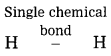
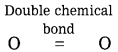
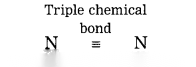
Valency of carbon is 4 and that of oxygen is 2. From this, we understand that there are …………. chemical bond/bonds between the carbon atom and one oxygen atom in the compound- carbon dioxide.
(a) 1
(b) 2
(c) 3
(d) 4.
Answer:
(b) 2
2. Identify the odd term out and explain.
Question a.
Gold, silver, copper, brass.
Answer:
Brass. (Others are elements.)
Question b.
Hydrogen, hydrogen peroxide, carbon dioxide, water vapour.
Answer:
Hydrogen. (Others are compounds.)
Question c.
Milk, lemon juice, carbon, steel.
Answer:
Carbon. (Others are mixtures.)
Question d.
Water, mercury, bromine, petrol.
Answer:
Petrol. (Others are inorganic compounds.)
Question e.
Sugar, salt, baking soda, blue vitriol.
Answer:
Sugar. (Others are inorganic compounds.)
Question f.
Hydrogen, sodium, potassium, carbon.
Answer:
Carbon. (Others are monovalent elements)
3. Answer the following question.
Question a.
Plants synthesize glucose in sunlight with the help of chlorophyll from carbon dioxide and water and give away oxygen. Identify the four compounds in this process and name their types.
Answer:
Photosynthesis:
Carbon dioxide, water, glucose, and Chlorophyll are compounds.
Types: Organic compounds: Glucose
Inorganic compounds: Carbon dioxide and water
Complex compounds: Chlorophyll.

Question b.
In one sample of brass, the following ingredients were found: copper (70%) and zinc (30%). Identify the solvent, solute and solution from these.
Answer:
Brass is an alloy, it contains 70% copper and 30% zinc. The largest proportion is solvent, i.e. copper. The smaller proportion is solute, i.e. zinc. The solution is Brass.
Question c.
Seawater tastes salty due to the dissolved salt. The salinity (the proportion of salts in water) of some water bodies Lonar lake – 7.9%, Pacific Ocean 3.5%, Mediterranean sea – 3.8%, 5 Dead sea – 33.7%. Explain two characteristics of mixtures from the above information.
Answer:
4. Give two examples each.
Question a.
Liquid element.
Answer:
Mercury (Hg), Bromine (Br2)
Question b.
Gaseous element.
Answer:
Hydrogen (H2), Oxygen (O2).
Question c.
Solid element.
Answer:
Iron (Fe), Copper (Cu), Silver (Ag).
Question d.
Homogeneous mixture.
Answer:
Sea water, blue vitriol dissolved in water.
Question e.
Colloid.
Answer:
Milk, blood.
Question f.
Organic compound.
Answer:
Glucose, urea.
Question g.
Complex compound.
Answer:
Chlorophyll, Haemoglobin.
Question h.
Inorganic compound.
Answer:
Soda, rust, limestone.
Question i.
Metalloid.
Answer:
Silicon, arsenic.
Question j.
Element with valency 1.
Answer:
Sodium (Na), potassium (K), chlorine (Cl).
Question l.
Element with valency 2.
Answer:
Magnesium (Mg), Calcium (Ca).
5. Write the names and symbols of the constituent elements and identify their valencies from their molecular formulae given below:
KCl, HBr, MgBr2. K2O, NaH, CaCl2, CCl4, HI, H2S, Na2S, FeS, BaCl2.
Question a.
Write the names and symbols of the constituent elements and identify their valencies from their molecular formulae given below:
KCl, HBr, MgBr2,K2O, NaH, CaCl2, CCl4, HI, H2S, Na2S, FeS, BaCl2.
Answer:
Molecular formula | Constituent element/Name symbol | Valency |
1. KCl | Potassium (K) | 1 |
2. HBr | Hydrogen (H) | 1 |
3. MgBr2 | Magnesium (Mg) | 2 |
4. K2O | Potassium (K) | 1 |
5. NaH | Sodium (Na) | 1 |
6. CaCl2 | Calcium (Ca) | 2 |
7. CCl4 | Carbon (C) | 4 |
8. HI | Hydrogen (H) | 1 |
9. H2S | Hydrogen (H) | 1 |
10. Na2S | Sodium (Na) | 1 |
11. FeS | Iron (Fe) | 2 |
12. BaCl2 | Barium (Ba) | 2 |
6. Chemical composition of some matter is given in the following table. Identify the main type of matter from them.
Question a.
Chemical composition of some matter is given in the following table. Identify the main type of matter from them.
Answer:
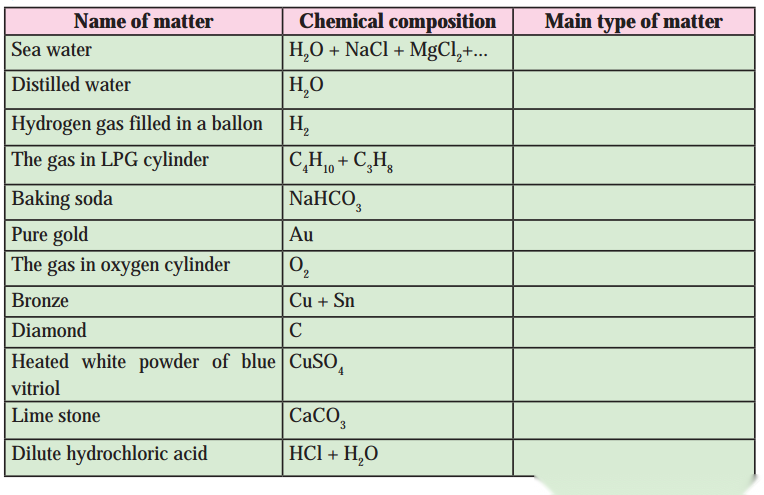
Name of matter | Chemical composition | Main type of matter |
Sea water | H2O + NaCl + MgCl2+… | Mixture |
Distilled water | H2O | Compound |
Hydrogen gas filled in a balloon | H2 | Element |
The gas in LPG cylinder | C4H10+ C3H8 | Mixture |
Baking soda | NaHCO3 | Compound |
Pure gold | Au | Element |
The gas in oxygen cylinder | O2 | Element |
Bronze | Cu + Sn | Mixture |
Diamond | C | Element |
Heated white powder of blue vitriol | CuSO4 | Compound |
Limestone | CaCO3 | Compound |
Dilute hydrochloric acid | HCl + H2O | Mixture |
7. Write scientific reason.
Question a.
Hydrogen is combustible, oxygen helps combustion, but water helps to extinguish fire.
Answer:
Question b.
The constituent substances of a colloid cannot be separated by oridinary filtration.
Answer:
Question c.
Lemon sherbat has sweet, sour and salty taste and it can be poured in a glass.
Answer:
Question d.
A solid matter has the properties of definite shape and volume.
Answer:
8. Deduce the molecular formulae of the compound obtained from the following pairs of elements by the cross multiplication method.
Question a.
C (Valency 4) & Cl (Valency 1)
Answer:
Step 1: Write the symbols of the constituent elements.
Step 2: Write the valency below the respective elements.
Step 3: Cross multiply the valencies.
The molecular formula: CCl4


Question b.
N (Valency 3) & H (Valency 1)
Use your brain power!
Answer:
Step 1: Write the symbols of the constituent elements.
Step 2: Write the valency below the respective elements.
Step 3: Cross multiply the valencies.
The molecular formula: NH3


Question c.
C (Valency 4) & O (Valency 2)
Answer:
Step 1: Write the symbols of the constituent elements.
Step 2: Write the valency below the respective elements.
Step 3: Cross multiply the valencies.
The formula: C2O4The number of constituent atoms in the final molecular formula should be the smallest possible whole number. Divide the formula C2O4by suitable number.
Final molecular formula obtained by dividing by ‘2’.
Molecular formula: CO2


Question d.
Ca (Valency 2) & O (Valency 2)
Answer:
Step 1: Write the symbols of the constituent elements.
Step 2: Write the valency below the respective elements.
Step 3: Cross multiply the valencies.
The formula: Ca2O2
Divide the formula by suitable number ‘2’.
The molecular formula: CaO.


Project:
Question a.
Collect the wrappers of ready-made foodstuff. Use the information given and prepare a chart of foodstuff and the ingredients in it. Procure the ingredients available. Discuss with friends and teacher, test the procured ingredients with combustion test under the supervision of your teacher. Thereby identify the ingredients as organic or inorganic.
Class 8 Science Chapter 6 Composition of Matter Additional Important Questions and Answers
Rewrite the sentences after filling the blanks:
Choose the appropriate option and rewrite the following statements:
State whether the following statements are True or False:
Match the column:
Column I | Column II |
1. Potassium dichromate | a. Complex compound |
2. Cyanocobalamine | b. Element |
3. Air | c. Compound |
4. Silver | d. Mixture |
Column I | Column II |
1. Potassium dichromate | c. Compound |
2. Cyanocobalamine | a. Complex compound |
3. Air | d. Mixture |
4. Silver | b. Element
Question 2
Maharashtra Board Solution
|
Column 1 | Column II |
1. Milk | a. Alloy |
2. Lemonade | b. Colloid |
3. Sand and water | c. Solution |
4. Brass | d. Suspension |
Column 1 | Column II |
1. Milk | b. Colloid |
2. Lemonade | c. Solution |
3. Sand and water | d. Suspension |
4. Brass | a. Alloy
Question 3
Maharashtra Board Solution
|
Column I | Column II |
1. Sea water | a. Solid in solid |
2. Vinegar | b. Solid in liquid |
3. Air | c. Liquid in liquid |
4. Bronze | d. Gas in liquid |
5. Chlorinated water | e. Gas in gas |
Column I | Column II | ||||||||||||||||||||||||
1. Sea water | b. Solid in liquid | ||||||||||||||||||||||||
2. Vinegar | c. Liquid in liquid | ||||||||||||||||||||||||
3. Air | e. Gas in gas | ||||||||||||||||||||||||
4. Bronze | a. Solid in solid | ||||||||||||||||||||||||
5. Chlorinated water | d. Gas in liquid Answer the following questions in one sentence:
Question 1
Maharashtra Board Solution
Why does a solid have definite volume ?
Solution & Step-by-Step Answer:
In solids intermolecular forces are strong enough to keep the particles together in fixed positions, as a result solids have definite volume.
Question 2
Maharashtra Board Solution
Why does a liquid have indefinite shape?
Solution & Step-by-Step Answer:
In a liquid intermolecular forces are not strong enough to keep the particles together in fixed positions, as a result liquid has indefinite shape.
Question 3
Maharashtra Board Solution
Why does a gas have indefinite volume and shape?
Solution & Step-by-Step Answer:
In a gas intermolecular forces are very weak and the distance between the particles is very large, as a result gas has indefinite volume and shape.
Question 4
Maharashtra Board Solution
What can you say about the distance between the neighbouring particles of solid?
Solution & Step-by-Step Answer:
The particles of solid are very close to each other and the distance between them is minimum.
Question 5
Maharashtra Board Solution
What can you say about the distance between the constituent particles of gas?
Solution & Step-by-Step Answer:
The intermolecular force is very weak in gases. The distance between the particles of gas is very large. They move freely and occupy all the available space.
Question 6
Maharashtra Board Solution
State whether the mixture of oil in water is a homogeneous or heterogeneous mixture.
Solution & Step-by-Step Answer:
The mixture of oil in water is a heterogeneous mixture.
Question 7
Maharashtra Board Solution
State whether seawater is a homogeneous or heterogeneous mixture.
Solution & Step-by-Step Answer:
Seawater is a homogeneous mixture.
Question 8
Maharashtra Board Solution
Give two examples of liquid in liquid.
Solution & Step-by-Step Answer:
Examples of liquid in liquid: Vinegar, dilute sulphuric acid.
Question 9
Maharashtra Board Solution
Give two examples of gas in gas.
Solution & Step-by-Step Answer:
Examples of gas in gas: Air, cooking gas.
Question 10
Maharashtra Board Solution
Give two examples of solid in solid.
Solution & Step-by-Step Answer:
Examples of solid in solid: Brass, stainless steel.
Question 11
Maharashtra Board Solution
Give two examples of gas in liquid.
Solution & Step-by-Step Answer:
Examples of gas in liquid: Chlorinated water, hydrochloric acid.
Question 12
Maharashtra Board Solution
Give molecular formulae of 1. potassium chloride, 2. sodium sulphide.
Solution & Step-by-Step Answer:
Question 13
Maharashtra Board Solution
State the molecular formula and number of hydrogen atoms in methane.
Solution & Step-by-Step Answer:
Molecular formula of methane: CH4 The number of hydrogen atoms in methane is 4.
Question 14
Maharashtra Board Solution
Identify the valency of chlorine in (i) KCl and (ii) CaCl2.
Solution & Step-by-Step Answer:
i. The valency of chlorine in KCl is 1. ii. The valency of chlorine in CaCl2 is 1.
Answer the following questions:
Question 1
Maharashtra Board Solution
State two principal ways of classifying matter.
Solution & Step-by-Step Answer:
Two principal ways of classifying matter are:
Question 2
Maharashtra Board Solution
What are the different states of matter?
Solution & Step-by-Step Answer:
The different states of matter are solid, liquid and gas.
Question 3
Maharashtra Board Solution
Define solid.
Solution & Step-by-Step Answer:
A substance which has a definite shape and volume is called a solid.
Question 4
Maharashtra Board Solution
State any three characteristics of solids.
Solution & Step-by-Step Answer:
Question 5
Maharashtra Board Solution
What is meant by rigidity of solids?
Solution & Step-by-Step Answer:
The property by which solids maintain their shapes when subjected to external forces is called rigidity.
Question 6
Maharashtra Board Solution
What is meant by elasticity of solids?
Solution & Step-by-Step Answer:
Some solids undergo a change in their shapes and volume when subjected to external forces and regain their original shapes and volume on removal of the forces. This property of solids is called elasticity.
Question 7
Maharashtra Board Solution
What is meant by plasticity?
Solution & Step-by-Step Answer:
Some solids are deformed by external forces and do not regain their original shapes on removal of the forces. This property of solids is called plasticity.
Question 8
Maharashtra Board Solution
Solids have a high density and negligible compressibility. Explain.
Solution & Step-by-Step Answer:
Question 9
Maharashtra Board Solution
Define liquid.
Solution & Step-by-Step Answer:
A substance which does not have a definite shape, but has a definite volume is called a liquid.
Question 10
Maharashtra Board Solution
State any three characteristics of liquids.
Solution & Step-by-Step Answer:
Question 11
Maharashtra Board Solution
What is meant by fluidity?
Solution & Step-by-Step Answer:
Liquids flow easily and change their shapes in response to external forces. This property of liquids is called fluidity. It is exhibited by gases also.
Question 12
Maharashtra Board Solution
Liquids have fluidity and they do not have a definite shape. Explain.
Solution & Step-by-Step Answer:
1. The forces among the constituent particles (atoms/molecules) are called intermolecular forces. 2. In liquids, the intermolecular forces are strong enough to keep the particles within the bulk in aggregation, but not strong enough to keep them in fixed positions. As a result, they flow easily and change shapes according to that of container.
Question 13
Maharashtra Board Solution
Define gas.
Solution & Step-by-Step Answer:
A substance which has neither a definite shape nor a definite volume is called a gas.
Question 14
Maharashtra Board Solution
State any three characteristics of gases.
Solution & Step-by-Step Answer:
Question 15
Maharashtra Board Solution
Gases have neither a definite shape nor a definite volume. Explain.
Solution & Step-by-Step Answer:
Question 16
Maharashtra Board Solution
Why are gases more compressible, than liquids?
Solution & Step-by-Step Answer:
In liquids the distances between the neighbouring molecules are less than those in the gases. The intermolecular forces are extremely weak in gases, but not so weak in liquids. Hence, gases are more compressible than liquids.
Question 17
Maharashtra Board Solution
What is an element? Give two examples.
Solution & Step-by-Step Answer:
A type of matter composed of only one kind of substances where each smallest indivisible part of it has the same properties is called an element. It cannot be subdivided into simpler substances by any physical or chemical means. Examples: Oxygen, nitrogen, silver.
Question 18
Maharashtra Board Solution
Write any two characteristics of an element.
Solution & Step-by-Step Answer:
Question 19
Maharashtra Board Solution
What is a compound? Give two examples.
Solution & Step-by-Step Answer:
A substance produced by a chemical reaction of two or more elements combined in a fixed proportion is called a compound. Examples: Water, common salt, sugar.
Question 20
Maharashtra Board Solution
Write any two characteristics of a compound.
Solution & Step-by-Step Answer:
Question 21
Maharashtra Board Solution
What is a mixture? Give two examples.
Solution & Step-by-Step Answer:
When two or more elements or compounds which do not react chemically with each other are mixed in any proportion, a mixture is formed. Examples: Air, steel, milk.
Question 22
Maharashtra Board Solution
Write any two characteristics of a mixture.
Solution & Step-by-Step Answer:
Question 23
Maharashtra Board Solution
Classify the following into elements, compounds and mixtures: Sugar, sodium, nitrogen, sodium carbonate, air, sulphuric acid, mercury, stainless steel, cement, potassium dichromate.
Solution & Step-by-Step Answer:
Question 24
Maharashtra Board Solution
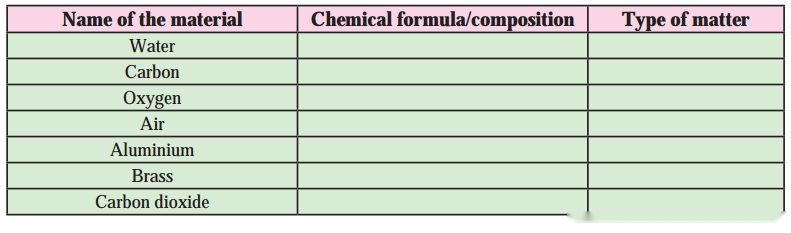
Write the composition of the following materials by means of chemical formulae and classify them accordingly.
Solution & Step-by-Step Answer:
Question 25
Maharashtra Board Solution
What is meant by an organic compound? Give two examples.
Solution & Step-by-Step Answer:
The compound which when heated strongly gives black coloured carbon residue is called an organic compound or carbon compound. Examples: Carbohydrates, proteins, hydrocarbons (petrol, cooking gas).
Question 26
Maharashtra Board Solution
What is meant by an inorganic compound? Give two examples.
Solution & Step-by-Step Answer:
Compounds which when heated strongly decomposes to give a residue behind are called inorganic compounds. Examples: Common salt, rust, blue vitriol, limestone.
Question 27
Maharashtra Board Solution
What is meant by complex compounds? Give two examples.
Solution & Step-by-Step Answer:
The molecules of compounds which have a complex structure formed by many atoms and in the centre of this structure metal atoms are also included are called complex compounds. Examples: Haemoglobin, chlorophyll.
Question 28
Maharashtra Board Solution
Classify the following compounds into organic compounds, inorganic compounds and complex compounds. Petrol, common salt, haemoglobin, blue vitriol, cyanocobalamine, cooking gas.
Solution & Step-by-Step Answer:
Question 29
Maharashtra Board Solution
What is a phase?
Solution & Step-by-Step Answer:
The part of matter with uniform composition is called a phase.
Question 29
Maharashtra Board Solution
What is a homogeneous mixture? Give two examples.
Solution & Step-by-Step Answer:
When all the components of a mixture form one phase, it is called homogeneous mixture. Example: Solution of blue vitriol in water, solution of sugar in water.
Question 30
Maharashtra Board Solution
What is heterogeneous mixture? Give two examples.
Solution & Step-by-Step Answer:
When the components of a mixture are distributed into two or more phases, it is called a heterogeneous mixture. Examples: Oil and water, sand and water.
Question 31
Maharashtra Board Solution
Define solution or What is meant by a solution? Give two examples.
Solution & Step-by-Step Answer:
A homogeneous mixture of two or more substances is called a solution. Examples: Seawater, sugar, syrup.
Question 32
Maharashtra Board Solution
What is meant by a solvent? OR Define solvent. Give two examples.
Solution & Step-by-Step Answer:
The component which is present in largest proportion in a solution is called a solvent. Examples:
Question 33
Maharashtra Board Solution
What is meant by a solute? OR Define solute. Give two examples.
Solution & Step-by-Step Answer:
The component of a solution which is present in smaller proportion than the solvent is called a solute. Examples:
Question 34
Maharashtra Board Solution
Define suspension. OR What is meant by a suspension?
Solution & Step-by-Step Answer:
A heterogeneous mixture of a liquid and a solid is called a suspension. The diameter of the solid particles in a suspension is larger than 10-4 m.
Question 35
Maharashtra Board Solution
Define colloid.
Solution & Step-by-Step Answer:
A heterogeneous mixture in which the particles cannot be seen with a naked eye is called a colloid. The diameter of colloidal particles is around 10-5 m.
Question 36
Maharashtra Board Solution
State the characteristics of a
Solution & Step-by-Step Answer:
Answer:
Question 37
Maharashtra Board Solution
State the characteristics of a suspension.
Solution & Step-by-Step Answer:
Question 38
Maharashtra Board Solution
State the characteristics of a colloid.
Solution & Step-by-Step Answer:
Question 39
Maharashtra Board Solution
Give two examples of each of the following: |
Question 40
Maharashtra Board Solution
State the different types of
Solution & Step-by-Step Answer:
s. Give one example. Answer: The different types of solutions:
Question 41
Maharashtra Board Solution
Classify the following into homogeneous solution and heterogeneous solution? Soda water, potassium permanganate solution, milk, alcohol in water, ink solution, wheat flour in water.
Solution & Step-by-Step Answer:
Question 42
Maharashtra Board Solution
Classify the following into solution, suspension and colloids: Milk, sand in water, lemonade, smoke, oxygen in water.
Solution & Step-by-Step Answer:
Question 43
Maharashtra Board Solution
What is meant by molecular formula?
Solution & Step-by-Step Answer:
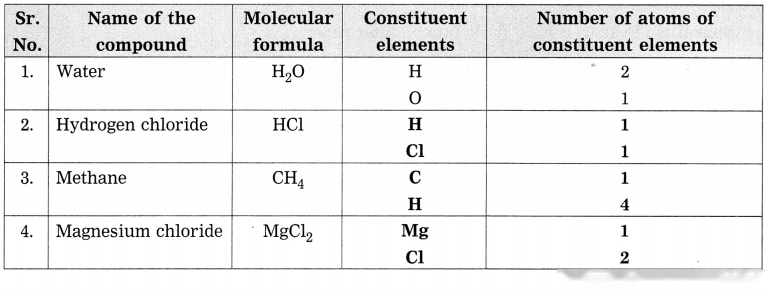
The number of atom of each of the constituent elements present in one molecule of a compound is called molecular formula.
Question 44
Maharashtra Board Solution
What is meant by valency of an element?
Solution & Step-by-Step Answer:
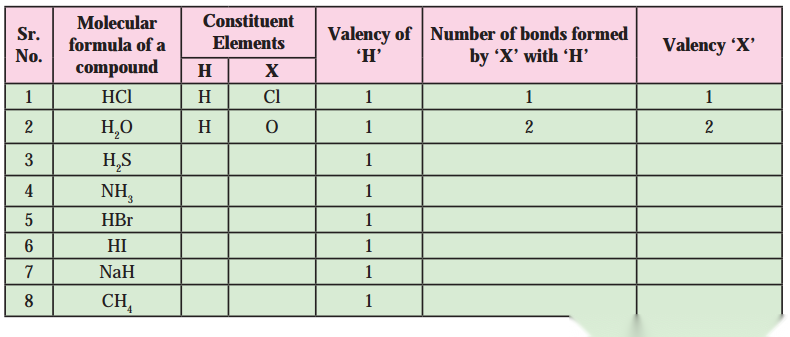
The capacity of an element to combine with another element is known as valency.
Question 45
Maharashtra Board Solution
Deduce the molecular formulae of the compound obtained from the following pairs of elements by the cross multiplication method.
Solution & Step-by-Step Answer:
Question a. H (Valency 1) and O (Valency 2) Answer: Step 1: Write the symbols of the constituent elements. Step 2: Write the valency below the respective elements. Step 3: Cross multiply the valencies. ∴ The molecular formula: H2O.
Question b.
Question c.
Give scientific reasons:
Question 1
Maharashtra Board Solution
Hydrogen is an element.
Solution & Step-by-Step Answer:
Question 2
Maharashtra Board Solution
Water is a compound.
Solution & Step-by-Step Answer:
Question 3
Maharashtra Board Solution
Air is a mixture.
Solution & Step-by-Step Answer:
Question 4
Maharashtra Board Solution
A potassium permanganate solution in water is a homogeneous mixture, while a mixture of oil and water is a heterogeneous mixture.
Solution & Step-by-Step Answer:
Question 5
Maharashtra Board Solution
Milk is a colloid.
Solution & Step-by-Step Answer:
Distinguish between the following:
Question 1
Maharashtra Board Solution
Solution & Step-by-Step Answer:
Question 2
Maharashtra Board Solution
Liquids and Gases:
Solution & Step-by-Step Answer:
Question 3
Maharashtra Board Solution
Solids and Gases:
Solution & Step-by-Step Answer:
Question 4
Maharashtra Board Solution
Element and Compound:
Solution & Step-by-Step Answer:
Question 5
Maharashtra Board Solution
Compound and mixture:
Solution & Step-by-Step Answer:
Question 6
Maharashtra Board Solution
Colloidals and Suspension:
Solution & Step-by-Step Answer:
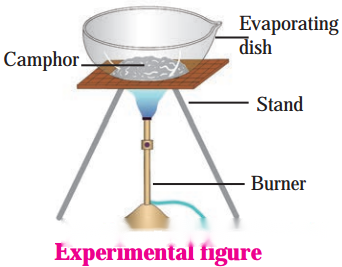
Activity-based questions: Activity 1:
Question 1
Maharashtra Board Solution
Solution & Step-by-Step Answer:
Activity 2:
Question 1
Maharashtra Board Solution
Solution & Step-by-Step Answer:
Activity 3:
Question 1
Maharashtra Board Solution
Solution & Step-by-Step Answer:
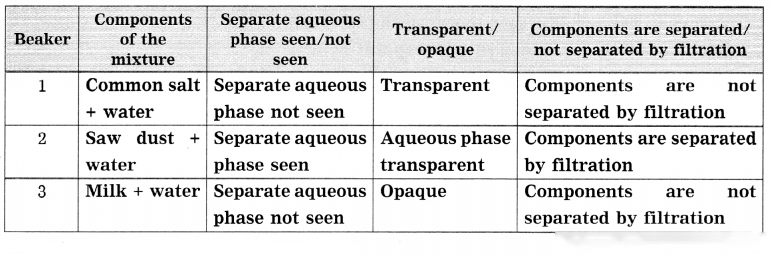
Activity 4: (Textbook page 43)
Question 1
Maharashtra Board Solution
Solution & Step-by-Step Answer:
Question 2
Maharashtra Board Solution
In the above activity after stirring a homogeneous mixture is formed in only one beaker? Which is that?
Solution & Step-by-Step Answer:
The homogeneous mixture is formed in the second beaker. It is a solution of blue vitriol.
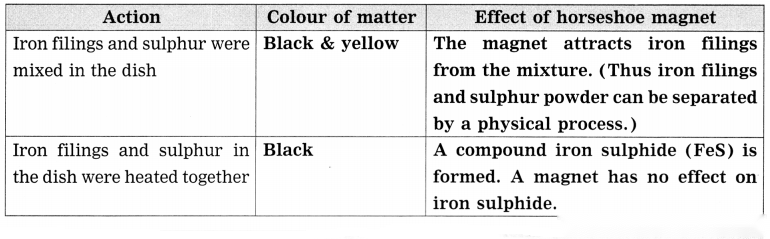
Activity 5:
Question 1
Maharashtra Board Solution
Solution & Step-by-Step Answer:
Activity 6: (Textbook page 44)
Question 1
Maharashtra Board Solution
Solution & Step-by-Step Answer:
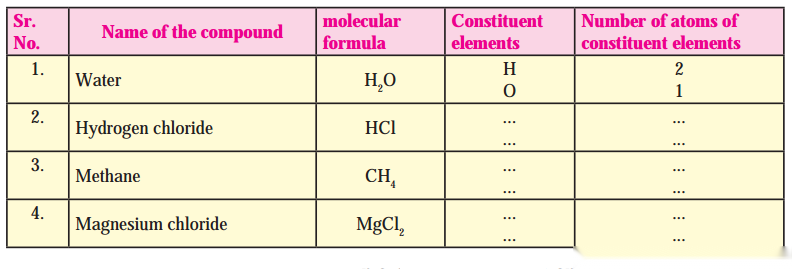
Complete the following:
Question 1
Maharashtra Board Solution
Complete the table:
Solution & Step-by-Step Answer:
Molecular formulae of some compounds are given in the following table. Use these to fill in the gaps in the table.
Question 2
Maharashtra Board Solution
Complete the table:
Solution & Step-by-Step Answer:
Molecular formulae of various compounds formed by hydrogen with other elements are given in the following table. From that, deduce the valencies of the concerned elements.
Question 3
Maharashtra Board Solution
Complete the table:
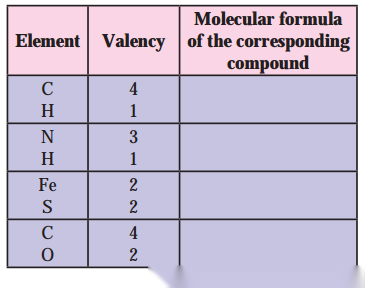
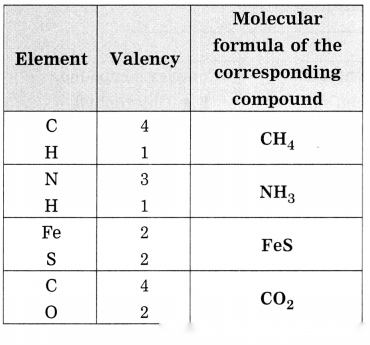
Solution & Step-by-Step Answer:
|